What to store in a home safe? You’ll want to keep vital documents, financial records, valuables, and digital media secure from theft, fire, and other emergencies. This article explains the essential items you should store in your home safe and why.
Key Takeaways
- Important documents, financial records, jewelry, and digital media should be securely stored in a home safe to protect against theft and damage.
- Emergency cash and medical information must be easily accessible in a home safe, ensuring preparedness for unforeseen situations and health emergencies.
- Choosing a home safe with appropriate fire ratings and secure locking mechanisms is essential for safeguarding valuables and ensuring long-term protection.
Important Documents
What to store in a home safe – key takeaways
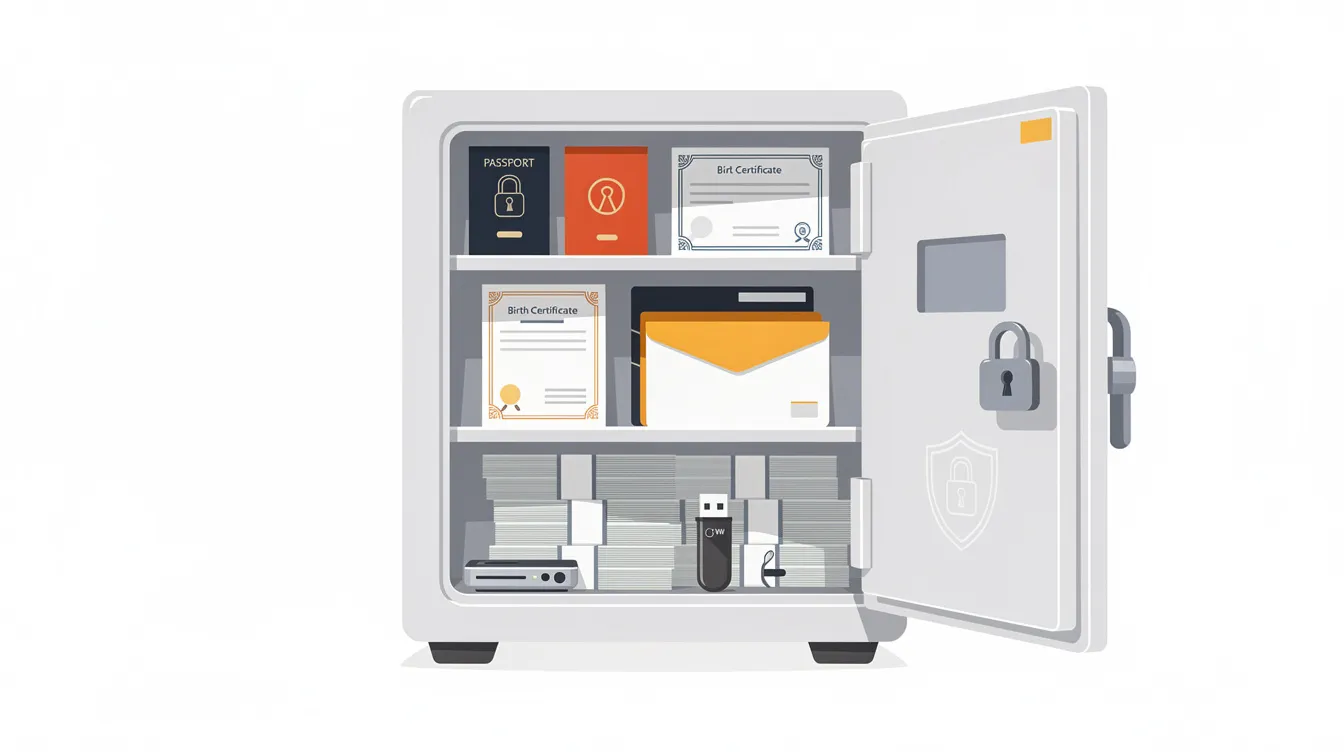
Important documents are the backbone of our personal and financial identity. A home safe protects these documents from theft, fire, and other emergencies. Vital records that should be kept in a secure, easily accessible location include:
- Birth certificates
- Passports
- Social Security cards
- Marriage licenses
Replacing original documents like birth certificates and passports can be a time consuming and costly process, so storing them securely helps you avoid the hassle and expense of having to replace them.
This setup provides peace of mind and quick access when needed.
To protect your important documents and prevent identity theft:
- Lock your Social Security card in a home safe to prevent potential identity theft.
- Keep copies of important documents in your safe to ensure easy access.
- Store the original documents in a bank safe deposit box.
A bank safety deposit box is especially recommended for sentimental items that would be difficult to replace after a tragedy or emergency.
This approach provides ready access to necessary documents while keeping the original copies secure.
Using a fire-safe box that locks and plastic bags can further protect your important documents from wear and tear, adding an extra layer of security. These measures ensure your crucial documents remain secure and accessible.
Financial Assets and Records
Securing financial documents is crucial for maintaining financial health and ensuring quick access. Key points to consider include:
- Tax documents, including W-2 forms and past tax filings, should generally be kept for three to seven years.
- Annual tax returns should be retained indefinitely.
- A home safe protects these documents from loss or theft and ensures they are easily accessible.
Property records, including deeds and titles, are crucial for transactions and should be securely stored. Documentation such as sales receipts and warranty information should also be preserved. These records serve as proof of ownership and are essential for future dealings.
Investment-related documents that should be kept in your home safe include:
- Stocks
- Bonds
- Retirement plans
- Bank account information
Having these documents ready during a natural disaster facilitates immediate access to funds and enables prompt insurance claims, safeguarding financial stability and ensuring preparedness.
Jewelry and Valuables
What to store in a home safe – financial assets and records
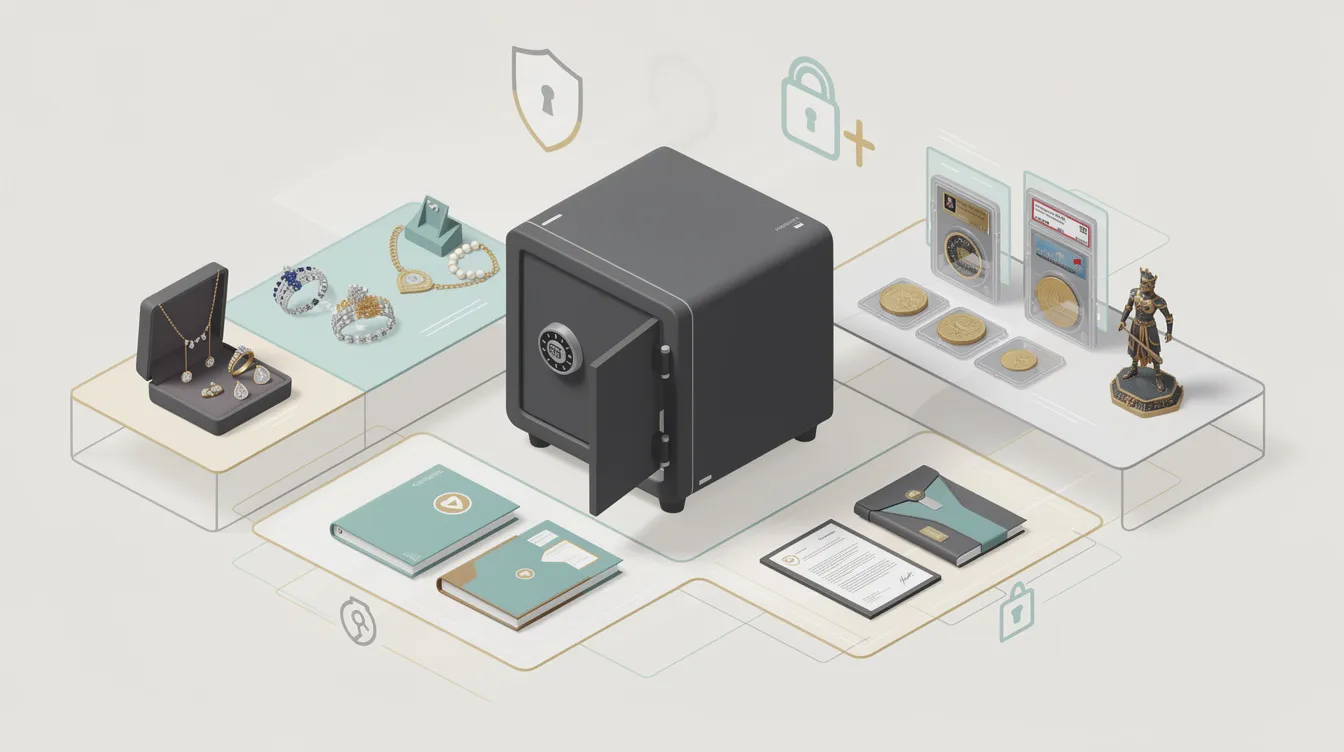
Valuable items, such as heirloom jewelry and watches, should be securely stored in a home safe to protect them from theft and damage. Everyday jewelry should also be stored safely at home rather than in a safe deposit box, ensuring both security and convenience. A home safe offers robust defense against potential burglars and significantly reduces the risk of loss.
A fireproof home safe provides additional protection against natural disasters, preserving the condition of valuable items. Collectibles with significant monetary and sentimental value should also be stored in a safe to maintain their condition. Secure storage solutions can include drawer safes, shelf safes, wall safes, or floor safes. Floor safes are embedded in concrete floors for enhanced burglar protection, but they may offer limited fire protection, so using fire- and water-resistant bags inside them is recommended for added security.
Investing in a quality home safe protects valuable items from both theft and environmental hazards, securing their monetary value and preserving their sentimental significance for future generations.
Digital Media and Data
In today’s digital age, protecting digital data is as important as securing physical documents. Storing external hard drives, USB flash drives, and memory cards in a home safe prevents data loss from theft or damage. These devices often hold crucial backups of important documents, family photos, and other irreplaceable digital content.
A home safe designed to protect digital media should have the following features:
- Fireproof
- Waterproof
- Vibration-resistant
- Shock-resistant
These features safeguard your digital devices against various threats. An electronic safe offers the necessary protection for your digital data, providing security service to protect and peace of mind.
Securing your digital media and data in a home safe protects valuable information, memories, and important documents stored digitally. This ensures retrieval when needed, without the risk of loss or damage.
Personal Identification and Access Items
What to store in a home safe – digital media and data
Securing personal identification items in a home safe avoids identity theft and ensures availability when needed. Items to store in a home safe include:
- Spare keys
- Driver’s licenses
- Identification cards
- Access cards
- Key fobs
Storing these other items in a home safe prevents unauthorized access, protects them from being lost or stolen, and ensures they are readily accessible.
Access tools like key fobs and access cards should be safely stored to avoid unauthorized use and falling into the wrong hands. Keeping a spare key in a safe ensures it is protected yet easily retrievable, enhancing security and providing peace of mind.
Securing personal identification and access items in a home safe protects against security risks and ensures these important items are always within reach for a person, promoting safety by using a security service.
Emergency Cash
Having a reserve of emergency cash at home is crucial for dealing with unforeseen situations like natural disasters or power outages. In these events, access to banking services may be limited, and a local bank may operate on a cash-only basis if electronic payment systems are down. Gradually building an emergency cash stash by setting aside small amounts each month can help you prepare.
Using lower denominations, such as one and five dollar bills, is beneficial for making small purchases during emergencies. Here are some important tips for managing emergency cash and money:
- Keep cash in various family emergency kits to ensure each member has access to funds if separated during an evacuation.
- Keep a record of where the cash is hidden.
- Inform trusted family members about the cash locations to avoid losing it.
Keeping emergency cash in a home safe ensures you and your family are prepared for any situation, providing security and peace of mind.
Medical Information
Storing medical information in a home safe ensures quick retrieval during emergencies. Medical records, prescription details, and contact information for healthcare providers should be kept in a safe for easy access, including vaccination cards and a history of health conditions.
Keep current medication schedules in your safe, detailing names, dosages, and administration times. Insurance policies should also be easily accessible in your safe for emergencies. Keeping copies of your medical consent forms in the safe is crucial for emergencies.
Consider having a portable digital version of your important information for easy access when necessary. Storing medical information securely ensures you and your family are prepared for any medical emergency.
Sentimental Items
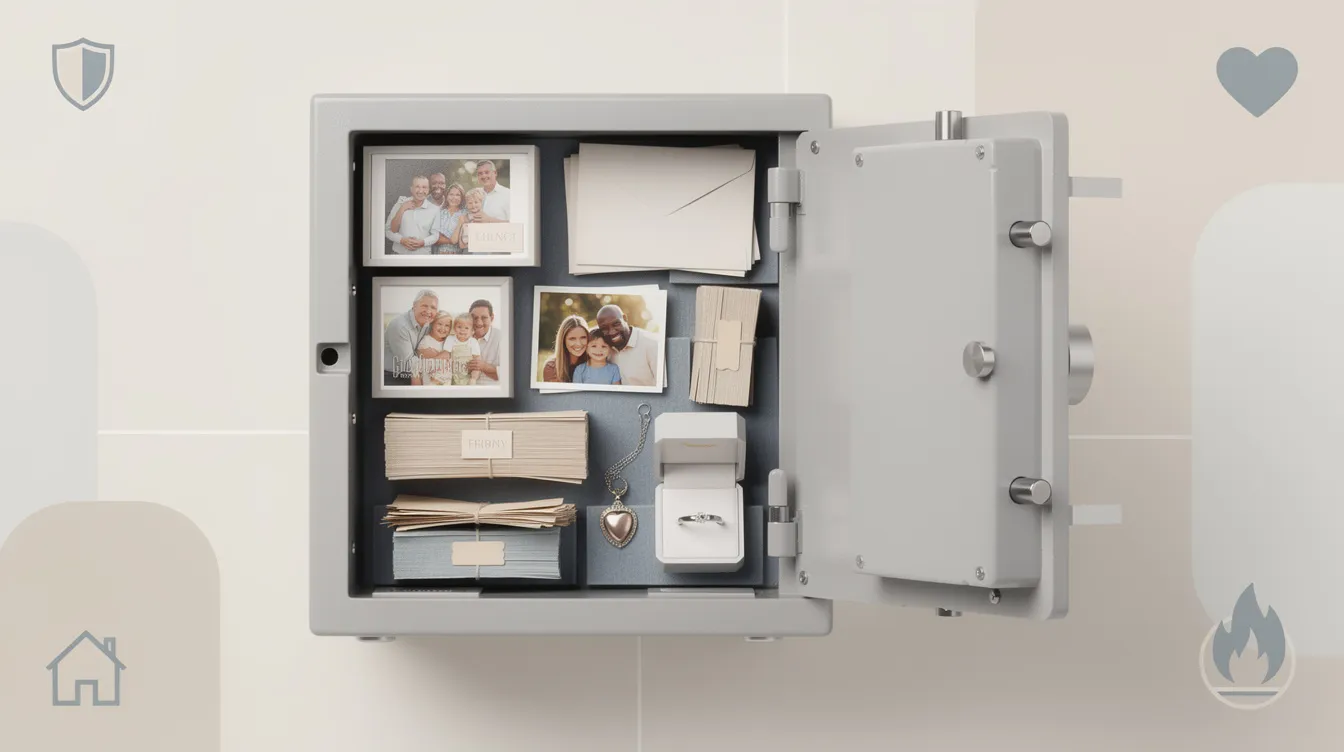
Sentimental items, such as family photos, letters, and keepsakes, hold immense personal significance and should be preserved in a fireproof safe. Family albums and old letters should be stored in a safe to protect them from damage and loss. Preserving these items ensures irreplaceable memories are safeguarded for future generations.
Storing sentimental items in a fireproof safe protects them from fire and theft, ensuring their longevity. This preserves their sentimental value and keeps cherished memories safe for you and your family.
Backup Legal Documents
Storing important legal documents securely is crucial due to their significant legal and financial implications. Legal documents that should be duplicated and stored securely include:
- Wills
- Powers of attorney
- Vehicle titles
- Mortgage documents Estate planning documents should be easily accessible when needed.
Keep the originals in a secure location like a safe deposit box, while storing copies in your home safe. Not securing these vital legal documents can result in significant complications during critical times. These precautions ensure you store important documents protected and accessible.
Tips for Choosing a Home Safe
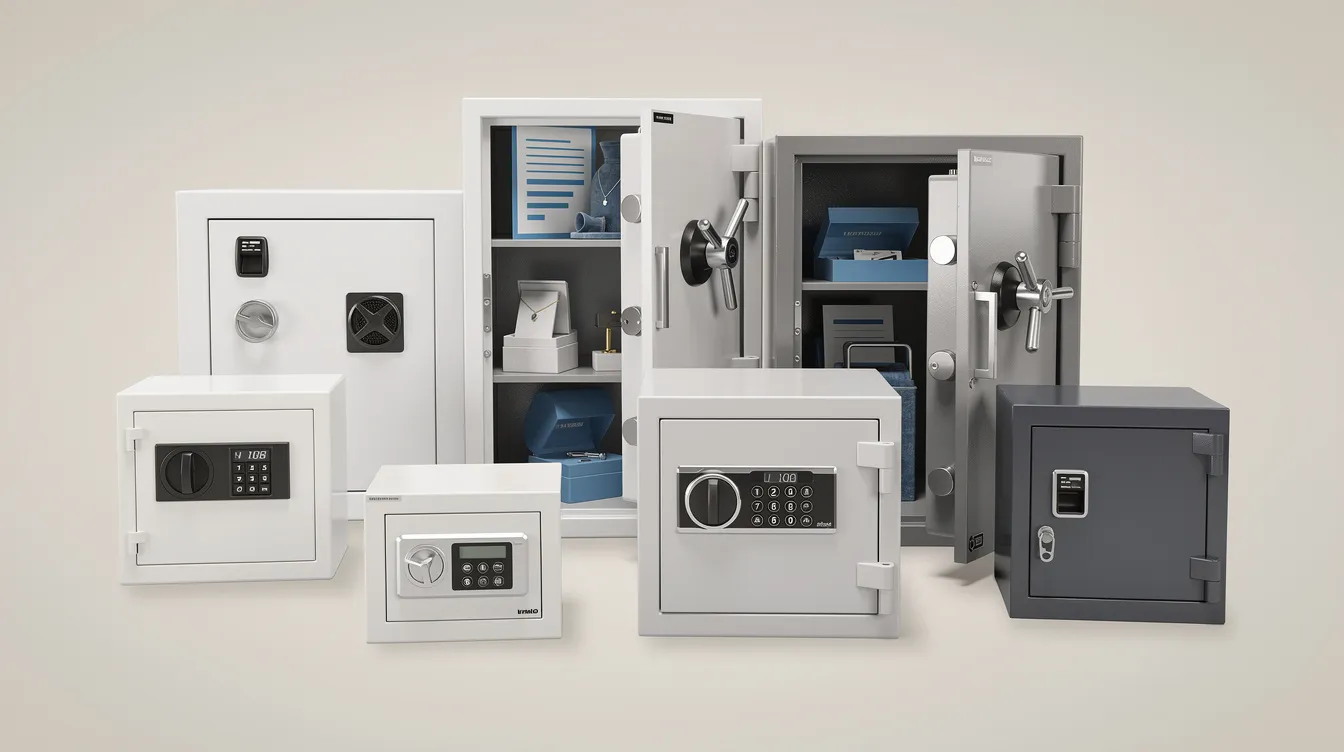
Choosing the right home safe is crucial for protecting your valuables and important documents. The fire rating indicates how long a safe can withstand high temperatures, which is crucial for protecting sensitive materials. Safes are tested for fire resistance by simulating real-world conditions at temperatures up to 1,700°F. Preparing for a house fire is essential, and a fireproof safe can help ensure that your important documents and valuables remain protected in the event of a house fire.
The best fire ratings come from independent testing organizations like Underwriters Laboratories (UL) and Intertek Laboratories (ETL). Consider the types of materials in your building, as some burn faster than others. Assessing the proximity of a fire station can also influence the level of fire protection required for your safe.
A home safe should have both fireproof capabilities and a secure locking mechanism. Considering these factors ensures you select a safe that provides the best protection for your valuables and important documents.
Summary
In summary, a home safe is an indispensable tool for protecting your valuable and essential items. From important documents and financial records to jewelry, digital media, and sentimental items, a home safe ensures these items are secure and accessible when needed. Storing these essentials can be crucial for rebuilding your life after a disaster or emergency, making recovery smoother and less stressful. By taking the time to store these items properly, you can safeguard your peace of mind and ensure you are prepared for any emergency.
Remember, choosing the right home safe is just as important as deciding what to store in it. Ensure your safe has the necessary fireproof and security features to protect your valuables. By being proactive and diligent, you can protect your most treasured possessions and ensure they are safe from harm.
Frequently Asked Questions
What types of documents should I store in a home safe?
You should store important documents like birth certificates, passports, Social Security cards, and marriage licenses in a home safe to ensure their security and easy access.
Why is it important to keep financial documents in a home safe?
It is important to keep financial documents in a home safe to protect them from loss or theft, ensuring they are accessible when needed for financial health and emergency preparedness.
How can I protect my digital media and data?
Protect your digital media and data by storing external drives and USBs in a fireproof, waterproof, and shock-resistant safe to mitigate risks of loss and damage. This proactive measure ensures your valuable data remains secure.
What is the best way to store jewelry and other valuables?
Storing jewelry and other valuables in a fireproof home safe is the best way to ensure protection from theft, fire, and environmental damage. This method provides peace of mind for safeguarding your cherished items.
How do I choose the right home safe for my needs?
To choose the right home safe, prioritize fire resistance ratings, independent certifications, and the secure locking mechanism it offers. Ensuring these features will help protect your valuables effectively.