Choosing between a wall safe and a floor safe can make a big difference in your home security. In this article, we compare wall safe vs floor safe, covering their benefits, installation, and best uses. Understand which type suits your needs and protects your valuables effectively, so you can make the right choice for your security needs.
Key Takeaways
- Wall safes are discreet and easy to access, ideal for everyday valuables, while floor safes provide superior protection for high-value items but have accessibility challenges.
- Professional installation is essential for both wall and floor safes to ensure security, functionality, and maintain the aesthetic of your home.
- When selecting a safe, consider factors such as intended use, available space, cost, and whether you prefer ease of access or maximum security.
Understanding Wall Safes
Wall safe vs floor safe – key takeaways
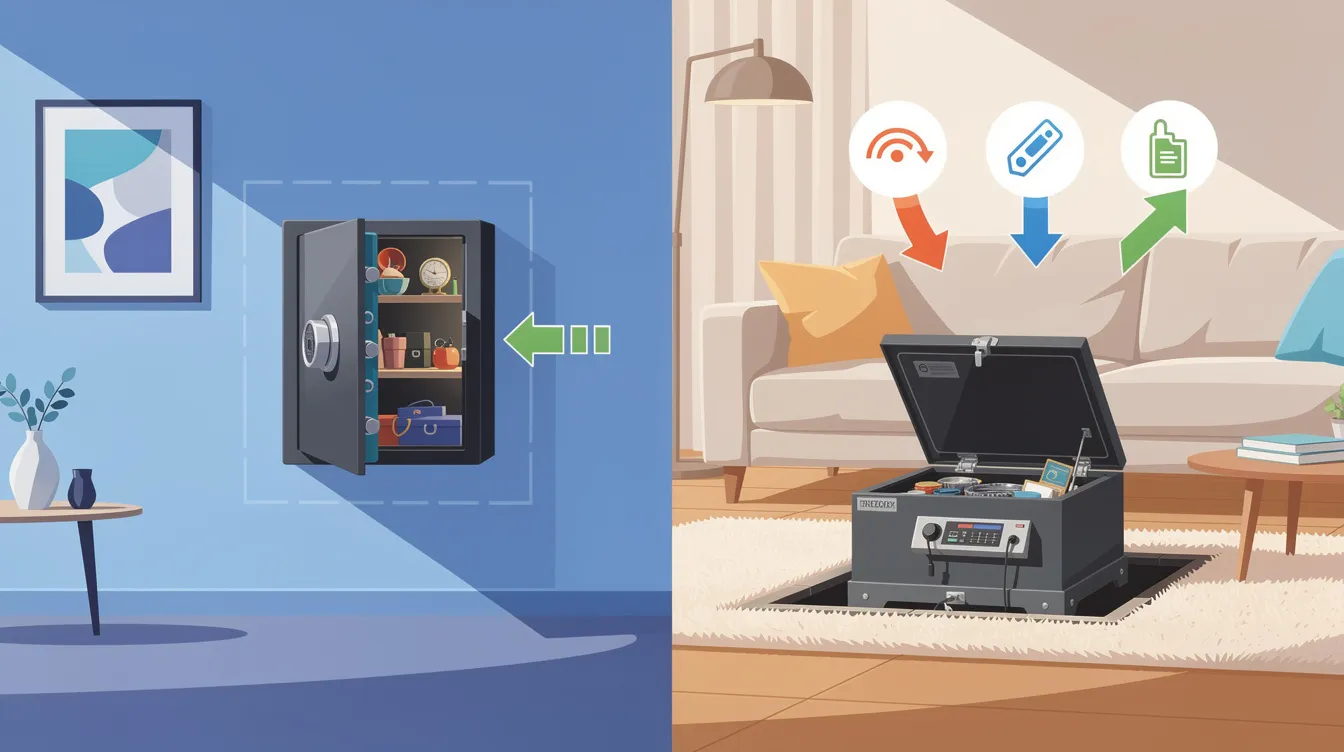
Wall safes provide a convenient and discreet way to secure valuables by being installed within the walls of a home. They are designed to be hidden from plain sight, often concealed behind furniture or decor, making them a popular choice for homeowners looking to integrate security seamlessly into their living spaces. The installation process for in wall safes typically requires professional help to ensure they are securely fastened and provide the intended protection.
However, there are limitations to consider. The dimensions of a wall safe are determined by the size and depth of the wall it is installed in, which can restrict your options. Additionally, space limitations within the wall can affect the type and size of the safe you can install. It’s important to ensure there is enough room within the wall or even a dedicated room to properly install and access the safe.
Despite these constraints, wall safes remain a reliable option for securing important documents, cash, and other valuable items, including a deep wall safe.
Hidden Wall Safes
Hidden wall safes offer an added layer of security by being concealed behind artwork, mirrors, furniture, or closets. This concealment significantly deters burglars, who may overlook the safe entirely. The integration of secret compartments not only enhances the security of valuables but also provides peace of mind by keeping them out of sight. Hidden wall safes can also serve as concealed gun safes, offering versatile security solutions.
Incorporating a hidden wall safe into your home decor can be achieved through various methods. For instance, a concealment cabinet can disguise a wall safe behind a steel or display door. Some safes, like the T861 Compact Depository Drop Safe, are designed for easy concealment within furniture, cabinetry, or closets.
These options not only secure your valuables but also blend seamlessly into your house, making them a better option for enhanced protection and peace of mind.
Wall Mounted Safe Features
Wall-mounted safes come equipped with essential features designed for quick access and secure access to your valuables. One notable feature is the electronic lock, which:
- Allows for fast entry without the need for keys
- Is particularly useful in emergencies
- Provides maximum protection while ensuring that your valuables are easily accessible.
Many wall-mounted safes also feature a combination lock, offering an alternative secure locking mechanism for added security and user access control.
In addition to electronic locks, many wall-mounted safes offer fire protection and other security enhancements. These features ensure that your valuables are not only protected from theft but also from environmental hazards like fires. The combination of electronic locks, combination locks, and robust construction makes wall-mounted safes a reliable choice for securing important documents, cash, and other high-value items.
Exploring Floor Safes
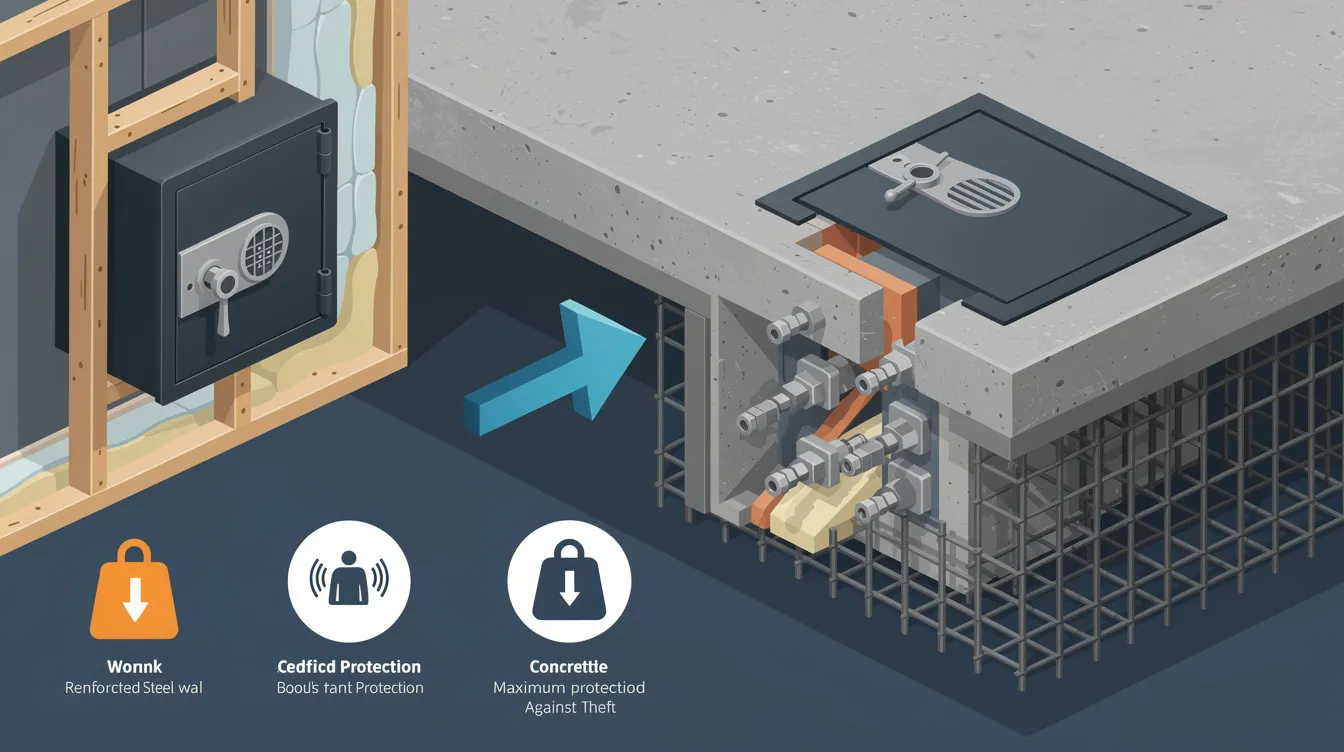
Floor safes, typically encased in a concrete floor, provide maximum protection for high-value items. These safes are often preferred for their enhanced security features and ability to remain completely concealed from view. Critical installation requirements for floor safes include embedding them in concrete, which makes them difficult to access without specialized tools and ensures that valuables are secure from theft.
When selecting a floor safe, it’s crucial to evaluate the level of security needed for your specific items and assess the physical space for installation. The installation process often requires professional help to ensure the safe is securely embedded and remains undetected, integrating well into your home’s design.
This professional installation not only maintains the structural integrity of your floor but also provides added peace of mind knowing your valuables are well protected.
Benefits of Floor Safes
Floor safes offer superior protection for high-value items due to their installation in concrete. Their advantages include:
- High security against burglars, as the concrete casing adds an extra layer of difficulty in accessing the safe
- Excellent fire protection
- Excellent water protection These features make floor safes versatile for various storage needs.
These safes are particularly suitable for storing larger valuables, such as important documents, jewelry, and cash. Selecting a reliable brand, like T870 in-floor safes, ensures that your valuables are protected by a high-quality, durable safe.
The combination of high security, fire and water protection, and suitability for valuable items makes floor safes a compelling choice for homeowners seeking high level maximum protection. However, it’s important to note that not all safes provide the same level of security—modern floor safes often surpass vintage safes or less secure options, offering greater peace of mind.
Installation Considerations
Professional installation of floor safes is essential to maintain the structural integrity of your home and ensure the safe is completely concealed. A professional can accurately measure the depth of walls and floor space to ensure the safe fits appropriately without compromising accessibility or functionality. This prevents issues during installation, such as needing to modify structural elements to accommodate the safe.
Moreover, professional installation ensures that the safe is securely embedded in concrete, which enhances its security and fire resistance. By integrating the safe seamlessly into your home’s design, professional installation helps maintain the aesthetic appeal of your living space while providing robust protection for your valuables.
Comparing Security Levels
Wall safe vs floor safe – exploring floor safes
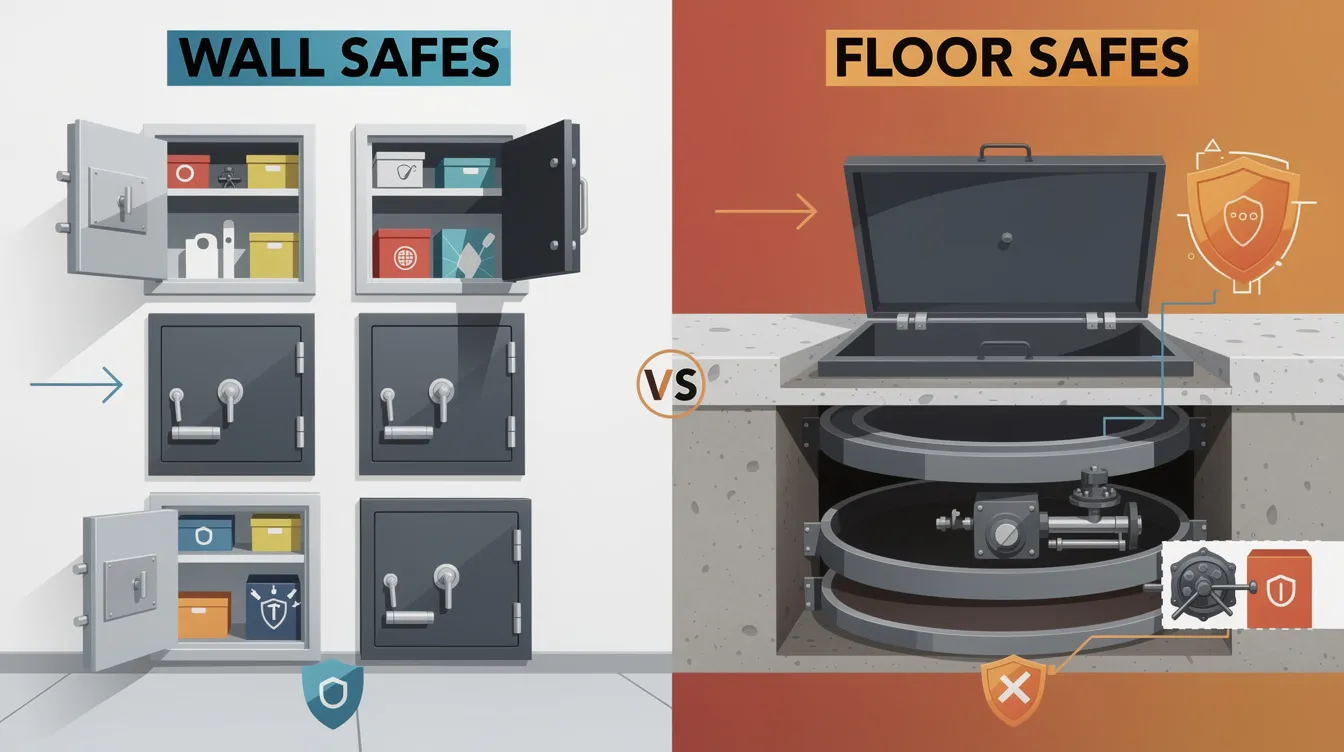
When comparing wall safes and floor safes, both offer enhanced security over standard free-standing safes due to their installation methods. Wall safes are typically installed within walls and can be concealed behind decor, making them difficult for burglars to find. High-quality wall safes often feature concealed hinges, which help maintain a seamless wall appearance and enhance security by making the safe less noticeable. Floor safes, on the other hand, feature heavier and thicker doors, contributing to their enhanced security.
Floor safes often offer double security due to their concrete encasement, which makes them more resistant to prying and other forced entry attempts. Wall safes, while generally easier to access, should meet burglar ratings such as TL-15 or TL-30 to ensure adequate theft deterrence.
Both types of safes provide robust protection for valuables, but the choice depends on the specific security needs and preferences of the homeowner.
Fire Protection & Environmental Factors
Fire protection is a crucial consideration when selecting a safe to safeguard valuables in the event of a fire. Wall safes need to have a UL Class rating of 1-hour or 2-hour. This rating:
- Ensures they offer effective fire protection
- Confirms the safe can withstand high temperatures for a specified period
- Protects the contents from fire damage
Floor safes, often encased in concrete, can enhance fire protection due to their installation method. However, several factors such as flooding and earthquakes can impact the performance of both wall and floor safes. It’s important to consider these factors when choosing a safe to ensure that it provides maximum protection in all potential scenarios.
Accessibility & Convenience
Accessibility is a key factor when choosing between wall safes and floor safes. Floor safes can present accessibility issues since they require bending down to access, making them less convenient for frequent use. However, their secure installation in concrete floors provides unmatched protection for high-value items.
Wall safes offer several advantages:
- They can be mounted at eye level, providing quick and easy access to valuables.
- They are easier to install and relocate compared to floor safes, making them more convenient for many homeowners.
- Concealed wall safes act as a further deterrent to burglars, adding an extra layer of security to your home.
Cost Analysis
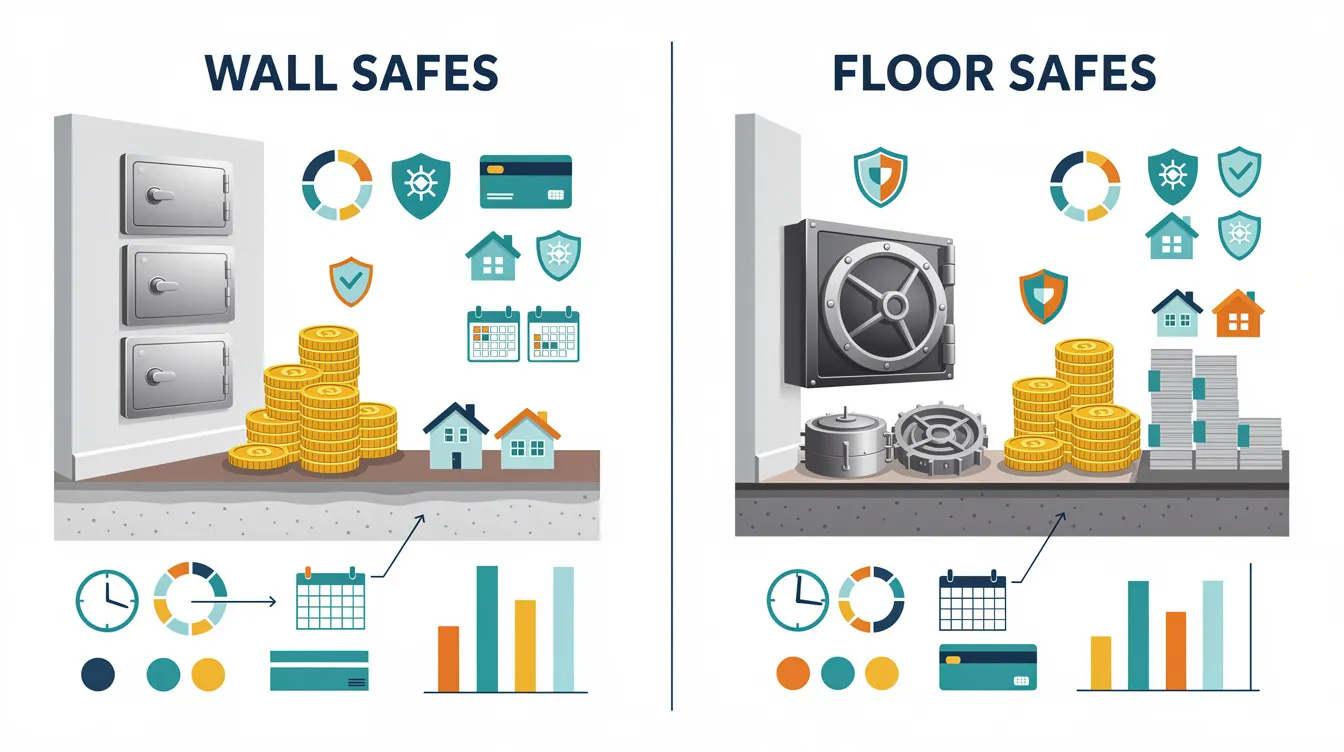
When comparing the costs of wall safes and floor safes:
- Floor safes are typically more expensive due to their construction and installation requirements.
- A basic wall safe can start at approximately £66 ($83 USD).
- A basic floor safe starts at about £115 ($145 USD).
- The overall cost of installing a safe includes the cost of professional installation.
- Installation costs are generally higher for floor safes due to the complexity of embedding them in concrete.
Wall safes are generally cheaper because they are smaller and have thinner walls, reducing material and installation costs.
However, it is essential to balance the cost with your security needs to ensure that you choose the right safe for your valuables. Investing in a high-quality safe that meets your security requirements is crucial for protecting your valuable items and ensuring peace of mind.
Budget-Friendly Options
For budget-minded buyers, there are numerous models of safes that offer essential security features without breaking the bank. Recommended wall-mounted safes include the Gardall SL4000, which is both affordable and reliable. Brands like Hollon, Liberty Safe, and V-Line also offer budget-friendly options for wall safes.
For built-in safes, the BlumSafe Professional Jr and BlumSafe Professional are top recommended options. While the installation of safes can require a substantial financial investment, choosing budget-friendly models ensures you don’t sacrifice essential security features. This balance allows you to protect your valuables without overspending, providing peace of mind at a lower cost.
Long-Term Investment
Investing in higher-quality safes can yield better long-term protection, as they typically offer enhanced security features. Premium floor safes often have:
- Reinforced steel construction, contributing to their durability and security over time
- Design to withstand various threats
- Robust protection for your valuables
Safes that offer a good balance between price and features often include biometric locks and fire resistance, which enhance their security capabilities. By investing in a high-quality safe, you ensure that your valuables are protected for years to come, providing long-term peace of mind and security.
Selecting the Right Safe for Your Needs
Wall safe vs floor safe – cost analysis
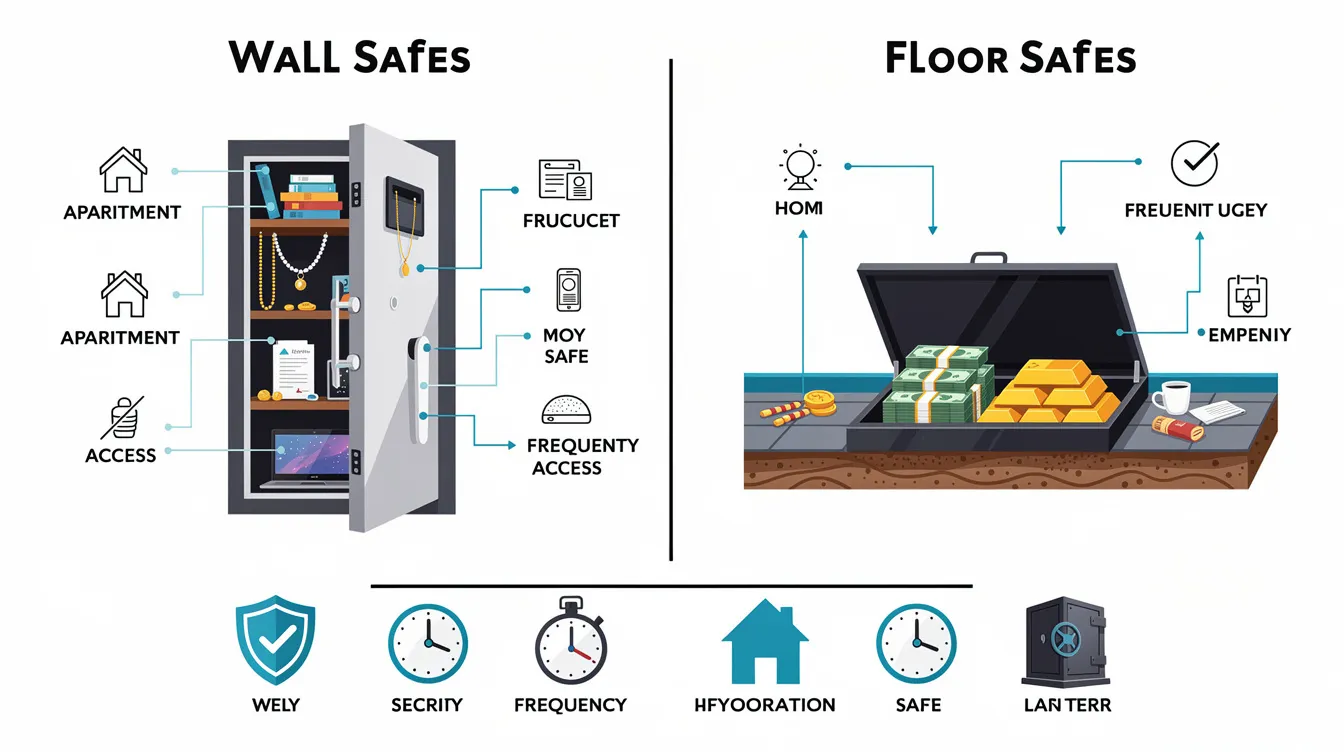
Selecting the right safe for your needs involves considering the primary purposes of wall safes and floor safes, as well as the types of items you plan to store. Wall safes are ideal for securing jewelry, cash, important documents, small electronics, keys, and guns. Floor safes, generally offering better security, are suitable for high-value items that require maximum protection.
When choosing between wall safes and floor safes, consider their similarities, differences, and unique advantages. Some electronic safes with keypad locks offer access for multiple users, allowing each person to have their own code for added convenience and security—an important feature for households or small groups. Factors such as space availability, security needs, and personal preferences will guide your decision. Ensuring that the safe you select meets your specific requirements will provide the best protection for your valuables and peace of mind.
Space Considerations
Evaluating available space is crucial when choosing a safe. Key considerations include:
- For wall safes, measuring the wall depth is essential to ensure it fits well without protruding or compromising structural integrity.
- Standard wall studs may limit the size of the safe you can install.
- Careful planning can help you find a suitable spot that offers both security and accessibility.
Floor safes, on the other hand, require:
- Assessing floor space
- Planning for their installation in a location that provides both security and convenience
- Taking accurate measurements to ensure the safe fits appropriately without affecting the floor’s structural integrity.
By thoroughly evaluating the space available, you can optimize storage efficiency and ensure that your safe is both secure and discreet. Don’t forget to double check your measurements.
Intended Use & Contents
Identifying the items you plan to store in your safe is another important consideration. Different safes are designed to accommodate various sizes and types of valuables, such as:
- Cash
- Jewelry
- Important documents
- Small firearms
- Other valuables Knowing what you intend to store will significantly influence the type and size of the safe you need.
It’s also important to consider future storage needs to avoid outgrowing your gun safe quickly. For example, if you plan to store firearms or expect to acquire more valuable documents over time, choosing a larger safe with adjustable compartments can provide flexibility for future needs. By planning ahead, you ensure that your safe remains effective for years to come.
Tips for Effective Safe Installation
Proper installation is key to ensuring that your wall or floor safe provides maximum protection. Following the manufacturer’s installation guide is essential to ensure the safe functions correctly and effectively. Whether you opt for a wall safe or a floor safe, precise installation is crucial to maintaining its security features and ensuring it remains discreet.
Consulting professionals for installation can provide additional benefits, such as specialized equipment and expertise to securely embed the safe without damaging your property. Proper installation not only enhances the safe’s security but also ensures it blends seamlessly into your home’s design, providing both protection and aesthetic appeal.
Professional vs DIY Installation
Professional installation offers several advantages, including:
- The use of specialized equipment to move heavy safes safely and securely.
- Ensuring that the safe is installed without causing damage to floors or walls, maintaining the structural integrity of your home.
- Providing peace of mind, knowing that your safe is installed correctly and securely.
However, for those who prefer a DIY approach, basic carpentry tools are necessary. While DIY installation can save money, it’s important to weigh the risks and potential negative impacts of improper installation. Incorrectly installed safes can compromise security and even damage your property, so it’s crucial to follow installation guidelines carefully and consider professional help if needed.
Concealment Strategies
Concealing your safe effectively can greatly enhance its security. Wall safes can be hidden behind paintings, mirrors, or furniture, making them difficult for burglars to find. Incorporating a concealed safe into your home decor not only secures your valuables but also keeps them out of sight, providing additional peace of mind.
Floor safes can be concealed using the following methods:
- Placing them under carpets, rugs, or heavy furniture (partially or fully concealed).
- Modifying furniture to include secret compartments.
- Creating false bottom drawers.
- Incorporating hidden compartments into existing furniture.
These strategies enhance the security and discretion of your safe.
These creative conceal strategies ensure that your safe remains hidden and secure, protecting your valuables from theft. You can create a more effective approach by implementing these methods.
Maintenance & Security Practices
Regular maintenance is crucial to ensure that your safe functions properly and continues to provide maximum protection. Key maintenance tasks include:
- Regular use of testing the locks to identify any issues before they escalate, ensuring that your safe remains secure.
- Cleaning to remove dust and control moisture, which can cause malfunctions in locking mechanisms.
- Controlling the environment around the safe to prevent damage and maintain proper function.
Enhancing security by changing the combination of your safe every six to twelve months is also recommended. Using a dehumidifier or silica gel inside the safe can prevent moisture damage, ensuring that your valuables remain protected. By following these maintenance and security practices, you can ensure that your safe provides reliable protection for years to come.
Summary
Choosing the right safe for your home involves careful consideration of various factors, including the type of valuables you plan to store, available space, and your specific security needs. Wall safes offer convenience and ease of access, while floor safes provide superior security and protection against fire and water. Both types of safes have unique advantages and limitations, and selecting the right one depends on your individual requirements.
Ultimately, investing in a high-quality safe that meets your security needs is crucial for protecting your valuable items and ensuring peace of mind. By understanding the differences between wall safes and floor safes, considering cost implications, and following proper installation and maintenance practices, you can make an informed decision that provides the best protection for your home.
Frequently Asked Questions
What are the main differences between wall safes and floor safes?
The main differences between wall safes and floor safes lie in their installation and security features; wall safes are discreet and easily accessible, while floor safes provide enhanced security and protection against environmental hazards like fire and water. Choose based on your specific security needs and the location’s requirements.
How much does it cost to install a wall safe versus a floor safe?
Installing a wall safe typically costs around £66 ($83 USD), making it the more affordable option compared to floor safes, which start at approximately £115 ($145 USD) and involve higher installation costs due to their complexity.
What items are best stored in wall safes?
Wall safes are best for securing jewelry, cash, important documents, small electronics, keys, and firearms, offering both security and easy access. Choose a wall safe to keep your valuable items protected.
Are floor safes fireproof and waterproof?
Yes, many floor safes provide fire and water protection, ensuring high-value items are safely stored. It’s essential to check the specifications of each safe to confirm its protective features.
Can I install a safe by myself, or should I hire a professional?
It is advisable to hire a professional for safe installation to ensure it is securely embedded and integrated into your home, preventing any potential damage. DIY installation can be done but may compromise safety and effectiveness.