Electrical fires are dangerous and can happen in any home. Learn how to prevent electrical fires at home by tackling common hazards and following safety practices. This article covers everything from proper appliance use to warning signs of trouble.
Key Takeaways
- Outdated wiring and overloaded circuits are significant hazards that can lead to electrical fires; regular inspections and upgrades are essential for safety.
- Proper use and maintenance of electrical appliances, cords, and extension cords can prevent overheating and reduce the risk of fire.
- Installing safety devices like GFCIs and AFCIs, alongside educating family members about electrical safety, enhances protection against electrical hazards.
Understanding Electrical Fire Hazards
Prevent electrical fires at home – key takeaways
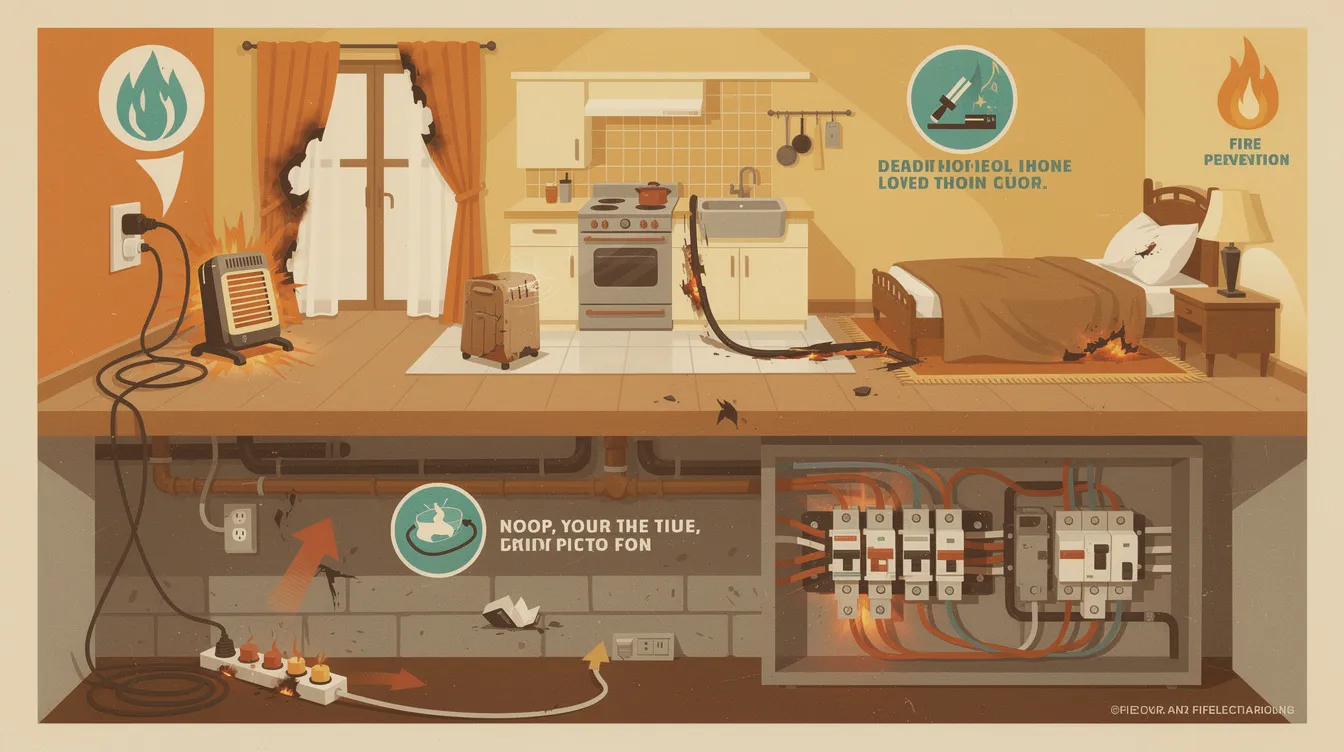
Electrical fires are among the leading causes of residential fire deaths, especially for older adults. In 2021 alone, these fires caused over $1.2 billion in damages and claimed 295 lives. Homeowners must be aware of the common hazards that contribute to these fires, and they should also know how to contact the local fire department in case of an emergency.
One of the most significant fire hazards is outdated electrical wiring. Homes built before the 1980s often have old wiring and electrical systems that can’t handle the demands of modern appliances. Old wiring can create fire hazards and electric shock risks, especially since older systems often lack a grounding wire, increasing the risk of electrical hazards. It can also lead to expensive damage to appliances. Knob and tube wiring and aluminum wiring, commonly found in older homes, are particularly prone to overheating and should be evaluated by a licensed electrician. Knob-and-tube systems used ceramic knobs to support and insulate wires, but these components are now considered outdated and potentially hazardous. Additionally, many older homes still use fuses instead of modern circuit breakers; homes with fuses are more prone to electrical issues and should be upgraded for safety and reliability. Ensuring your home’s wiring is up to date is crucial for safety, and regular inspection and upgrades are recommended to reduce the risk of fire hazards and electric shock.
Overloaded circuits are another major concern. Plugging too many devices into a single outlet can cause the circuit to overheat, leading to potential electrical problems and increasing the risk of fire. Be mindful of the electrical load on your circuits and avoid overload outlets in addition to additional outlets.
Warning signs of electrical problems, such as warm or discolored outlets and the smell of burning plastic, should never be ignored. These indicators suggest that your home’s wiring may be at risk and should be addressed promptly by consulting a licensed professional.
Proper Use of Electrical Appliances
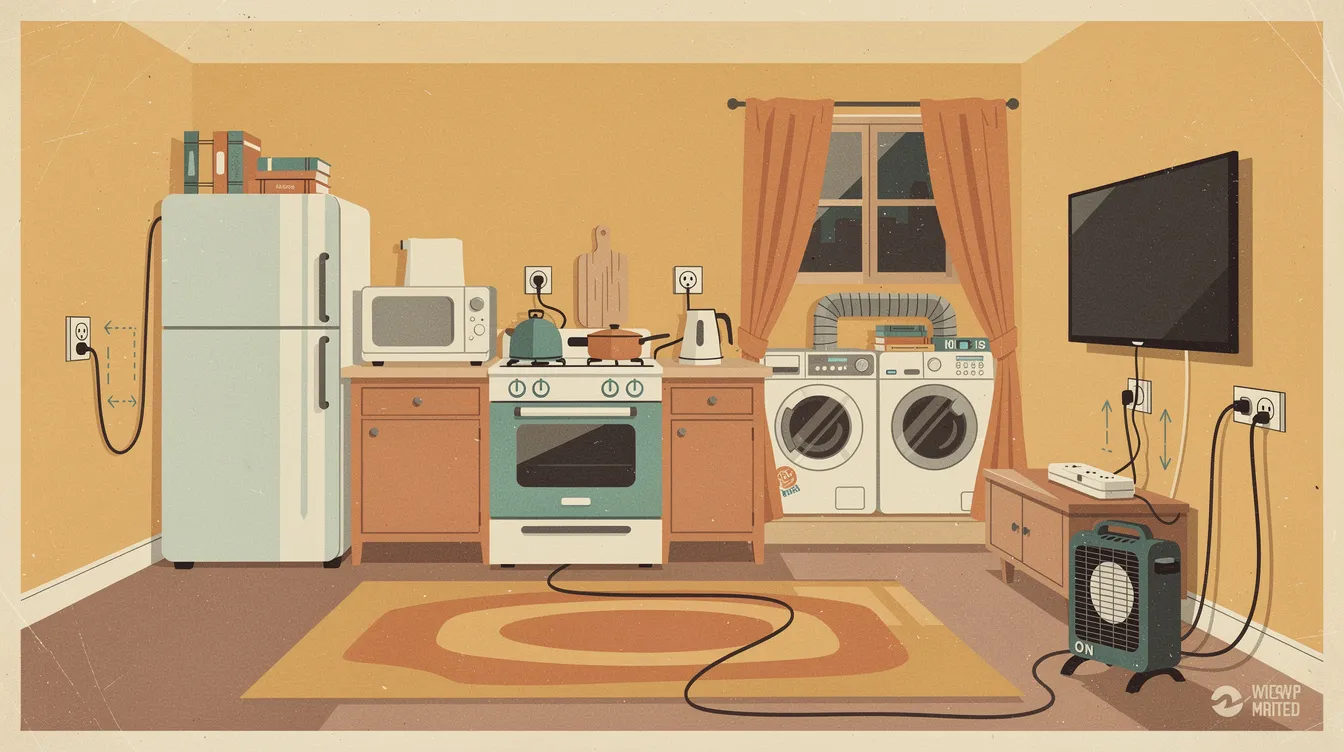
Safe use of electrical appliances is a cornerstone of electrical fire safety. Major appliances should always be connected directly to a wall outlet to ensure they receive the necessary power without overloading the circuit. Using extension cords for major appliances can lead to overheating and should be avoided.
All electrical equipment should be used according to manufacturer guidelines, kept dry, and well-ventilated to prevent hazards such as shocks, overheating, and damage to sensitive electronics.
Unplugging unused appliances helps minimize electrical risks and prevent overheating. This simple habit can greatly reduce the chances of an electrical fire starting in your home. Additionally, always keep flammable materials away from appliances. Items like paper, cloth, and other combustibles can easily catch fire if they come into contact with one heat producing appliance.
Adhering to instruction manuals for your appliances and using the correct wattage for light fixtures and lighting is also important. A bulb with too high a wattage can cause overheating and potential fires. Following these guidelines ensures that your light bulbs operate safely and efficiently.
Maintaining Electrical Cords and Plugs
Prevent electrical fires at home – proper use of electrical appliances
Regularly inspecting and maintaining electrical cords and plugs is vital to prevent fire risks. Key points to consider include:
- Replace or repair damaged cords immediately, especially those with fraying or cracking.
- Understand that damaged cords can lead to overheating.
- Recognize that overheating increases the risk of a fire.
Proper placement of electrical cords is crucial. Guidelines include:
- Do not place cords under carpets or rugs, as this can cause them to overheat.
- Avoid resting cords on hot surfaces.
- Do not wrap cords tightly around objects, as this can cause stretching and overheating.
Selecting the right cords for the specific electrical load is essential. Consider the following:
- For heavier electrical loads, use a 14 or 12 AWG cord.
- Avoid cords that are too long or not rated for the electrical load, as they can lead to power loss and overheating.
- Ensure that your electrical cords are appropriate for the appliances they are connected to.
Safe Use of Extension Cords and Power Strips
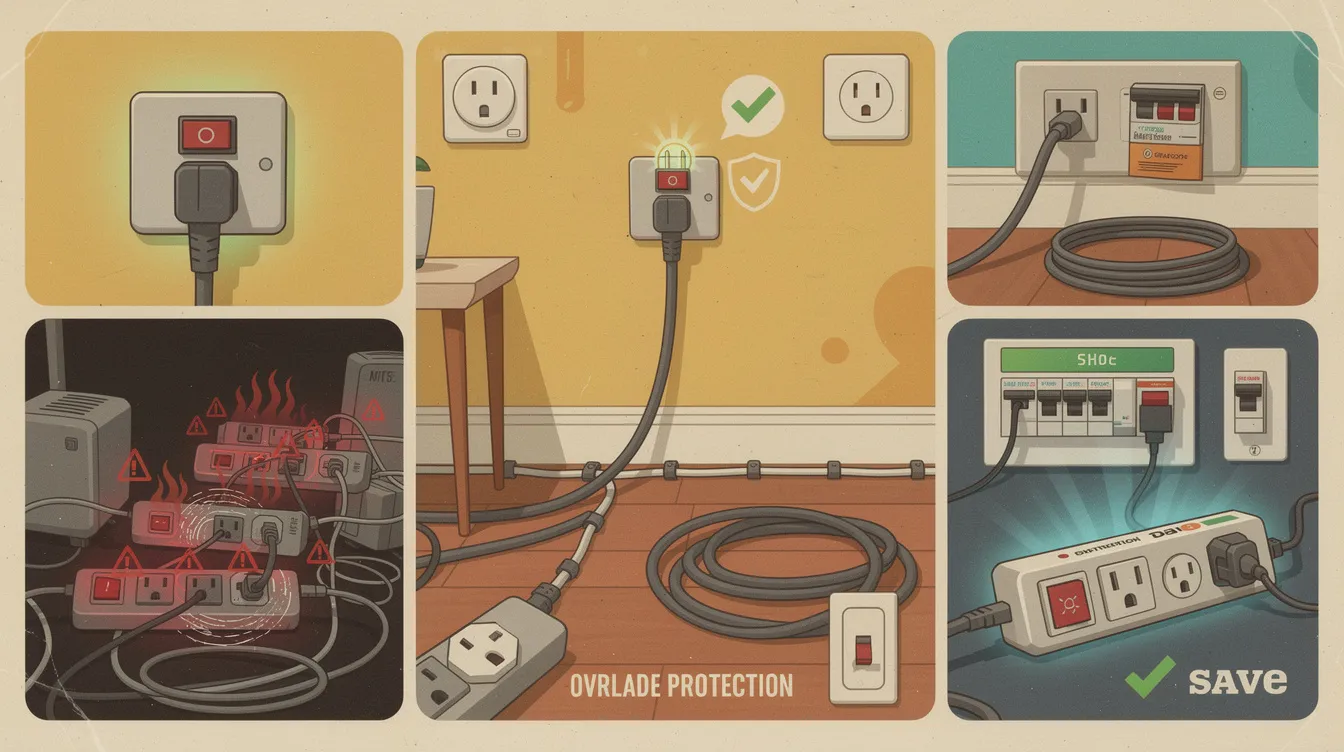
Extension cords and power strips are convenient but can pose significant fire hazards if not used correctly. Here are some important safety tips:
- Overloading outlets is a major hazard, with more than 3,300 house fires each year caused by power strips and extension cords.
- Avoid using extension cords with worn or damaged insulation.
- Replace extension cords immediately if they show signs of wear.
- Use extension cords only on a temporary basis and never as a permanent solution.
Safety guidelines for plugs, outlets, and power strips:
- Plugs should be fully inserted into sockets to ensure safety.
- Replace the outlet if a plug does not fit snugly to prevent potential hazards.
- Only use power strips with internal overload protection to reduce the risk of fire from overloads.
- Reserve power strips for low-voltage electronics and not for high-power appliances.
Advanced power strips can also help reduce energy consumption by shutting off devices when not in use. Adhering to these guidelines ensures safe and effective use of extension cords and power strips.
Installing Safety Devices
Prevent electrical fires at home – safe use of extension cords and power strips
Safety devices like Ground Fault Circuit Interrupters (GFCIs) and Arc Fault Circuit Interrupters (AFCIs) significantly enhance electrical fire safety. GFCI receptacle outlets are designed to cut off power quickly to prevent electric shocks, making them crucial in areas prone to water exposure, such as kitchens and bathrooms. Both GFCIs and AFCIs are specifically designed to protect people from electrical shocks and fires by detecting faults early and stopping dangerous situations before they cause harm.
AFCIs help prevent fires caused by electrical faults by detecting arcing conditions and shutting off power before overheating occurs. These devices are essential for preventing fires that can spread quickly through damaged wiring behind walls, and they provide afci protection.
Professional installation of GFCIs and AFCIs ensures safety and compliance with electrical codes. Regular testing of GFCIs ensures they are functioning correctly and providing adequate protection.
Regular Electrical Inspections
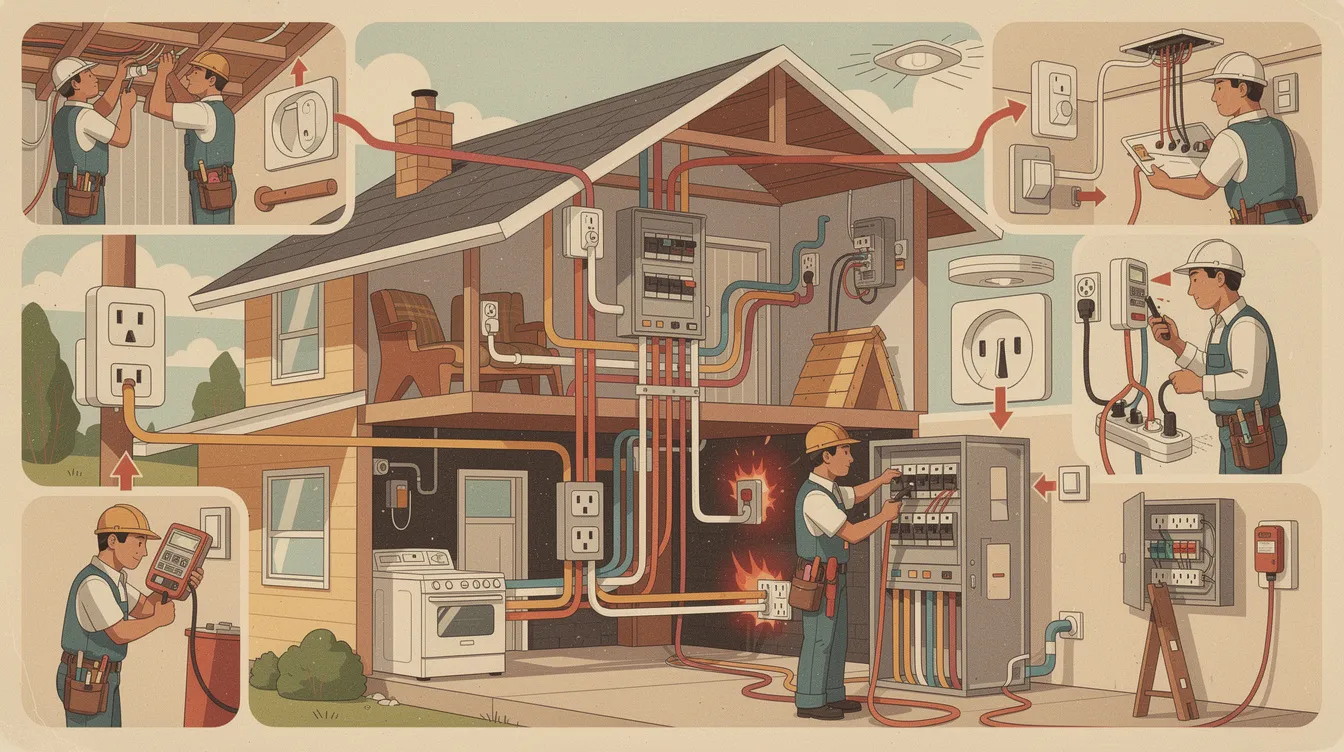
Regular inspections of your home’s electrical system by a licensed electrician are vital to identify and fix potential issues before they become dangerous. Early detection of electrical issues during these inspections can prevent serious hazards and help prevent electrical fires at home. Homes older than 40 years should be inspected every five years; newer homes typically require inspections every ten years.
A licensed electrician or qualified electrician should perform these inspections to ensure your electrical system is safe and up to code. They can appropriately assess issues with old house wiring and recommend necessary upgrades for your electrical service.
If you notice warning signs of electrical problems, such as flickering lights or warm outlets, have your system evaluated by a licensed professional. Regular safety checks on electrical devices, including power strips, are essential for maintaining a safe home environment.
Warning Signs of Electrical Problems
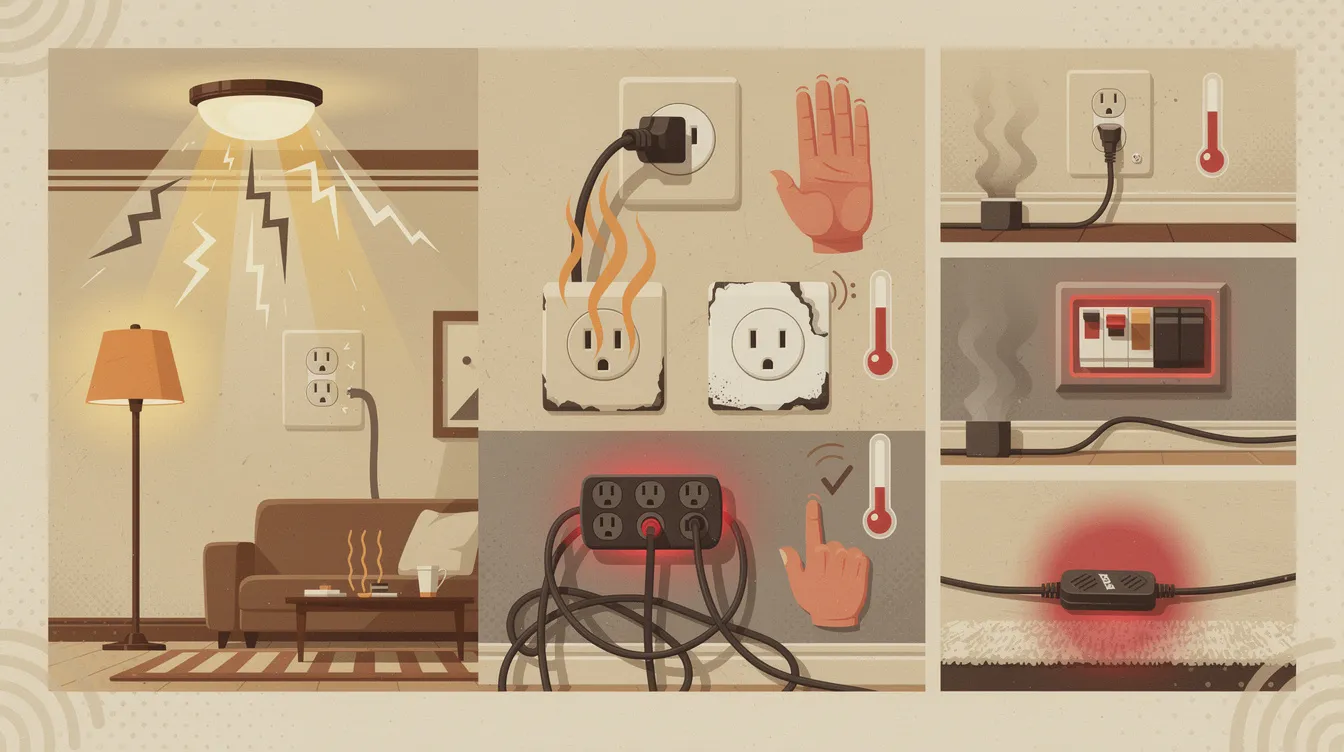
Recognizing warning signs of electrical problems can prevent potential fires and ensure the safety of your home. Common signs include flickering lights, warm outlets, and frequent circuit breaker trips. Flickering, dimming, or buzzing lights may signal electrical issues in older homes. These symptoms should not be ignored, as they could indicate underlying problems.
Visible signs of electrical issues include:
- Scorch marks or rust in the circuit breaker box, hinting at serious underlying issues.
- Buzzing noises near outlets, which may indicate wiring issues or arcing, posing a fire risk.
- Burning odors from the electrical panel, signaling overheating components and potential fire hazards.
- Warm or discolored switches, which can indicate faulty wiring, loose connections, or overheating and should be checked by a professional.
If you notice frequent tripping of circuit breakers, it often suggests an overloaded circuit or a malfunctioning breaker that needs immediate attention. Promptly addressing these warning signs by seeking professional help can significantly reduce fire risks.
Keeping Electrical Devices Away from Water
Keeping electrical devices away from water prevents electric shock and fires. Contact between electrical devices and water creates a dangerous path for electricity, increasing the risk of electric shock. Water exposure also significantly increases the risk of electrocution, making it critical to keep electrical devices away from water sources. Water can cause electrical outlets to malfunction, leading to short circuits and potential power outages.
Ensure your hands are dry when handling electrical appliances to minimize the risk of electrical shock. Position electrical devices away from sinks, bathtubs, and other water sources to reduce the risk of water exposure.
Operating electrical devices with wet hands or while standing on damp surfaces should be avoided to prevent accidents.
Ensuring Proper Ventilation for Appliances
Adequate space for air circulation around appliances is important because:
- It prevents overheating and potential fire hazards.
- Appliances should not be placed inside enclosed spaces, as this can lead to overheating.
- Proper airflow reduces the risk of electrical fires.
- It enhances the efficiency of your appliances.
Regularly cleaning exhaust fans on appliances can help maintain their efficiency and prevent overheating. Following these practices ensures your appliances are working properly and efficiently.
Educating Family Members on Electrical Safety
Educating all household members, including small children, on basic electrical safety practices prevents accidents. Teaching children about electrical hazards significantly reduces the risk of accidents in the home. Regular discussions about electrical safety reinforce proper behavior and awareness among family members.
Demonstrating how to properly use electrical appliances ensures family members understand safe practices. As part of electrical safety education, teach children how to safely operate a light switch to help prevent electrical fires at home. A family emergency plan that includes responses to electrical emergencies prepares all members for potential crises.
Visual aids, such as reminders or charts, can enhance family members’ understanding of electrical safety measures.
Summary
Summing up, electrical fire safety is a crucial aspect of home safety that requires vigilance and proactive measures. By understanding common hazards, properly using and maintaining electrical appliances, and recognizing warning signs, you can significantly reduce the risk of electrical fires in your home.
Remember, regular inspections by a licensed electrician, installing safety devices, and educating family members on electrical safety are key components of a comprehensive fire prevention strategy. Stay informed, stay safe, and make electrical fire safety a priority in your household.
Frequently Asked Questions
How often should I have my home’s electrical system inspected?
You should have your home’s electrical system inspected every five years if it is older than 40 years, and every ten years for newer homes. Regular inspections ensure safety and compliance with current standards.
What are the warning signs of electrical problems?
Flickering lights, warm outlets, frequent circuit breaker trips, buzzing noises near outlets, and burning odors from the electrical panel are critical warning signs of electrical problems. Address these issues immediately to ensure safety.
Why is it important to use the correct wattage for light fixtures?
It is crucial to use the correct wattage for light fixtures to prevent overheating and the risk of fire. Always adhere to the manufacturer’s recommended wattage for safety.
What should I do if I notice my circuit breaker frequently trips?
If your circuit breaker frequently trips, it’s essential to address the issue promptly as it may indicate an overloaded circuit or a faulty breaker. Contact a licensed professional to evaluate and resolve the problem.
How can I educate my family about electrical safety?
Educating your family about electrical safety involves regular discussions, demonstrating proper appliance use, creating an emergency plan, and utilizing visual aids for better understanding. Implementing these strategies will help ensure everyone’s safety.