Worried about your pet’s safety at home? You’re not alone. In this guide, we cover essential tips to ensure a hazard-free environment for your furry friends, focusing on pet safety at home. From pet-proofing rooms to securing dangerous items, learn how to keep your pets safe and sound.
Key Takeaways
- Assess your home from your pet’s perspective to identify and eliminate potential hazards.
- Establish safe zones and restrict access to harmful areas by using gates and closed doors.
- Regularly check for hazards and secure medications and cleaning products to keep your pets safe.
Assessing Your Home from a Pet’s Perspective
Pet safety at home – key takeaways
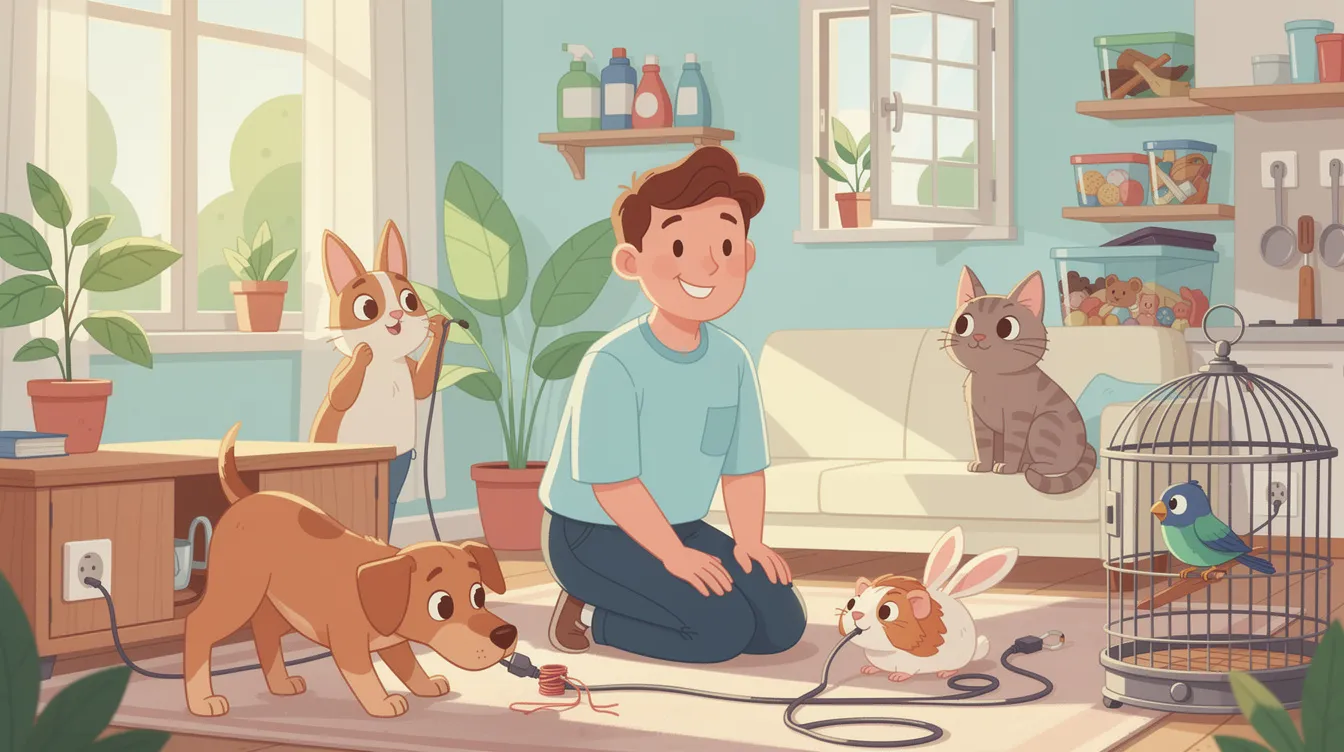
When it comes to pet proofing, the first steps are to get down to your pet’s level—literally. Imagine navigating your home as your pet does. What do you see? What items might tempt chewing or be knocked over? This perspective is crucial to identifying potential hazards in nature that you might otherwise overlook, including your pet’s reach.
Identifying harmful items and valuable objects in your home that could pose a danger to pets is crucial. Common hazards include toxins, choking hazards from small objects, and areas where hidden dangers might lurk. Pets, especially curious pets, are notorious for exploring every nook and cranny. Ensure that you check small spaces and nooks where pets might hide or get stuck, such as behind furniture or appliances.
To ensure your pet’s safety at home, consider the following tips:
- Pay special attention to your pet’s paws, noses, and tails when shutting doors or moving furniture to avoid accidents.
- Always check for pets in spaces like laundry rooms before closing doors to prevent accidental confinement.
- Regularly assess your home for potential hazards to ensure ongoing safety for your pets.
Remember, pet proofing is not a one-time task. Regular assessments and adjustments are necessary to keep up with your pet’s changing behavior and growth. Staying vigilant and proactive helps keep your home a safe haven for your beloved pets.
Establishing Safe Zones for Pets
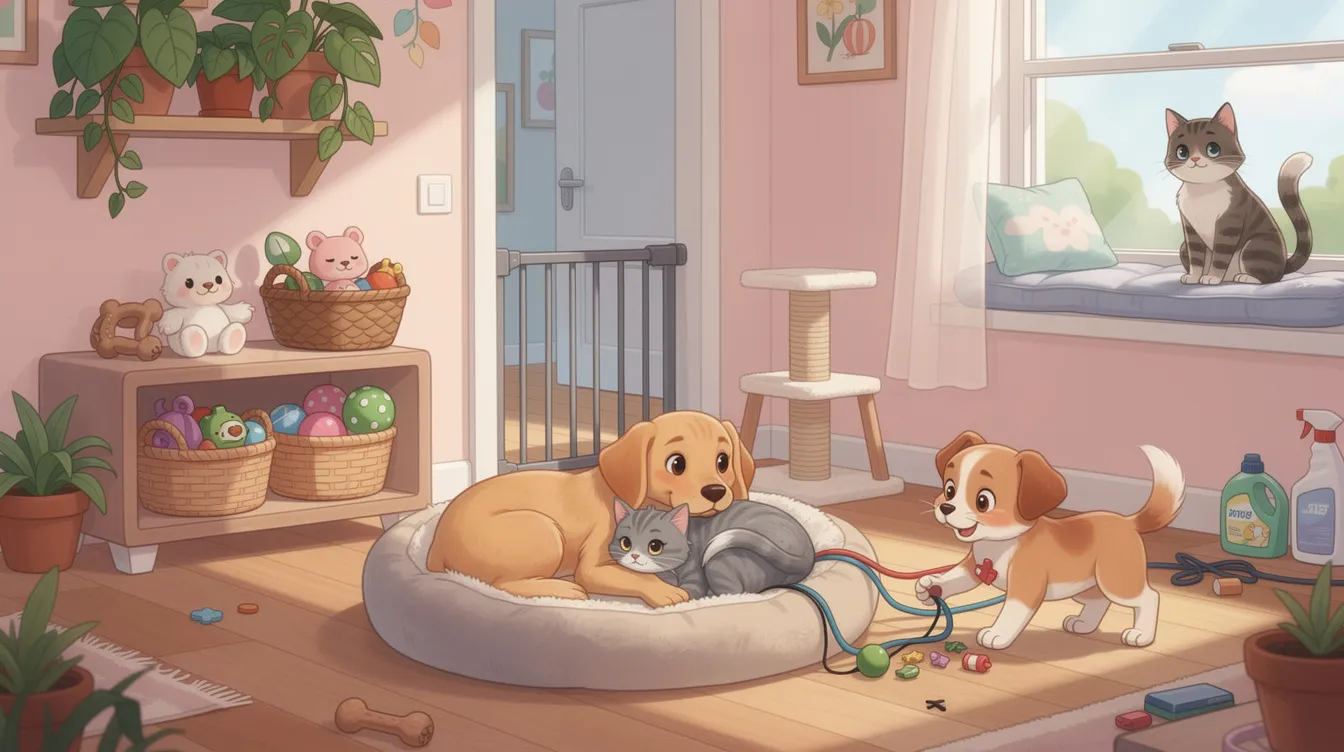
Creating designated safe zones in your home allows your pets to roam freely without encountering harmful substances or objects. This is particularly important for many dogs and cats who love to explore and get into everything. By establishing these zones, you provide a controlled environment where your pets can play and relax safely.
To create these zones:
- Start by blocking small spaces and ensuring harmful items are stored out of reach.
- Use gates and closed doors to restrict access to areas that contain dangerous items or substances.
- Place plants on high shelves or use hanging pots to prevent pets from reaching and damaging them.
- Provide climbing structures and elevated perches to fulfill a cat’s natural climbing instincts and provide entertainment.
To keep your pets safe, consider the following:
- Regularly inspect areas where pets may hide or explore to prevent access to dangerous items.
- Train your pets to understand boundaries to keep them safe around hazardous areas.
- Establish and maintain safe spaces to reduce your pets’ exposure to dangerous areas when unsupervised.
Securing Trash Cans and Food Storage
Pet safety at home – establishing safe zones for pets
Food storage is crucial in preventing pets from ingesting harmful substances. Certain common human foods like chocolate and onions are toxic to pets and should be stored securely to prevent ingestion. Some foods that are safe for humans can be harmful or even fatal to pets, so always check before sharing any food with your pet. Ensuring that all food, including wrappers, is kept out of reach is an essential part of home pet proofing.
Using pet-proof trash cans with a secure lid can significantly reduce the risk of pets consuming dangerous items. Keep trash cans covered or grab a sign stored in latched cabinets to prevent pets from scavenging.
These steps not only protect your pets but also help maintain a clean and organized home environment.
Managing Electrical Cords and Small Items
Electrical cords can be particularly tempting for chewing, which can lead to potential shocks or burns for pets. To protect your pets, ensure that all electrical cords are out of reach. Use cord organizers or protective covers to conceal these cords. These simple steps can prevent your pets from getting hurt and keep your home safer.
Small items such as small toys, batteries, and coins represent choking hazards and need to be kept out of reach of pets. Store small items on higher ground or in drawers to minimize the risk of pets ingesting them. By managing these items, you protect your pets from potential harm and keep your home tidy.
Choosing Non-Toxic Plants
Pet safety at home – managing electrical cords and small items
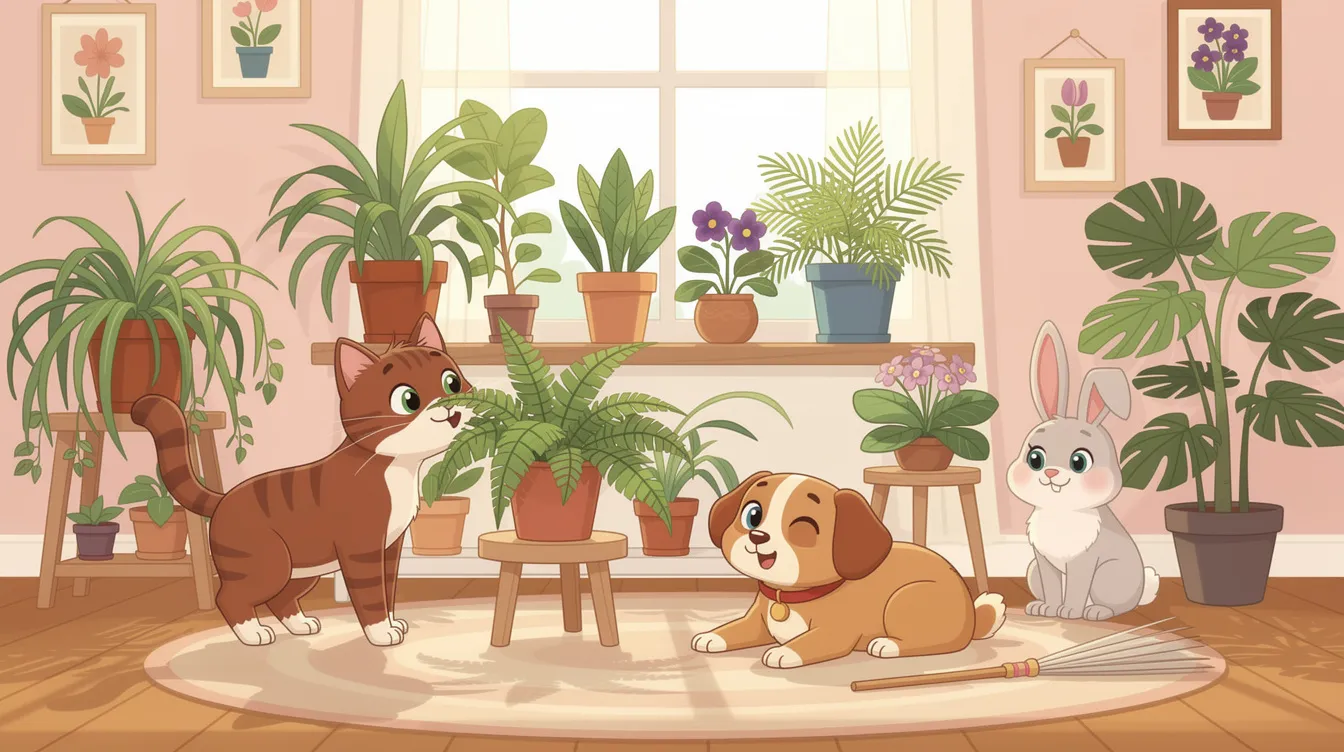
Houseplants add beauty and freshness to our homes, but some can be dangerous to pets. Awareness of toxic plants, such as poisonous lilies and sago palms, which can severely harm pets, is crucial. Removing potentially toxic houseplants from accessible areas is a critical step in home pet proofing.
Certain plants like the Peace Lily and Sago Palm are known to contain harmful toxins for pets, so they should be avoided. Instead, opt for non-toxic plants that are safe for both dogs and cats. Houseplants like the Money Tree and Christmas Cactus are not only beautiful but also safe for pets.
Consult ASPCA guidelines for pet-friendly plants to ensure safety for your furry friends. This will help you choose plants that enhance your home without posing a risk to your pets’ health.
Proper Storage of Medications and Cleaning Products
Medications and household cleaners must be stored securely to prevent accidental ingestion by pets. To minimize the risk:
- Use childproof latches on cabinets to prevent pets from accessing dangerous chemicals and medications.
- Keep these items on high shelves.
- Store them in secure drawers.
All medications and cleaning products should be kept well out of your pet’s reach to prevent accidental ingestion.
Dispose of expired or unused medications properly to prevent pet access, as many pet medications can attract pets. Proper storage and disposal of these items are essential to keep your pets safe.
Storing these substances securely helps in maintaining a safe environment for your pets and gives you peace of mind knowing that they are protected from potential hazards.
Crate Training for Safety and Comfort
Crate train your pets provides them with a secure space and assists with potty training. By using treats and positive reinforcement, you can help your pets accept their crates and see them as a safe place. Gradually increase the time your pet spends inside the crate and use treats to encourage acceptance.
This method not only provides safety but also offers comfort to your pets, giving them their own space to retreat to when they need to feel secure.
Keeping Laundry and Shoes Tucked Away
Storing shoes and laundry in closed spaces prevents pets from accessing these items and protects their health. Pets often chew on items they find on the floor, including laundry and shoes, which can lead to health issues if swallowed.
By using closed storage for shoes and keeping laundry out of reach, you reduce the likelihood of pets damaging these items or consuming harmful components. This simple step can prevent unnecessary vet visits and keep your home organized.
Monitoring Access to Dangerous Areas
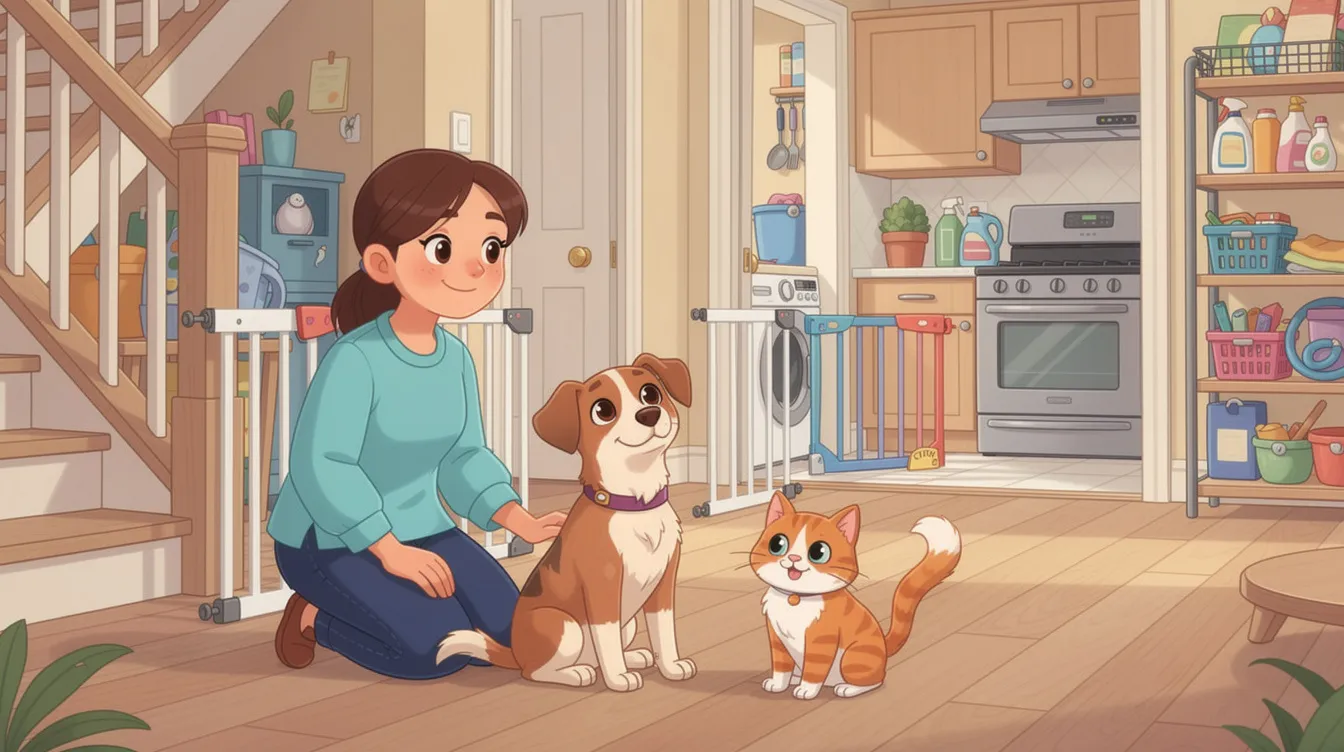
Monitoring access to dangerous areas is crucial for pet safety. Methods to restrict pet access include:
- Using gates and closed doors to restrict access to hazardous areas such as the garage or kitchen.
- Keeping the bathroom door closed to prevent pets from drinking from the toilet.
- Using toilet locks to prevent pets from accessing the toilet bowl.
To keep pets safe and protect your home:
- Secure trash can lids and use child-proof locks on lower cabinets to prevent pets from accessing hazardous items.
- Ensure screens on windows are secure to prevent pets from pushing them open.
- Make rooms containing valuable items off-limits and pet-proof them.
Additionally, installing a secure fence around your yard is essential to prevent pets from escaping and to protect them from external hazards such as traffic, predators, or nearby water bodies.
By taking these steps, you can prevent your pets from encountering dangerous areas and ensure their safety while bringing home your house pets.
Providing Safe Entertainment Options
Keeping toys accessible for your pets is important to prevent them from damaging personal items. Store pet toys in accessible baskets to ensure they have plenty of options to keep them entertained.
Engaging activities like puzzle feeders and nose work games can make mealtime fun and stimulate your pets mentally. These activities not only keep your pets occupied but also provide mental and physical exercise, contributing to their overall well-being.
Maintaining a Clean Water Supply
To keep your pets safe and healthy:
- Always keep the toilet lid down to prevent pets from drinking harmful chemicals.
- Close toilet lids to prevent pets from accessing harmful substances.
- Replace and refill water bowls regularly to ensure your pets have clean drinking water.
Pet owners should ensure their pets’ water is cool and clean to make it more appealing. This simple habit ensures your pets stay hydrated and healthy.
Regularly Checking for Potential Hazards
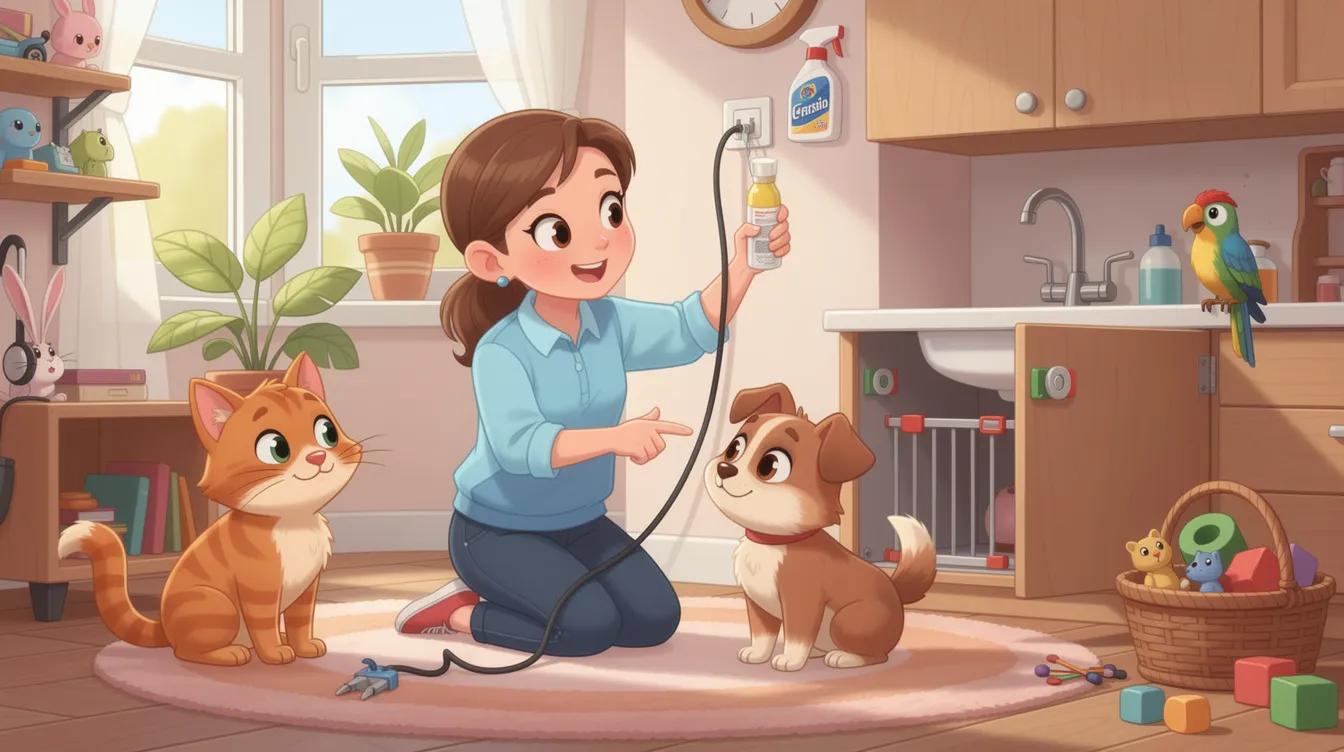
Regularly checking for potential hazards in the home is crucial to ensure the safety of your pets. Regularly checking and maintaining your plant collection will help ensure that no harmful species are accessible to pets.
To keep pets safe, follow these precautions:
- Store human healthcare products securely away, as pets may find them appealing.
- Be aware that cleaners can cause allergic reactions, skin irritations, watery eyes, and difficulty breathing in pets.
- Medications can be fatal if ingested by pets, so they should be securely stored in the bathroom.
By conducting regular checks and taking appropriate measures, you can mitigate hazards and ensure a careful and safe environment for your pets and contact animals.
Summary
In summary, ensuring pet safety at home involves a variety of steps, from identifying potential hazards to implementing specific safety measures. Regular assessments, secure storage of dangerous items, and providing safe entertainment options are all crucial elements in maintaining a safe environment for your pets.
By following these tips, you can create a home that is not only safe but also comfortable and enjoyable for your furry friends. Remember, a safe pet is a happy pet, and taking these precautions will give you peace of mind knowing your pets are protected.
Frequently Asked Questions
What are some common household items that can be hazardous to pets?
Household cleaners, medications, electrical cords, and foods like chocolate and onions can be harmful to your pets. It’s essential to keep these items out of their reach to ensure their safety!
How can I create a safe zone for my pet?
To create a safe zone for your pet, block off small spaces and keep harmful items out of reach, using gates and closed doors to limit access to potentially dangerous areas. This simple setup helps ensure your pet stays safe and secure.
What are some non-toxic plants safe for pets?
No worries, you can safely have a Money Tree or a Christmas Cactus around your pets. Just remember to check the ASPCA guidelines for any other pet-friendly plants you might want!
How can I prevent my pet from accessing the trash can?
To keep your pet out of the trash, opt for pet-proof trash cans or store them in cabinets that latch shut. This way, you can avoid any messy scavenging!
Why is crate training beneficial for pets?
Crate training is beneficial because it gives your pet a cozy, secure space while also making potty training easier. Plus, it helps them feel safe and comfortable in their environment.