Securing your home’s perimeter is your first line of defense against intrusions. This home perimeter security guide will help you understand essential steps and tools you need, such as physical barriers, surveillance, and alarm systems. Expect practical advice tailored to enhance your safety and peace of mind, with strategies that apply to various facilities, including homes, buildings, and other properties.
Key Takeaways
- Home perimeter security acts as the first line of defense against intrusions, focusing on deterrence, detection, delay, and denial of unauthorized access.
- Key components of effective perimeter security include physical barriers (like fences and gates), surveillance systems, and alarm systems, each playing a critical role in maintaining overall safety.
- Effective perimeter security also involves identifying and securing potential attack surfaces, such as doors, windows, and other access points, to prevent unauthorized entry.
- Integrating advanced technologies and smart home features enhances home security by improving detection accuracy and allowing for proactive monitoring and control over one’s property.
- Access control systems at the perimeter rely on credentials—such as ID cards, badges, or temporary passes—to verify identity and authorize entry, ensuring only approved individuals can access the premises.
Defining Home Perimeter Security
Home perimeter security guide – key takeaways
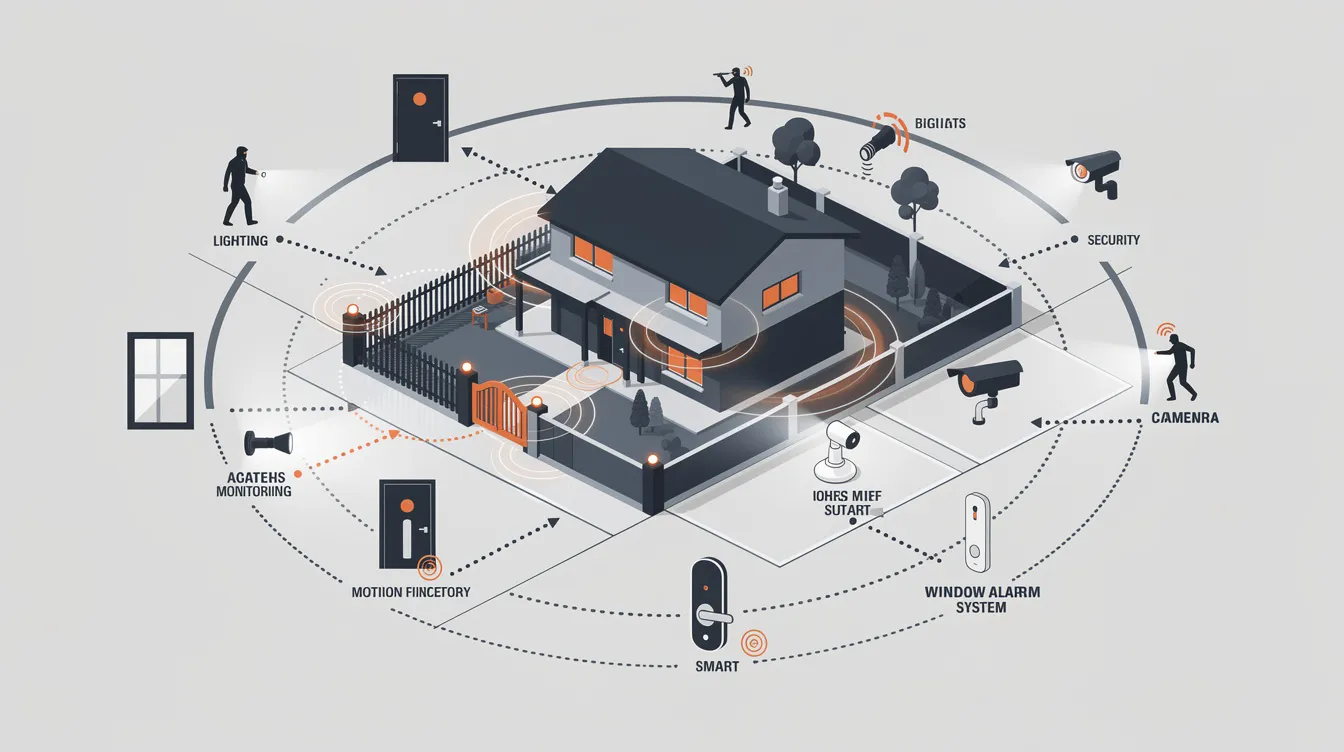
Home perimeter security is the first line of defense in protecting your property from potential threats and intrusions. Its primary purpose is to prevent unauthorized access and protect your assets by creating a secure boundary around your home. This boundary not only deters criminal activity but also provides a framework for detecting, delaying, and denying potential intruders, as well as helping to detect and prevent potential intrusions through integrated technologies and sensors.
The goals of perimeter security measures are multifaceted. They aim to:
- Deter intruders by making your property less appealing as a target
- Detect unauthorized access attempts
- Delay intruders to buy time for an appropriate response
- Ultimately deny access altogether
Implementing these protective measures significantly enhances home security and safeguards your most valuable assets.
Home perimeter security is crucial as it reduces the risk of intrusions and provides peace of mind. Establishing a robust perimeter security infrastructure is vital for protecting your property and ensuring safety. No matter where your home is located, taking these precautions is essential.
Key Components of Home Perimeter Security
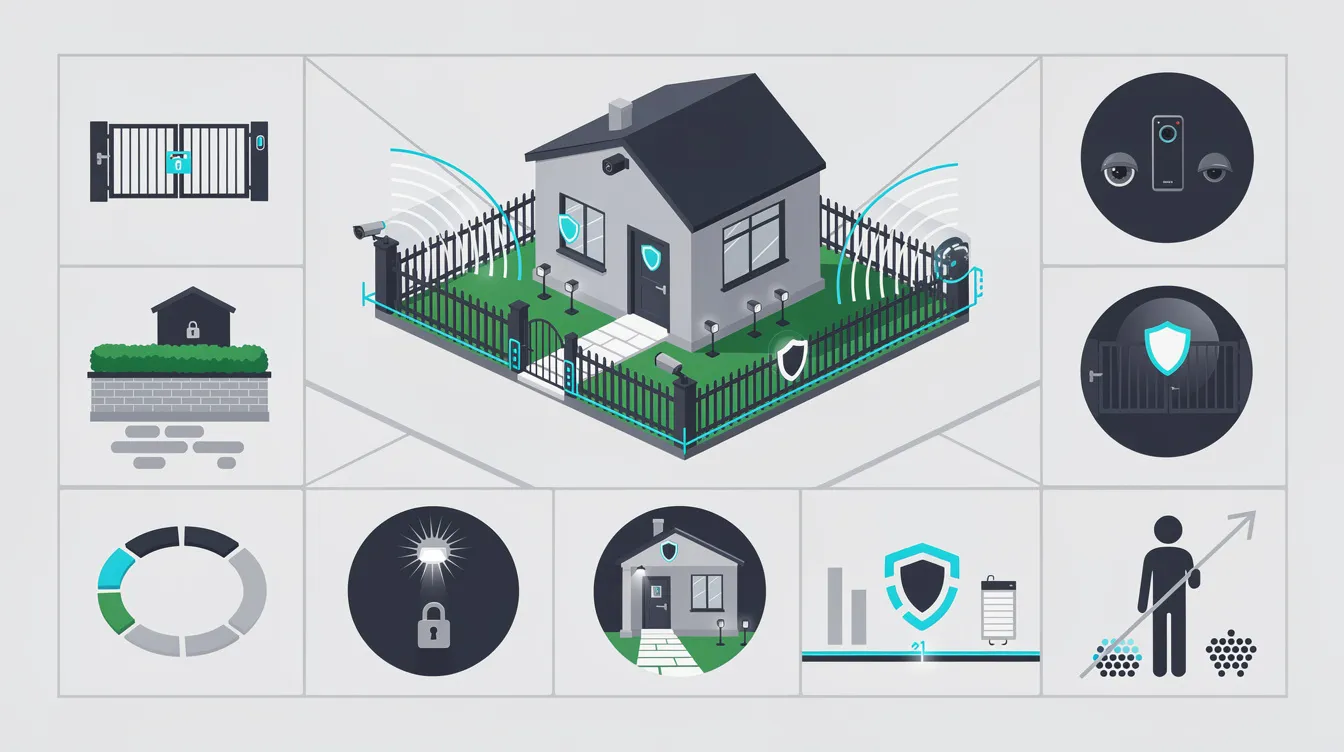
Effective measures create a multi-layered defense against unauthorized entries. A comprehensive complex system includes physical barriers, surveillance systems, and complete alarm systems, each enhancing overall security solutions.
Combining walls, fences, and gates with additional security measures creates a formidable defense that deters and delays intruders. A dedicated security team can further enhance the effectiveness of these measures by monitoring and responding to incidents.
Surveillance systems monitor property and detect suspicious activities, while alarm systems provide immediate alerts for a swift response.
Physical Barriers
Fences and gates serve as the primary defense against unauthorized entry. These barriers define property boundaries and control access points, complicating intruder breaches and presenting challenges. Walls and fences should be high and difficult to scale to prevent unauthorized access.
Gates are another critical component of physical barriers. Key considerations for gates include:
- They should be robust and secure.
- Ideally, they should have locking mechanisms that can withstand force.
- Proper installation and maintenance are essential to prevent unauthorized entry.
Integrating additional security measures, such as effective lighting and visible deterrents, alongside physical barriers can significantly enhance overall property security. Strategically placed lighting can illuminate dark areas, making intruders more visible. Installing security equipment generally takes less than a day and can often be done by one person.
Physical barriers are essential elements of a robust perimeter security system. Combining walls, fences, and gates with additional security measures creates a formidable defense that deters and delays intruders.
Surveillance Systems
Surveillance systems monitor property and detect suspicious activities. Properly placed security cameras cover all vulnerable entry points for maximum visibility. Strategically positioning cameras significantly improves monitoring efficiency of vulnerable areas.
High-resolution cameras offer several advantages for home security:
- Accurately identify and record suspicious behavior around your property.
- Provide clear and detailed footage, invaluable in case of an incident.
- Use video analytics to identify unusual behaviors or movements in camera feeds, further improving home security.
Some companies provide video monitoring services for businesses, enabling visual verification of incidents. This service adds an extra layer of security, ensuring suspicious activity is promptly addressed by security personnel or law enforcement to support effective responses.
Alarm Systems
Alarm systems alert homeowners to potential threats, making them a critical component of perimeter security. These systems include motion detectors that trigger alerts when unexpected movement is detected in secured zones. Alarm systems quickly notify homeowners of potential break-ins by sensing movement.
Configuring the system for optimal performance is crucial after it has been installed. This involves adjusting sensitivity and detection zones to accurately detect threats without causing false alarms. Proper configuration ensures the effectiveness of alarm systems.
Integrating alarm outputs with your security system ensures prompt alerts in case of intrusions or equipment issues. Connecting alarms to surveillance systems and other security measures creates a comprehensive security network that enhances home protection.
Advanced Technologies in Home Perimeter Security
Home perimeter security guide – key components of home perimeter security
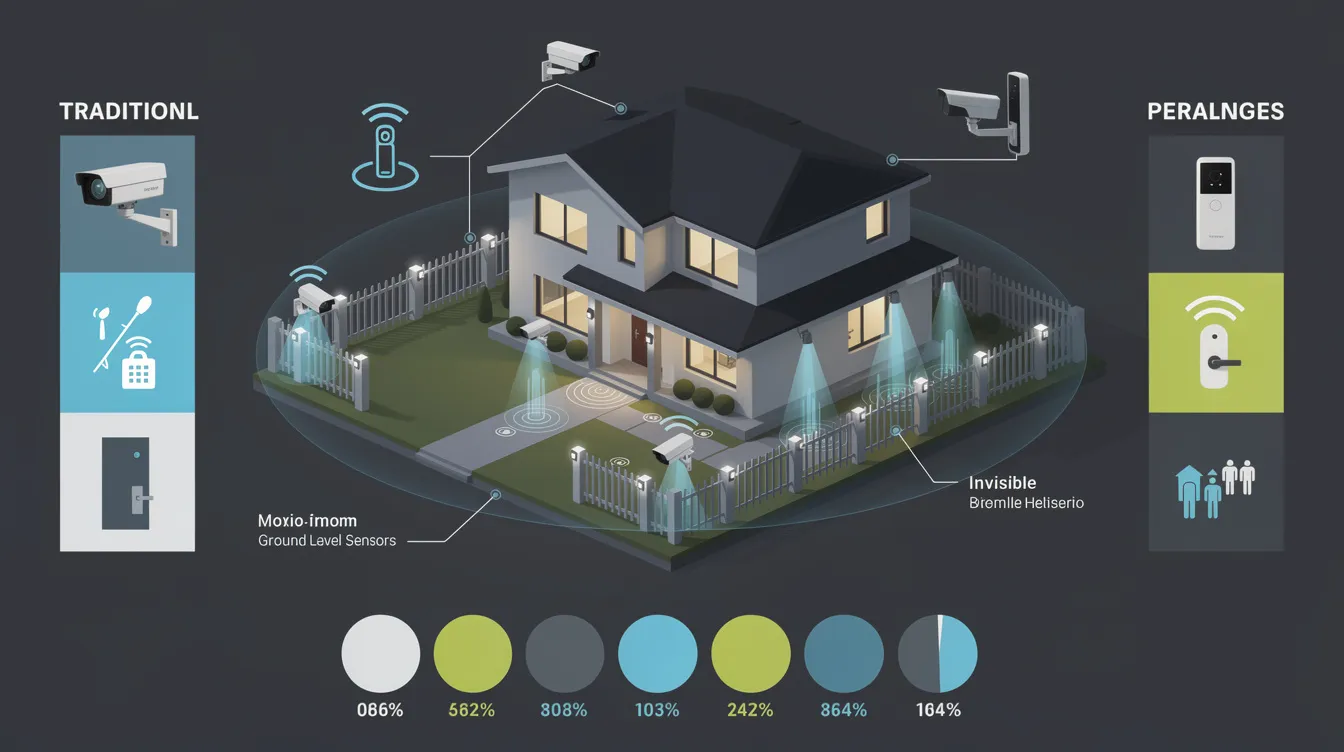
Effective home perimeter security consists of layered protective measures including detection, delay, deterrence, and defense. A robust system integrates physical barriers, surveillance technology, and alarm systems.
AI-driven analytics enhance detection accuracy, revolutionizing home security. These technologies filter out environmental disturbances, reducing false alarms and improving system reliability. Next-generation thermal imaging and radar technologies enhance detection capabilities, especially in darkness or bad weather. Cloud storage solutions can scale on demand to accommodate increased video footage and data generated by these advanced surveillance systems, providing flexibility and scalability for growing security needs.
Autonomous drones and robotic patrols extend surveillance coverage and enhance response times by providing real-time video feeds. Sophisticated automation features include:
- Activating lights based on motion detection
- Activating locks based on motion detection
- Activating alarms based on motion detection These features create a dynamic and responsive security system.
Implementing Access Control Systems
Modern systems use integrated detection and verification technologies to transition from reactive to proactive security measures. Perimeter sensors alert homeowners if a boundary is breached, enhancing immediate response capabilities. These sensors notify homeowners of security gaps, such as breaches through doors or windows, ensuring no potential intrusion detection systems goes unnoticed.
Smart physical barriers like fences and gates can be equipped with sensors and connected to centralized monitoring systems for real-time access control. Integrating these barriers with access control systems helps manage entry points effectively, ensuring only authorized individuals gain access with the ability to monitor activity.
High Security Doors and Windows
Home perimeter security guide – implementing access control systems
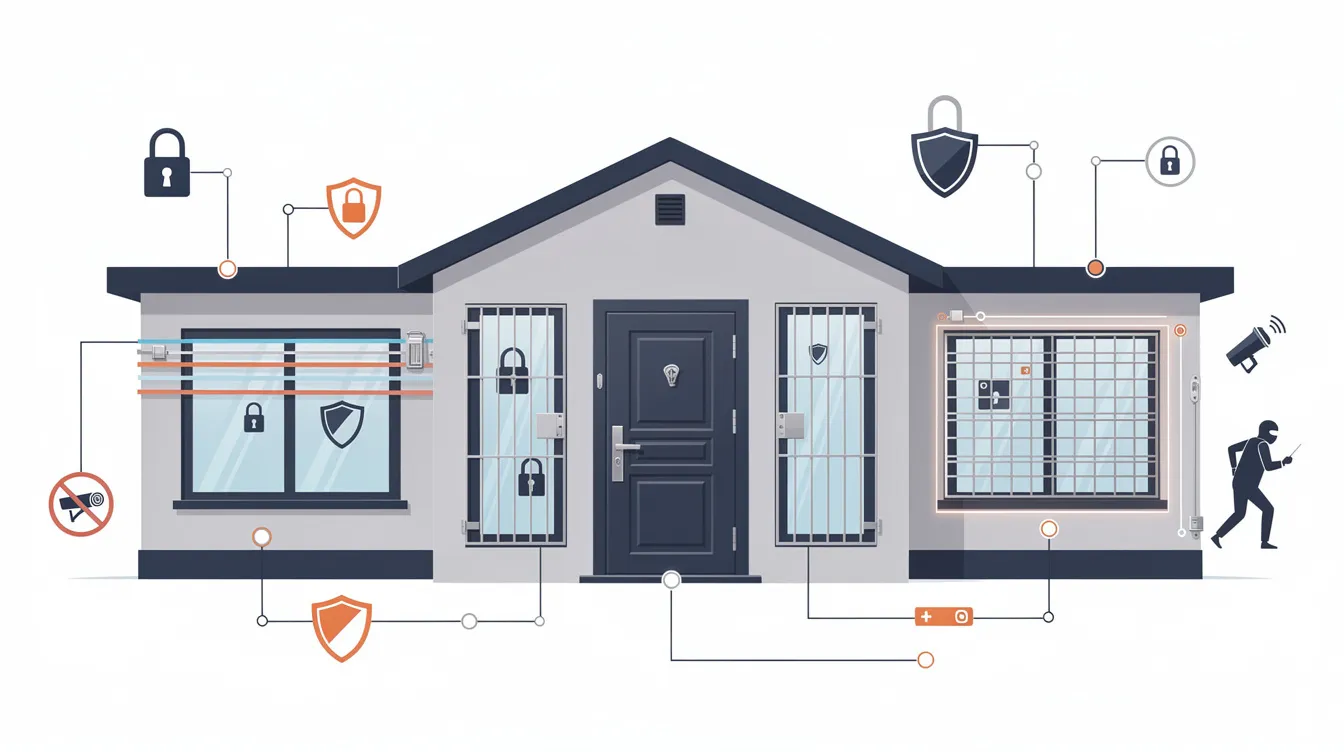
High security doors and windows serve as crucial defenses against break-ins, minimizing unauthorized entry risk. Security screen doors enhance regular doors’ protective capabilities, making them less appealing to intruders. High security doors and windows are among the most resilient options available on the market.
High security doors and windows reduce vulnerability to intrusions, significantly enhancing overall home security.
Custom Steel Security Doors
Custom steel security doors offer exceptional durability and can be tailored to specific design preferences. These doors are aesthetically pleasing and offer unmatched protection against break-ins and other threats.
High-security doors with advanced lock systems and layered steel cores provide added resilience. These features make forced entry incredibly difficult, ensuring home security.
Custom steel security doors withstand forced entry, natural forces, and firearm attacks, ensuring maximum protection. This unparalleled durability and protection make custom steel doors a worthwhile investment for security-conscious homeowners.
The primary benefit of custom security doors is their indestructible protection against break-ins and weaponized attacks. Installing these doors significantly enhances home security and protects loved ones from potential threats.
High Security Windows
High security windows offer enhanced protection against break-ins and extreme weather conditions. These windows feature reinforced frames and specialized glass to resist intrusions and severe weather.
Burglary defense ratings based on customer specifications ensure high security windows meet specific security needs, providing quality assurance. Choosing windows with high burglary defense ratings tailors home security to specific requirements, ensuring the highest protection level.
Enhancing Security with Professional Monitoring
Professional monitoring services provide around-the-clock surveillance for immediate detection of security incidents. A professionally monitored perimeter security system enhances safety through constant vigilance, deterring potential intruders.
These services provide faster emergency response times by alerting local authorities during a breach. Rapid response capabilities allow quick verification of threats and coordination with law enforcement, a key advantage of monitored systems.
Professionally monitored systems can reduce insurance premiums, as many insurers recognize their potential to lower risks. Investing in professional monitoring enhances security and provides financial benefits.
Best Practices for Homeowners
Homeowners should:
- Walk around the property to identify weaknesses in home security and carry out a thorough risk assessment.
- Assess vulnerabilities to help deter criminal activity and implement preventative actions.
- Regularly maintain fences and gates to ensure they remain effective barriers against unauthorized access.
Phased implementation of security enhancements focuses on high-risk areas in the middle for immediate impact. This approach secures the most vulnerable areas first, providing a foundation for further improvements.
Integrating Smart Home Technology
Smart home technology integrates with existing security systems, enhancing overall home security. Professional monitoring services offer mobile alerts, providing homeowners real-time updates. This integration keeps homeowners aware of their property’s security status.
Voice assistants like Alexa allow homeowners to manage perimeter security through voice commands. Advanced motion detection systems create customizable zones to minimize false alarms from pets or environmental factors. These features make managing home security more convenient and efficient.
Planning Your Home Perimeter Security System
A thorough risk assessment helps homeowners pinpoint vulnerabilities in their security setup. Start by surveying your property to gather essential information such as perimeter distances, fence height, and the number of gates. Assess potential security risks along the perimeter, including fence conditions and areas vulnerable to tampering or vandalism.
Determine the equipment needed based on security goals, including integrated devices like cameras and alarm systems. Carefully planning your home perimeter security system ensures comprehensive protection against potential threats.
Regular analysis of security data and incidents is crucial to identify vulnerabilities and continuously improve your perimeter security strategy.
Benefits of a Comprehensive Home Perimeter Security Solution
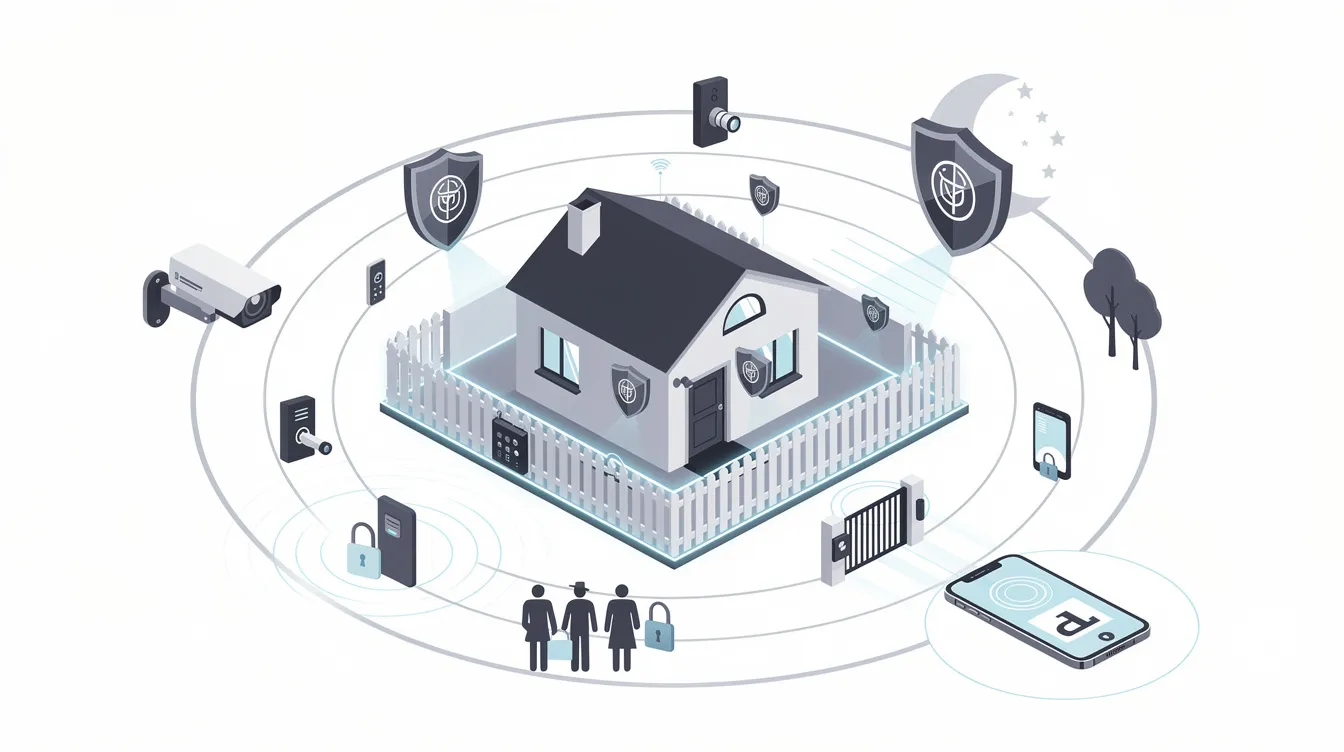
A comprehensive home perimeter security solution offers numerous advantages, including peace of mind and improved safety. Perimeter security provides peace of mind to homeowners and enhances safety for residents. Robust perimeter security significantly lowers the chances of theft and vandalism.
A well-structured perimeter security system can reduce insurance costs due to lower risk of incidents. Investing in a comprehensive solution protects your home and provides financial benefits.
Summary
In summary, implementing a comprehensive home perimeter security system is crucial for protecting your property and ensuring the safety of its occupants. By integrating physical barriers, surveillance systems, alarm systems, and advanced technologies, you create a robust defense against potential threats.
Investing in professional monitoring and smart home technology further enhances your security, providing peace of mind and financial benefits. Take proactive steps today to secure your home and enjoy the peace of mind that comes with knowing your loved ones and assets are protected.
Frequently Asked Questions
What is the primary purpose of home perimeter security?
The primary purpose of home perimeter security is to prevent unauthorized access and safeguard your property by establishing a secure boundary around your home.
How do physical barriers enhance home security?
Physical barriers such as fences and gates significantly enhance home security by creating a strong deterrent against intruders and preventing unauthorized access to your property. They establish a clear boundary that protects your home and assets.
What role do surveillance systems play in perimeter security?
Surveillance systems are crucial for perimeter security as they continuously monitor the property, detect suspicious activities, and enhance the overall effectiveness of security measures. Implementing such systems provides a proactive approach to safeguarding your premises.
Why is professional monitoring important for home security?
Professional monitoring is crucial for home security as it offers continuous surveillance, enabling swift detection of incidents and rapid emergency responses. This level of oversight greatly enhances the protection of your home and loved ones.
How can smart home technology enhance perimeter security?
Smart home technology significantly enhances perimeter security by providing real-time alerts, voice command management, and advanced motion detection, allowing for improved control and monitoring of your property. This integration with existing security systems ensures you’re always aware of any potential threats.