Worried about keeping your home safe for your family? This family home safety guide provides practical steps for preventing common household hazards like fires, falls, and poisonings. Keep reading to learn how to ensure your home is a safe haven for everyone.
Key Takeaways
- Install smoke and carbon monoxide detectors throughout the home to significantly reduce risks associated with fire and toxic gas.
- Implement safety measures specific to different generations, like grab bars for the elderly and childproofing for young children, to ensure comprehensive family safety.
- Regularly review and practice emergency plans and maintenance checks to effectively prepare for potential hazards and emergencies.
Home Safety Basics
Family home safety guide – key takeaways
The foundation of a safe home environment begins with addressing the most critical safety issues: fire, water, and general household hazards. Fire safety is paramount, as the absence of smoke detectors can drastically increase the risk of fatality in a home fire. According to the Consumer Product Safety Commission, following official safety standards and recommendations is essential for minimizing home hazards and preventing injuries. To ensure comprehensive protection:
- Install smoke detectors on every level of your home.
- Place smoke detectors in each bedroom.
- Install detectors near sleeping areas.
- Use carbon monoxide detectors alongside smoke detectors.
This combination ensures that your family is warned of both fire hazards and dangerous gases.
Water safety measures are equally crucial. Preventing scalding, particularly for young children and elderly family members, is essential. Installing anti-scald devices on faucets and showerheads and using a mixing valve on the faucet can help regulate water temperature and prevent accidental burns.
Additionally, maintaining clean and well-lit stairways can prevent falls, which are a leading cause of injury affecting over 33 million people annually. For multigenerational households, tailored safety measures that accommodate varying age groups are necessary to ensure everyone’s safety.
Install Smoke Alarms and Carbon Monoxide Detectors
Properly installed smoke alarms can reduce the risk of death in home fires by 60%. These devices are crucial for alerting occupants to fire hazards, while carbon monoxide detectors warn of a dangerous, colorless, and odorless gas. Combination smoke alarms and carbon monoxide detectors provide dual protection by detecting both fire and gas threats, making them an efficient safety solution.
To maximize safety, place smoke detectors on every level of the home, in each bedroom, and near sleeping areas. Regular maintenance is key: check batteries monthly, test alarms monthly, and change batteries yearly (or as advised) to ensure they are functioning correctly.
Even in homes without gas utilities, carbon monoxide detectors are essential due to the potential for accumulation from burning fuel appliances.
Fire Escape Plan
A well-prepared fire escape plan ensures the safety of all family members during an emergency. Key aspects include:
- Practicing the fire escape plan regularly to significantly increase the chances of a safe exit.
- Conducting regular family drills to enhance awareness and preparedness for all household members during emergencies.
- Including all family members, especially those with disabilities, to ensure everyone knows their roles and exits during a fire.
Family drills improve response times and help identify and remove obstacles in escape routes. These drills are vital for enhancing the household’s overall emergency response capabilities. Active participation from every family member in these drills can be lifesaving during a crisis.
Emergency Numbers
It’s crucial to have emergency numbers readily accessible for quick response during emergencies. Write emergency numbers into your cell phone and post them prominently in your home for easy access. Make sure all family members know where to find these contacts and that exits and safety devices are not blocked.
Regularly reviewing the locations of utility shut-off valves helps families quickly handle emergencies like gas leaks or water damage. It’s also important to know how to respond to other emergency situations, such as electrical issues or other urgent situations, by ensuring everyone knows how to shut off utilities and access emergency contacts and exits.
Bathroom and Bedroom Safety
Enhancing safety in bathrooms and bedrooms involves a combination of preventing falls and ensuring the safe storage of medicines. The use of non-slip mats and grab bars can significantly reduce the risk of slips and falls for older adults. When installing grab bars, it is crucial to use secure reinforcements, such as mounting them with sturdy anchoring, to ensure they remain stable and reliable for anyone who needs support. Additionally, installing toilet locks can prevent accidental falls when using the bathroom.
In the bedroom, safe storage practices are just as important. Keep over-the-counter medicines and prescription drugs in a locked cabinet with child-resistant caps to prevent accidental ingestion by children.
Regularly check for mold and mildew in bathrooms to maintain a healthy home environment.
Mount Grab Bars and Nonskid Mats
To reduce the risk of falls for individuals with mobility challenges:
- Install grab bars in showers and tubs, as well as near toilets.
- Install grab bars both horizontally and vertically for maximum support.
- Use nonskid mats to add extra grip in wet areas, further reducing slip hazards.
Nonskid mats on the floor and in the tub enhance safety. These additions can significantly prevent falls and ensure a safe bathing experience for everyone.
Safe Storage of Medicines
To safely store medications:
- Store medications in locked areas to prevent accidental access by children.
- Use a locking medicine cabinet to prevent unauthorized access to harmful medications.
- Keep medications in their original containers in a safe place to avoid misuse.
Child-resistant caps on medications add an extra layer of safety against accidental ingestion. These precautions ensure secure storage of both prescription and over-the-counter medicines, reducing poisoning and misuse risks.
Prevent Scalding
Preventing scalding is vital for families, especially for young children and elderly members sensitive to hot water. Set the tap water temperature to a maximum of 120°F (49°C) to avoid accidental burns. This setting ensures safety while using hot water.
This simple adjustment can make a significant difference in preventing painful and potentially dangerous scalds.
Kitchen and Living Room Safety
Family home safety guide – bathroom and bedroom safety
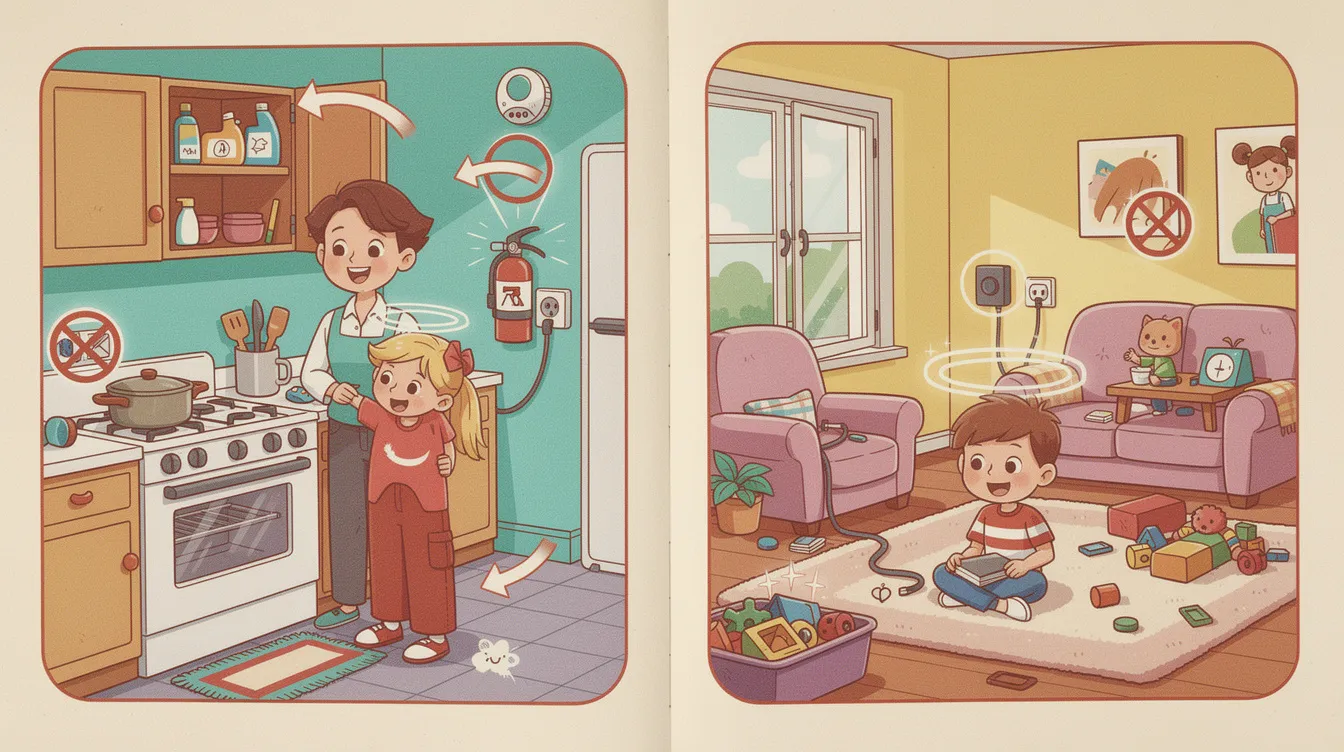
Maintaining kitchen and living room safety involves several key practices:
- Clean the stove and oven regularly to reduce fire risks.
- Check electrical cords for wear and tear to prevent electrical fires.
- Place space heaters at least three feet away from flammable materials, and always place barriers around any heat source, such as fireplaces or wood-burning stoves, to prevent accidental burns.
- Place barriers around heat sources to enhance safety and prevent injuries.
- Clear countertops to reduce the risk of accidents and make cleaning easier.
Install smoke alarms in every bedroom, outside each sleeping area, and on every level of the home. On levels without bedrooms, smoke alarms should also be installed in living room areas to ensure safety in common gathering spaces.
Organizing kitchen tools and appliances minimizes hazards and maintains safety. Keep hazardous substances in their original containers and out of children’s reach. Use extension cords only temporarily, not as a permanent power solution.
Store Cleaning Supplies Properly
Proper storage of cleaning supplies ensures household safety, especially for families with young children. Keep hazardous cleaning products out of children’s reach.
Keep cleaning products in their original packaging to avoid misuse and ensure safety.
Secure Furniture and Rugs
To create a safer home environment:
- Securely place furniture to prevent accidents.
- Place furniture away from high-traffic areas to minimize accident risks.
- Fasten rugs to the floor to avoid slips and falls.
- Secured rugs prevent falls and ensure a safer home environment.
Securing furniture and rugs is crucial for a safe home environment. This prevents trips, slips, and falls, common causes of household injuries.
Working Fire Extinguishers
Keep a working fire extinguisher in the kitchen. Knowing how to use the fire extinguisher effectively is crucial. When cooking, turn pot handles inward to prevent spills and burns.
Safe cooking practices like using back burners and turning handles inward prevent kitchen hazards. A working fire extinguisher and knowing how to use it can save lives and property.
Stairway and Outdoor Safety
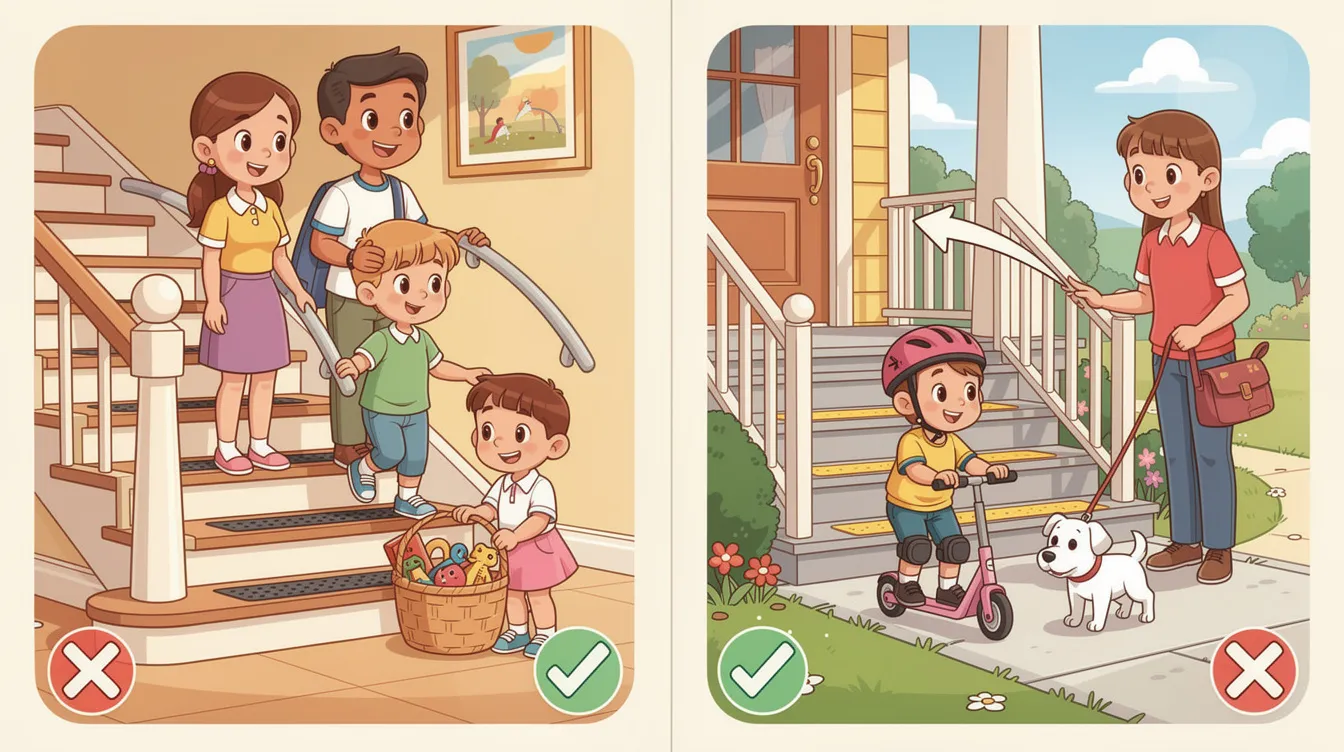
Preventing injuries on stairs and outdoors involves using safety gates and maintaining these areas. Safety gates at stairs prevent young children from accessing unsafe areas. Installing light switches at both the top and bottom of staircases enhances visibility and safety, making it easier to navigate stairs, especially at night. Maintaining outdoor areas properly significantly minimizes preventable injuries.
Regularly inspect stairs and outdoor areas for hazards to maintain safety. Well-maintained areas prevent accidents and ensure family safety.
Handrails and Lighting
Install handrails on both sides of stairs to enhance safety. Adequate sure lighting on stairs enhances visibility and prevents falls.
These measures significantly reduce stair accidents.
Clear Walkways
To maintain safe walkways:
- Clear walkways of snow, wet leaves, or other debris to prevent slips and falls.
- Inspect outdoor surfaces regularly for damage and remove hazards.
- Repair cracks or chips in cement sidewalks and stairs to ensure even and safe walking surfaces.
Regularly inspecting and clearing walkways promotes continuous safety. These practices ensure outdoor areas are safe and hazard-free.
Secure Railings and Gates
Properly secure railings to ensure safety on upper levels and prevent falls. Securing railings properly prevents dangerous falls from heights. Ensure gates and barriers are secure and in good repair for effective fall prevention.
Regularly check and maintain certain railings, gates, and barriers for safety. These measures prevent falls and ensure the safety of all family members, especially young children and elderly individuals. Additionally, it is important to place guards to enhance safety.
Utility Room and Other Areas
Family home safety guide – stairway and outdoor safety
Safety tips for less commonly considered areas like utility rooms significantly enhance overall home safety. Ensure electrical outlets in bathrooms are GFCI (Ground Fault Circuit Interrupter) protected. Cover electrical outlets with plastic plugs to prevent young children from inserting objects. Make sure outlets are not overloaded, are protected with surge protectors or safety outlets, and are in good working order to prevent electrical hazards.
Safety tips include:
- Check expiration dates on medicines and dispose of them properly when no longer needed.
- Keep medicines out of reach of children and pets to prevent accidental ingestion.
- Use corner guards on furniture to prevent injuries from sharp edges in homes with young children.
Electrical Cords and Outlets
Regularly inspect electrical cords for frays, cracks, or other damage to prevent electrical fires. If a cord is damaged, stop using it and replace it immediately for safety.
Avoid overloading outlets with too many devices to prevent overheating and potential fires. Use an extension cord temporarily and avoid running it under carpets to prevent overheating.
Space Heaters and Wood Burning Stoves
Ensure space heaters are used safely by following these guidelines:
- Keep space heaters in good condition and away from flammable materials.
- Place space heaters on a stable, level surface.
- Avoid using space heaters near curtains, furniture, or other combustible items.
- Regularly check the heater for damage or wear and replace it if necessary to prevent fire hazards.
To ensure safety when using a wood burning stove:
- Regularly inspect and maintain the stove.
- Clean the chimney and stovepipe cleaned regularly to prevent creosote buildup, which poses significant fire risks.
- Ensure the stove is properly installed and vented.
- Use only recommended fuels to minimize fire risk.
- Perform regular maintenance and cleaning to prevent dangerous build-ups and ensure safe stove operation.
Hazardous Items Storage
Store weed killers, bug sprays, and other hazardous items securely to prevent access by children and pets. Store these items securely in cabinets or containers out of reach of young children and pets. Keep hazardous items in their original containers to ensure safety information and instructions are easily accessible.
Proper storage prevents accidental poisoning and ensures safe and effective use of these items. Regularly check storage areas to ensure all hazardous materials are securely stored and inaccessible to children and pets.
Multigenerational Household Safety
Safety in multigenerational households involves tailored measures for all family members across multiple generations. Implementing safety measures protects everyone from potential hazards. A home safety plan tailored to each family member’s needs significantly reduces risks. Emergency contact numbers should be near every phone and prominently displayed in easily accessible areas.
Preventive measures include:
- Installing grab bars and nonskid mats to support elderly family members and prevent falls.
- Using childproofing strategies like anchoring heavy furniture to the wall to protect young children from accidents.
- Regularly checking and maintaining fire extinguishers to ensure their functionality in emergencies.
Elderly Family Members
Adults who are over 65 years old are especially at risk for falls. They are also more susceptible to poisoning. Implementing safety features like grab bars in the bathroom and nonskid mats can significantly reduce these risks. These features provide additional support and stability, helping older adults maintain their independence while staying safe. Good lighting throughout the home is also crucial, as it helps prevent falls and allows elderly family members to navigate their living spaces confidently.
In addition to physical aids, regularly reviewing and updating safety measures ensures that the home remains a secure environment for elderly family members. This helpful checklist approach can prevent accidents and improve the overall quality of life for older adults.
Childproofing for Young Children
Childproofing is essential to protect young children from potential hazards in the home. Some effective measures include:
- Using safety netting
- Installing window guards
- Placing guards on sharp edges to prevent accidents
- Installing gates at the top of stairs to prevent small children from falling and accessing dangerous areas.
These measures create a safer home environment for young children to explore and grow.
Communication and Emergency Response
It is crucial for all family members, including the elderly and disabled person, to know the emergency response plans and procedures to ensure their safety during an emergency. Creating a visual emergency plan that includes pictures can help all family members understand response procedures better.
Ensuring everyone knows the locations of water cut off valves can also expedite emergency responses and prevent further damage during crises.
Summary
Creating a safe family home is a comprehensive effort that involves addressing various safety issues, from fire and water hazards to ensuring the safe storage of medicines and hazardous materials. By installing smoke and carbon monoxide detectors, developing a fire escape plan, and keeping emergency numbers accessible, you lay the foundation for a secure home environment. Enhancing bathroom and bedroom safety with grab bars, nonskid mats, and proper medicine storage further protects vulnerable family members.
In the kitchen and living room, organizing items, securing furniture and rugs, and maintaining working fire extinguishers are crucial steps. Outdoor and stairway safety measures, such as installing handrails, clearing walkways, and securing railings, prevent falls and injuries. Finally, adopting tailored safety measures in multigenerational households ensures that everyone, from young children to elderly family members, can live safely and comfortably.
By implementing these safety tips, you can create a home that not only protects your loved ones but also provides peace of mind. Remember, the key to a safe home is vigilance and regular maintenance. Let’s make our homes the safest place they can be.
Frequently Asked Questions
Why is it important to have both smoke alarms and carbon monoxide detectors?
Having both smoke alarms and carbon monoxide detectors is essential for comprehensive home safety; smoke alarms detect fire hazards, while carbon monoxide detectors alert occupants to the presence of a colorless and odorless gas that can be lethal. Together, they significantly enhance your protection against both fire and carbon monoxide poisoning.
How often should I test and replace the batteries in my smoke detectors?
To ensure your smoke detectors function effectively, test them monthly and replace the batteries every six months. This routine helps maintain safety in your home.
What should the maximum tap water temperature be to prevent scalding?
To prevent scalding, the maximum tap water temperature should be set at 120°F. This helps ensure safety and minimizes the risk of burns.
What are some key safety features for elderly family members?
Key safety features for elderly family members include installing grab bars, using nonskid mats, and ensuring adequate lighting. These measures significantly enhance their safety and prevent accidents at home.
How can I ensure my home is safe for young children?
To ensure your home is safe for young children, install safety netting, window guards, and edge guards to mitigate hazards. Additionally, placing gates at the top of stairs will effectively prevent falls.