Worried about kitchen fires? You’re not alone. This article offers crucial kitchen fire safety tips that can help you prevent accidents and keep your home safe. By following advice on staying focused, using the right equipment, and practicing safe cooking methods, you can significantly reduce the risk of fires. Let’s get started.
Key Takeaways
- Cooking fires are the leading cause of home fire injuries, making it crucial to follow kitchen fire safety tips to prevent accidents and protect your household.
- Always stay focused and remain in the kitchen while cooking to prevent unattended fires, and use timers to help manage cooking times.
- Proper cooking equipment, such as dry pot holders and heat-resistant gloves, is essential to minimize the risk of burns and kitchen fires.
- Maintain a kid-free zone around the cooking area and ensure smoke alarms and fire extinguishers are functional for effective fire safety.
Stay Focused While Cooking
Kitchen fire safety tips – key takeaways
Remaining in the kitchen while cooking is vital to prevent fires. Unattended cooking is the leading cause of home fires, so it’s important to stay in the kitchen when using the stove or oven. Unattended cooking is also a major contributor to fire injuries in the home. Whether frying, grilling, broiling food, or boiling, keeping an eye on the cooking process helps avoid potential disasters.
Timers or loud reminders are especially helpful when baking or roasting for extended periods. These tools prompt you to check on your food regularly, reducing the risk of it catching fire. Activities like listening to a podcast or having company in the kitchen can also help maintain your focus.
If you need to leave the kitchen briefly, turn off the stove or any cooking appliances. Comfortable shoes can reduce fatigue, helping you stay alert in the kitchen longer. These few safety tips can significantly reduce the risk of cooking fires and create a safer environment.
Use Proper Cooking Equipment
The right cooking equipment helps prevent burns and kitchen fires. Heat-resistant oven mitts and pot holders are key for safely handling hot cookware, offering protection against burns and allowing you to manage hot pots and pans without injury.
Keep dry pot holders or oven mitts within reach to prevent accidents:
- Wet or damp gloves conduct heat and can lead to burns.
- Pot holders are essential for securely lifting lids or moving hot pots.
- Using pot holders reduces the risk of slips and spills that could cause fires.
Heat-resistant gloves add an extra layer of safety, enabling you to handle multiple hot items without burns. Using the right cooking equipment and keeping it dry and accessible significantly reduces the risk of kitchen fires and burns.
Preventing Grease Fires
Kitchen fire safety tips – use proper cooking equipment
Grease fires are among the most common and dangerous kitchen fires. Keep the cooking area clear of flammable materials like curtains, towels, and paper products to prevent them from catching fire. Clean cooking surfaces free of grease buildup to minimize fire risks.
When frying or cooking with oil, consider the following safety measures:
- Use lids or splatter guards to contain grease splatters and reduce fire risks.
- Keep a lid nearby to quickly cover a pan if a small fire occurs.
- Have a Class K fire extinguisher available, as it is crucial for effectively managing grease fires common during cooking.
Maintaining a clean and organized cooking area and having the right safety equipment can prevent grease fires and protect your home from potential fire hazards.
Handling Small Grease Fires
If a small grease fire ignites, act quickly and safely. Cover the burning pan with a metal lid or baking sheet to smother the flames and cut off the oxygen supply. Turn off the burner immediately to stop the heat source and prevent the fire from spreading.
Never use water to extinguish a grease fire; it can cause the hot grease to splatter and spread the flames, worsening the situation. Keep a lid or baking sheet close by when cooking with oil to quickly cover the pan if a fire starts.
Following these steps and having the right equipment on hand can help you handle small grease fires effectively, preventing them from escalating into larger, more dangerous liquid fires.
Maintain Your Kitchen Appliances
Kitchen fire safety tips – handling small grease fires
Regular maintenance of kitchen appliances prevents potential fire hazards. Keeping cooking equipment in good condition ensures proper function and maintains a safe cooking environment. Regularly cleaning appliances, especially dryers, prevents fires caused by lint buildup and other debris.
Using appliances with damaged cords can lead to electrical fires, so replace any with frayed or broken cords immediately. Avoid overloading electrical outlets, as it significantly increases the risk of electrical fires in the kitchen.
Ensure cookware used in the microwave is microwave-safe and allows steam to escape to prevent microwave fires. Fire suppression systems can automatically detect and extinguish small kitchen fires before they escalate, adding an extra layer of safety.
Safe Cooking Practices
Safe cooking practices prevent burns and spills. Always turn pot handles inward on the stove to avoid accidental spills and burns. This simple action significantly reduces the risk of hot liquids or foods being knocked over.
To create a safer cooking environment:
- Wear tight-fitting or short sleeves to minimize the risk of clothing catching fire.
- Avoid loose clothing, as it can easily come into contact with hot surfaces, leading to burns and potential fires.
- Use appropriate clothing and practice pot handle safety. Additionally, it is advisable to wear short sleeves to further reduce risks.
These safe cooking practices ensure a fire-safe kitchen, protecting you and your loved ones from potential hazards.
Kid-Free Zone
Creating a kid-free zone of at least three feet around the cooking area keeps children away from potential hazards. Establishing this safe distance significantly enhances safety by preventing kids from accessing hot surfaces and sharp objects.
Maintaining a three-foot perimeter around the stove reduces the risk of burns and accidents. Keeping kids out of the kitchen while cooking ensures their safety and allows you to focus without distractions.
Effectively establishing this kid-free zone creates a safer kitchen environment for your entire family.
Smoke Alarms and Fire Extinguishers
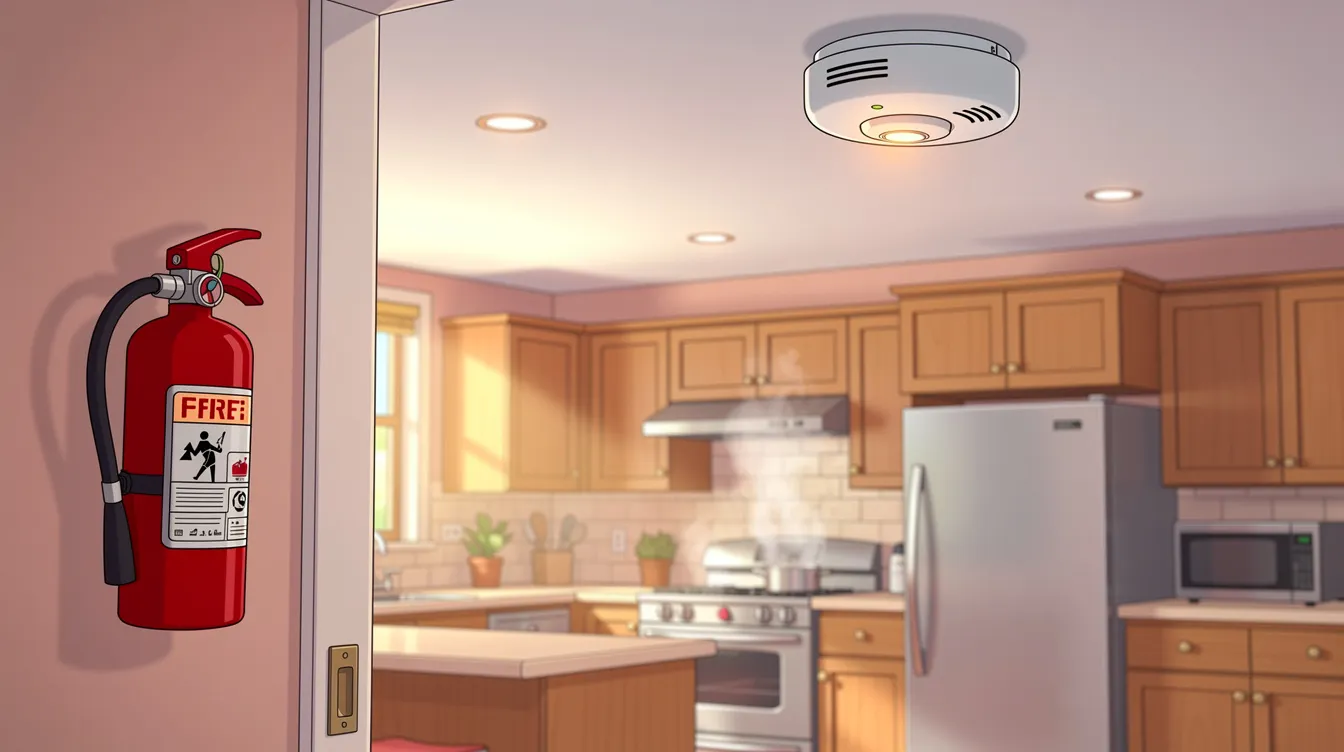
Functional smoke alarms and accessible fire extinguishers are vital for early detection and prompt response to fires. These devices are critical in reducing home fire deaths, especially since kitchen fires are a leading cause of residential fire fatalities. Regularly testing smoke detectors and carbon monoxide alarms ensures they function correctly, providing crucial early warnings in case of fire or gas leaks.
Maintaining fire extinguishers and keeping them easily accessible is crucial for quickly managing small fires before they escalate. Knowing the location of your fire extinguisher and how to use it effectively can save lives and prevent extensive damage in an emergency.
The PASS technique helps you effectively operate a fire extinguisher during a fire:
- Pull
- Aim
- Squeeze
- Sweep
Ensuring your smoke alarms and fire extinguishers are in working order enhances your home’s fire safety.
Alcohol and Cooking Safety
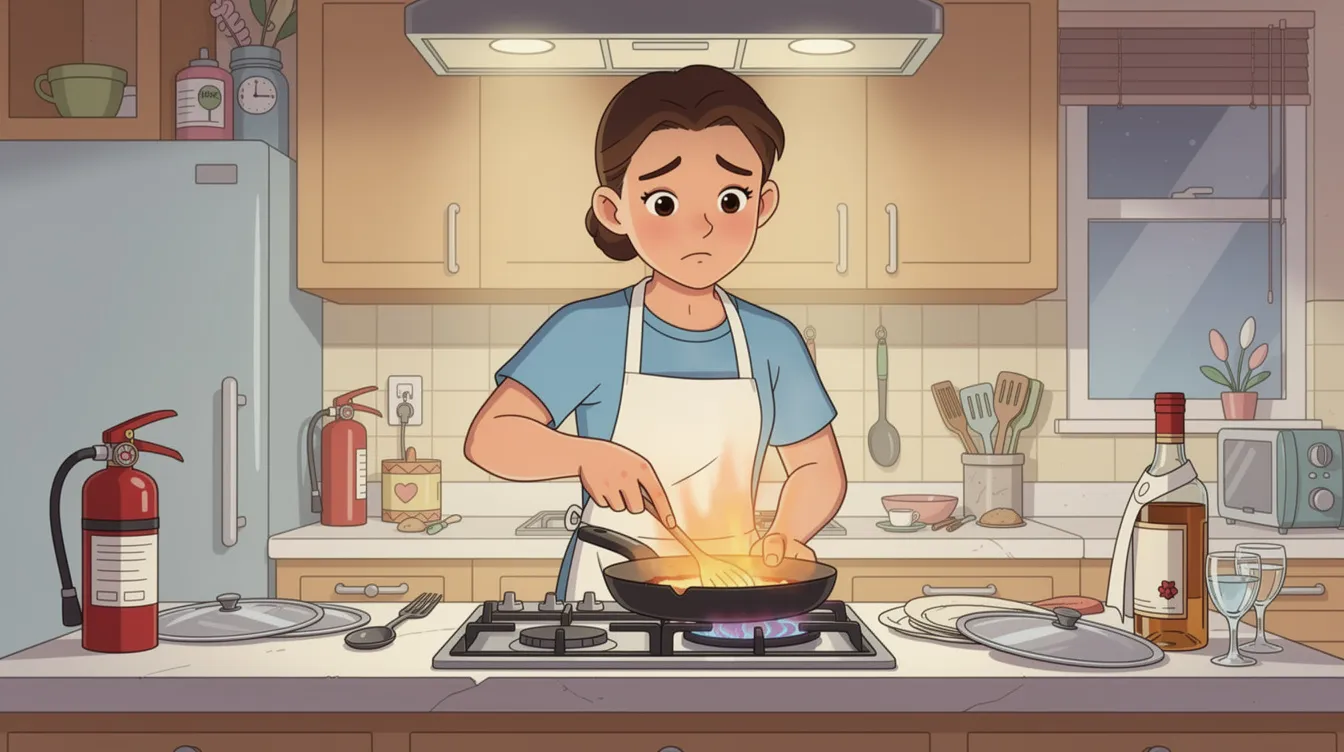
Cooking after consumed alcohol significantly increases the risk of kitchen fires because:
- Alcohol impairs judgment, leading to mistakes that can result in accidental fires.
- Cooking under the influence makes it more likely to forget about food on the stove.
- There is a higher chance of mishandling hot cookware.
To minimize fire hazards and ensure safety in the kitchen:
- Avoid cooking if you’ve been drinking.
- Stay sober while cooking to maintain focus.
- If you feel tired or under the influence, opt for takeout instead of risking a kitchen fire.
Staying alert and sober while cooking significantly reduces the risk of kitchen fires and ensures a safer cooking environment.
Emergency Procedures
In case of a kitchen fire, act quickly and safely. If a grease fire ignites, immediately turn off the burner to stop the heat source. Do not attempt to move a burning pan, as this could lead to spills and increased danger.
If the flames grow too large to manage:
- Evacuate the area immediately.
- Close the kitchen door closed to help contain the fire.
- Leave the lid on the pan covered until it has cooled completely to prevent reignition.
- When calling emergency services, provide your address and details about the fire, including whether anyone is still inside.
Staying low to the ground during an evacuation helps avoid smoke inhalation, as smoke rises. Following these emergency procedures ensures the safety of everyone in your home during a kitchen fire. Remember to stay safe.
Summary
In summary, kitchen fire safety is paramount to protecting your home and loved ones. By staying focused while cooking, using proper cooking equipment, preventing grease fires, and maintaining your kitchen appliances, you can significantly reduce the risk of fires. Implementing safe cooking practices, establishing a kid-free zone, and ensuring your smoke alarms and fire extinguishers are functional are also crucial steps.
Remember, avoiding cooking after consuming alcohol and knowing the proper emergency procedures can make all the difference in a fire situation. Stay vigilant, stay safe, and keep your kitchen a joyful and secure place for everyone.
Frequently Asked Questions
Why is it important to stay in the kitchen while cooking?
It is important to stay in the kitchen while cooking to prevent fires, as unattended cooking is the leading cause of home fires. Your continuous attention ensures safety and mitigates risks in a potentially hazardous environment.
What should I do if a small grease fire ignites?
If a small grease fire ignites, immediately turn off the burner and cover the pan with a metal lid or baking sheet to smother the flames, as using water can worsen the situation.
How often should I test my smoke alarms?
You should test your smoke alarms at least once a month to ensure they are functioning properly and providing essential early warnings. Regular checks help maintain safety in your home.
Why should I avoid cooking after consuming alcohol?
You should avoid cooking after consuming alcohol because it impairs your judgment and increases the risk of kitchen fires. Prioritizing safety in the kitchen is essential.
What are the steps to safely evacuate during a kitchen fire?
In the event of a kitchen fire, evacuate immediately by closing the kitchen door to contain the flames. Stay low to avoid smoke inhalation and call emergency services with your address and relevant fire details.