Kitchen fires can happen quickly, but you can prevent them. This guide covers essential kitchen fire safety tips to keep your home safe. Learn how to stay focused while cooking, manage grease fires, and use fire extinguishers correctly.
Key Takeaways
- Stay in the kitchen while cooking to prevent unattended cooking fires, which account for 37% of home cooking incidents.
- Maintain a kid-free zone around cooking areas and keep flammable materials away from heat sources to minimize fire risks.
- Keep a fire extinguisher accessible, know how to use it correctly, and ensure smoke alarms are installed and regularly tested for optimal kitchen safety.
Stay in the Kitchen While Cooking
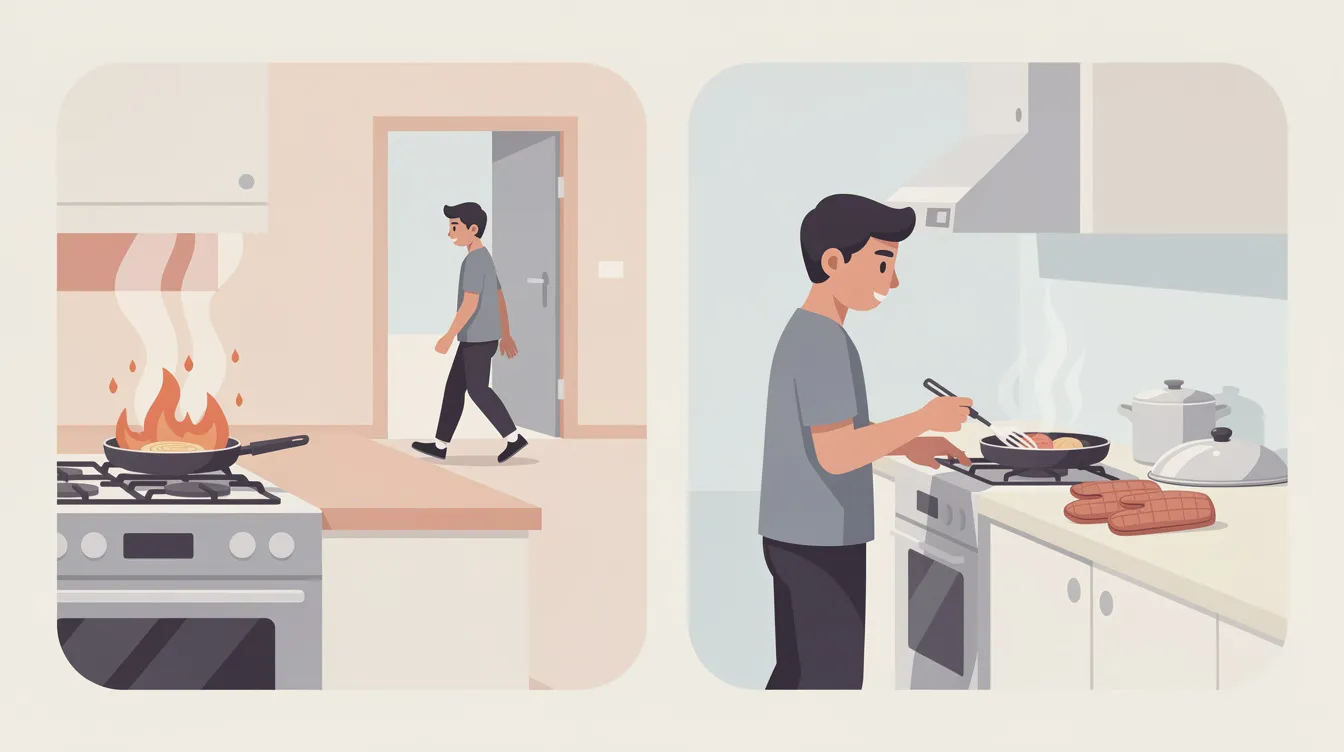
Staying in the kitchen while cooking is a fundamental rule for fire prevention because:
- Unattended cooking equipment causes 37% of home cooking fires.
- Leaving the kitchen, even briefly, risks a pot or pan catching fire.
- This risk is especially high when frying, grilling, or broiling food, which is a common leading cause of home fires and can lead to home fire injuries. The leading cause of home cooking fires is often linked to unattended cooking equipment.
High heat in cooking can quickly lead to small grease fires. Always turn off the heat burner if you need to step away. If using the oven, set a timer to check on the food regularly, enabling prompt response if something starts to smoke, burn, or overheat.
Enhance cooking safety by:
- Wear short or tight-fitting sleeves
- Keeping flammable materials away from the stovetop
- Turning pot handles inward
- Keeping a lid nearby to cover a pan if a small grease fire starts.
These cooking safety tips and a few safety tips are essential for maintaining a safe cooking environment.
Proper Use of Cooking Equipment
Proper use of cooking equipment is key to kitchen fire safety. Always turn pot handles inward to prevent accidents, reducing the risk of spills and burns.
To ensure safe cooking practices:
- Closely monitor cooking processes, using a timer to keep track of cooking times.
- If oil or food shows signs of overheating, remove the pan from the heat immediately.
- Avoid using the stove if you feel drowsy or have been drinking.
Safe practices apply to all cooking equipment, including stoves and microwave. Follow manufacturer instructions and never leave kitchen appliances unattended equipment. Regularly clean them to prevent food buildup, which can catch fire.
Keep Flammable Materials Away
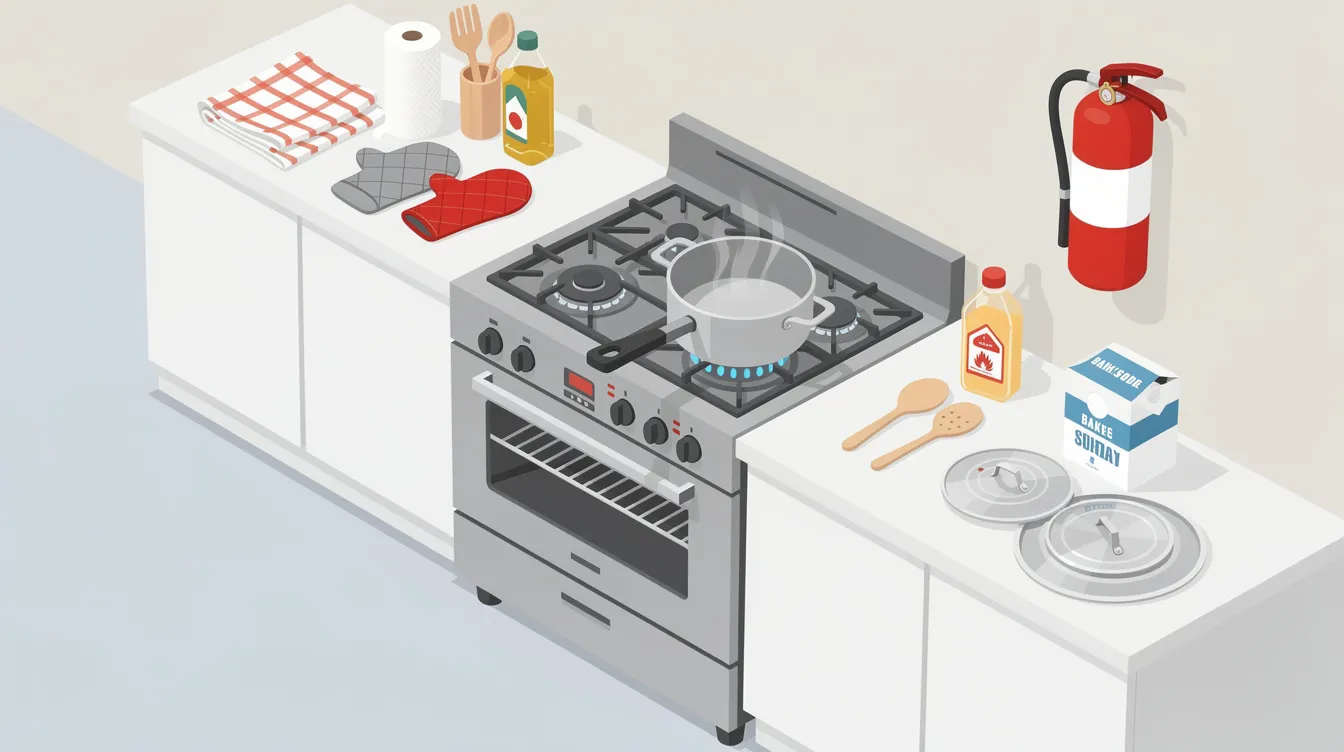
Keeping flammable materials away from heat sources is critical for preventing kitchen fires. Kitchens are susceptible to fires due to the frequent use of high-temperature cooking appliances, so maintaining a clear and safe cooking space is essential.
Keep flammable items like food packaging, towels, and oven mitts away from your stovetop. Avoid wearing loose clothing or dangling accessories while cooking, as they can easily catch fire if they contact a burner or hot surface.
Keeping your cooking area free of flammable materials significantly reduces the risk of kitchen fires. Store food packaging materials and towels away from heat sources, and keep oven mitts away from burners.
Kid-Free Zone
Creating a kid-free zone in the kitchen prevents burns and fire injuries among children. Establishing a three-foot safety perimeter around the stove keeps children away from hot surfaces and potential hazards.
To ensure kitchen safety with children:
- Use visual cues like tape on the floor or a small gate to create a safety perimeter.
- Explain to your children the importance of staying out of this area while cooking.
- Never leave children unattended in the kitchen.
Implementing these measures ensures a safe kitchen environment for the whole family, protecting children from burns and minimizing the risk of accidents that could lead to fires.
Handling Grease Fires Safely
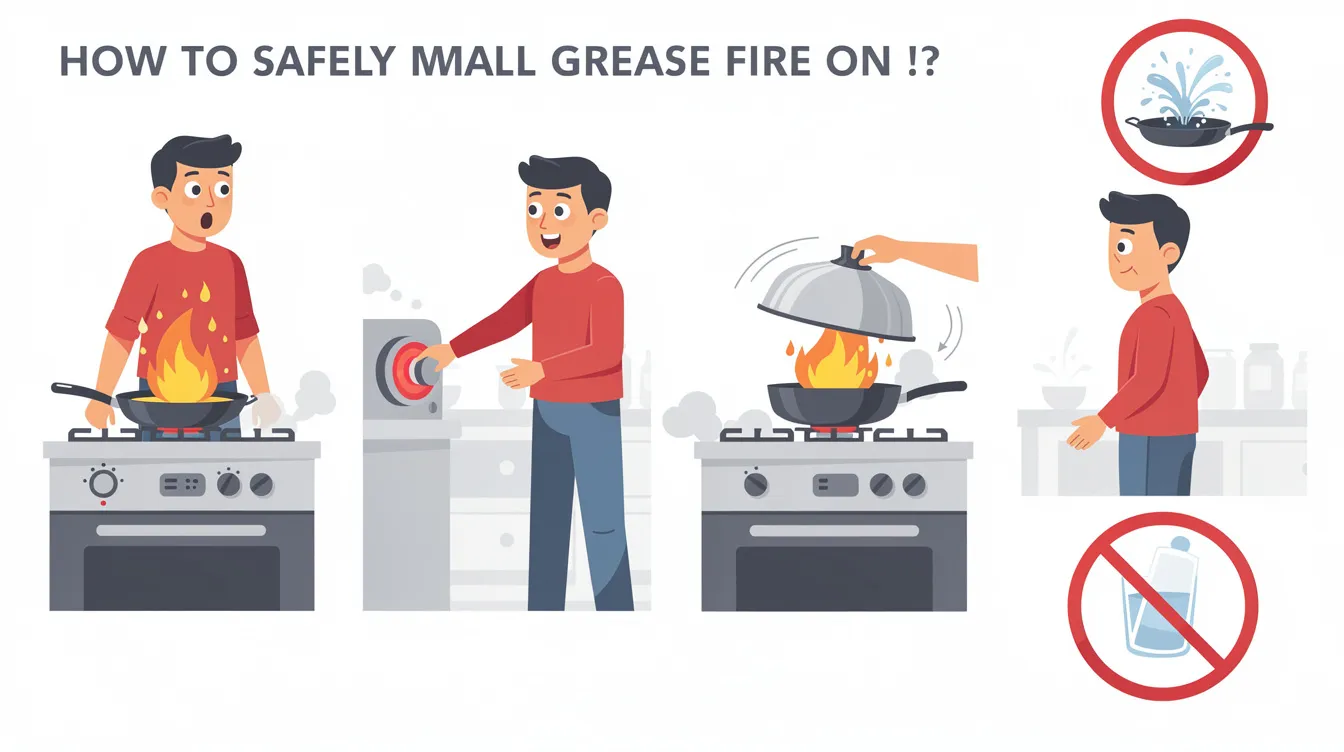
Grease fires can escalate quickly, so handling them safely is vital. Here are the steps to manage small grease fires:
- Keep a lid nearby to smother small grease fires by covering the pan covered.
- If a fire occurs, slide the lid over the pan.
- Turn off the burner to contain the flames.
When dealing with a grease fire:
- Use baking soda to help extinguish the fire.
- Never use water, as it causes flames to spread.
- Avoid water because it reacts with hot oil, creating dangerous splatters of burning grease.
- Keep a fire extinguisher within reach as a crucial safety measure.
Following these tips allows you to handle small grease fires effectively, preventing them from escalating into larger home fires. Always be prepared and know the steps to take in case of a fire.
Fire Extinguisher Basics
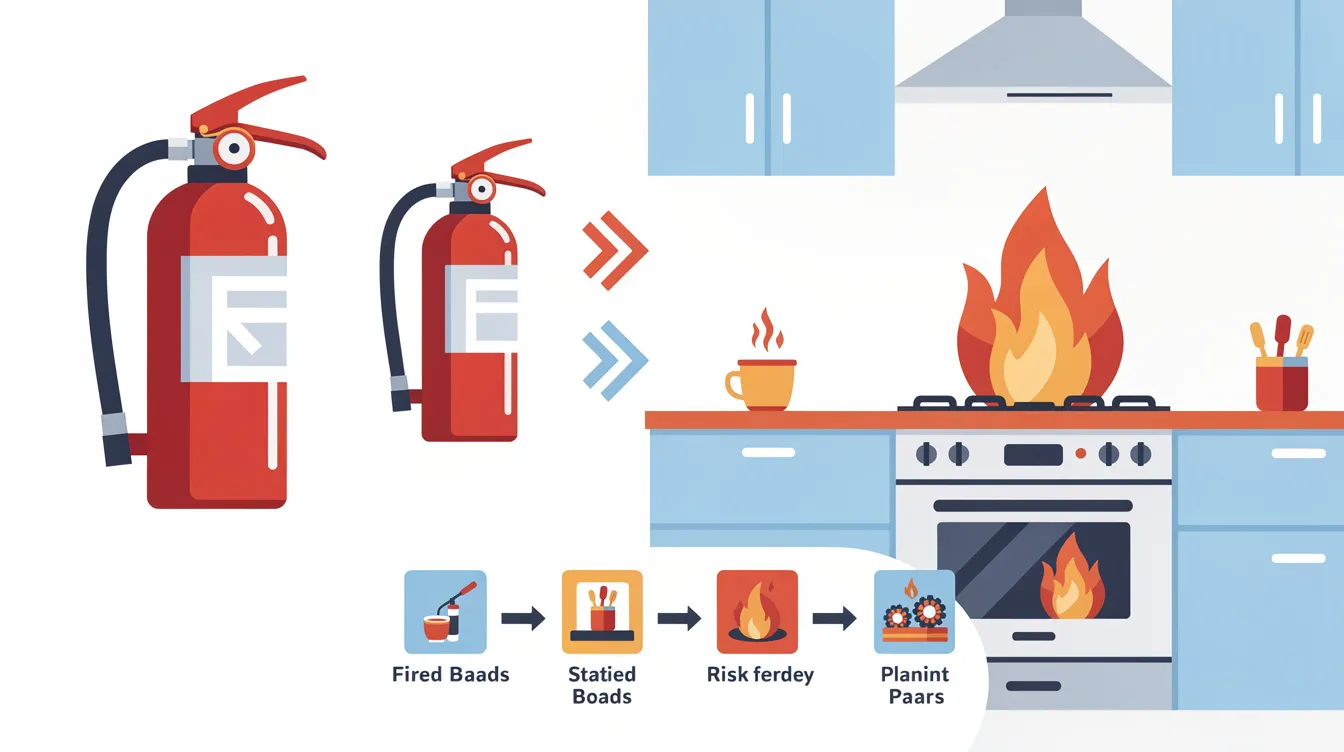
A fire extinguisher in the kitchen is essential for immediate action if a fire breaks out. Position it for easy access, but not too close to potential fire sources. Regular inspections and maintenance ensure it will be functional in an emergency.
The PASS method is a straightforward technique for using a fire extinguisher:
- Pull the pin
- Aim at the base of the fire
- Squeeze the handle
- Sweep from side to side
If the fire doesn’t go out or if you’re unsure, evacuate and call the fire department immediately.
Fire extinguishers are a critical part of kitchen safety. Knowing how to use them properly can prevent a small fire from becoming a major disaster.
Smoke Alarms and Detectors
Installing a smoke alarm in the kitchen is crucial for fire safety. Properly functioning smoke alarms can reduce the risk of dying in a fire by up to 60%, providing early warning and giving you and your family time to evacuate and call for help.
Regularly test your smoke alarms to ensure they are functioning correctly. Test them monthly and replace the batteries at least once a year to prevent kitchen-related fire tragedies.
Smoke alarms are a simple yet effective way to enhance kitchen fire safety. Install them in key areas, and ensure everyone in your home knows what to do when they sound.
Safe Practices for Frying and Broiling Food
Frying and broiling food require constant vigilance to prevent fires. Always stay in the kitchen and keep an eye on the food. If you observe smoke or boiling grease, promptly turn off the burner.
Proper temperature control is essential when frying. Slowly heat oil to the desired temperature to reduce flare-ups. Add food to hot oil gently to prevent splattering, which can cause burns and fires.
Following these tips allows you to enjoy frying and broiling food while minimizing the risk of kitchen fires. Constant monitoring and temperature control are key to safe cooking.
Alcohol Consumption and Cooking Safety
Consuming alcohol while cooking impairs judgment, increasing the likelihood of accidents and fires. Alcohol affects decision-making abilities, making it easier to overlook critical safety precautions. When individuals have consumed alcohol, these risks are further amplified.
Remaining attentive while cooking is crucial, especially if alcohol has been consumed. If you’ve had a drink, avoid using the stove or other cooking equipment to prevent potential disasters.
Cooking under the influence of alcohol poses a significant safety risk. Keep alcohol consumption and cooking separate to stay safe. Your attentiveness is vital for preventing kitchen fires.
Pet Safety in the Kitchen
Keeping pets safe in the kitchen is as important as keeping children safe. Keep pets away from hot surfaces to prevent burns and accidents. Train pets with commands like ‘leave it’ to manage their behavior around food.
Creating a designated area for pets away from cooking activities reduces the risk of accidents and helps protect them from knocking over pots or stepping on hot surfaces. This leading approach keeps them safe.
Implementing these safety tips protects your pets and maintains a safe kitchen environment. Keeping pets away from cooking activities is essential for preventing accidents.
Summary
In conclusion, kitchen fire safety is about being proactive and prepared. Staying in the kitchen while cooking, using equipment properly, and keeping flammable materials away are fundamental steps. Establishing kid-free zones and knowing how to handle grease fires are also critical.
Having a fire extinguisher, installing smoke alarms, and practicing safe frying and broiling techniques can further enhance your kitchen safety. Avoiding alcohol consumption while cooking and ensuring pet safety are also important.
By following these comprehensive tips, you can protect your home and loved ones from the dangers of kitchen fires. Stay safe and enjoy your culinary adventures with peace of mind.
Frequently Asked Questions
Why is it important to stay in the kitchen while cooking?
It’s crucial to stay in the kitchen while cooking to monitor heat sources and prevent potential fires from unattended equipment. This vigilance ensures both safety and the quality of your meal.
What should I do if a small grease fire occurs?
In the event of a small grease fire, immediately cover the pan with a lid and turn off the burner; do not use water to extinguish the flames. This will help contain the fire safely.
How often should I test my smoke alarms?
You should test your smoke alarms monthly and replace the batteries at least once a year to ensure they are working effectively.
What is the PASS method for using a fire extinguisher?
To effectively use a fire extinguisher, follow the PASS method: Pull the pin, Aim the nozzle, Squeeze the handle, and Sweep from side to side. This systematic approach ensures you can extinguish a fire safely and efficiently.
How can I keep pets safe in the kitchen while cooking?
To keep pets safe in the kitchen while cooking, ensure they stay away from hot surfaces by using commands and providing designated areas for them. This will help prevent accidents and keep both your pets and your cooking safe.