How do you choose the right fire extinguisher for your home? This home fire extinguisher guide explains everything you need to know, from understanding types and classes of extinguishers to their placement, usage, and maintenance.
Key Takeaways
- Understand the different classes of fire extinguishers (A, B, C, D, K) and their specific applications in home safety.
- Strategically place fire extinguishers in critical areas of the home, such as near kitchens and garages, ensuring easy access and adherence to NFPA guidelines.
- Regular maintenance and inspections of fire extinguishers are crucial, including monthly checks and annual professional services to ensure operational readiness.
Understanding Fire Extinguisher Types and Classes
Home fire extinguisher guide – key takeaways
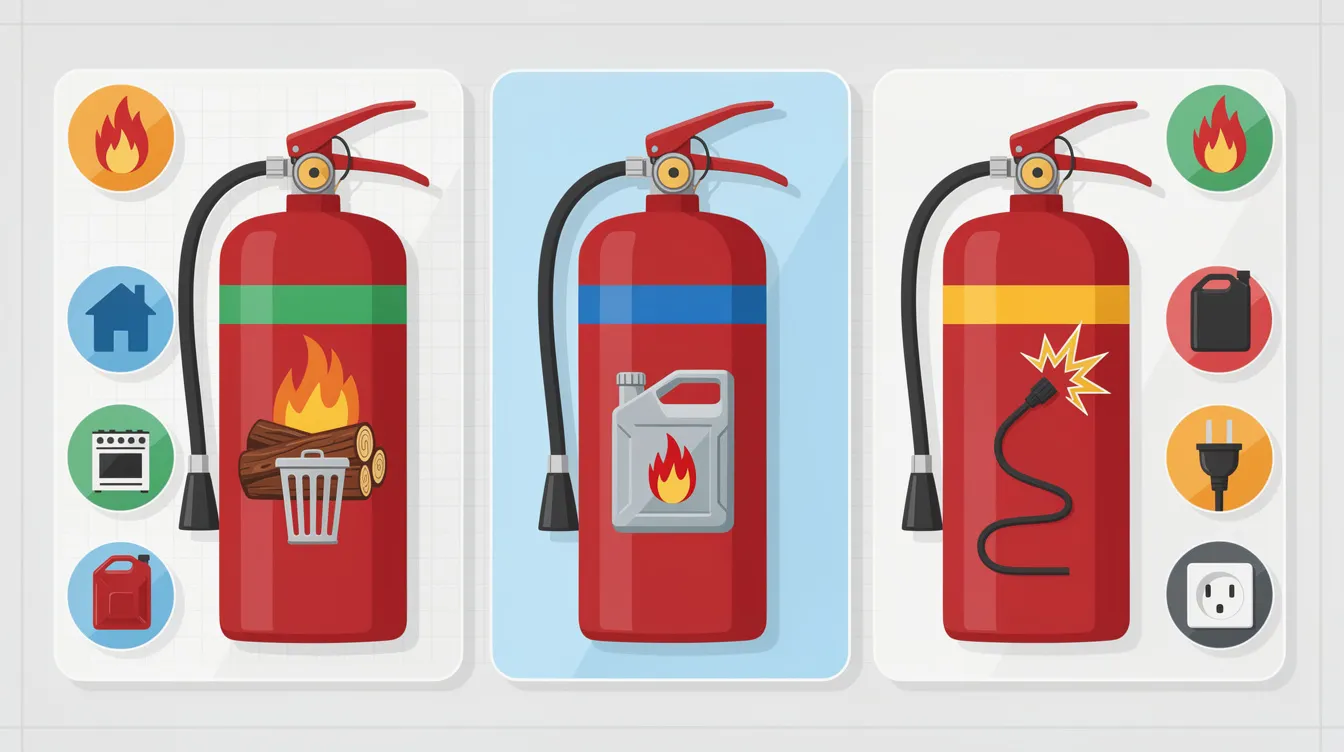
The backbone of fire safety lies in understanding the types of fire extinguishers and their specific uses. Fire extinguishers are categorized into five primary classes: A, B, C, D, and K. Each class is designed to combat different types of fires:
- Class A fire extinguishers are effective against fires involving ordinary combustible materials such as cloth, wood, and paper.
- Class B fire extinguishers handle fires involving flammable liquids like grease, gasoline, and oil. The flammable liquids class is crucial for understanding the appropriate extinguishing methods.
- Class C fire extinguishers are suitable for fires caused by electrical equipment.
- Class K fire extinguishers are designed for fires involving cooking oils and fats, including animal oils, and are commonly used in both home kitchens and commercial kitchens where these types of fires are more likely to occur.
Multipurpose fire extinguishers, such as ABC extinguishers, have the following features:
- Can handle a variety of fires, covering Class A through Class C fires
- Address most common household needs
- Offer versatility, so you don’t need multiple types of extinguishers at home
- One extinguisher can tackle multiple fire types, reducing clutter
Many home fire extinguishers use a dry chemical agent, which is effective for multiple fire classes and provides broad protection in residential settings.
Consider the following when choosing the right fire extinguisher for your home:
- Take into account the class ratings and specific risks associated with different areas.
- Class B fires extinguishers have numerical ratings indicating the square feet they can cover, important for larger areas like garages.
- Always ensure that your fire extinguisher matches the potential fire hazards in its designated area.
Essential Locations for Home Fire Extinguishers
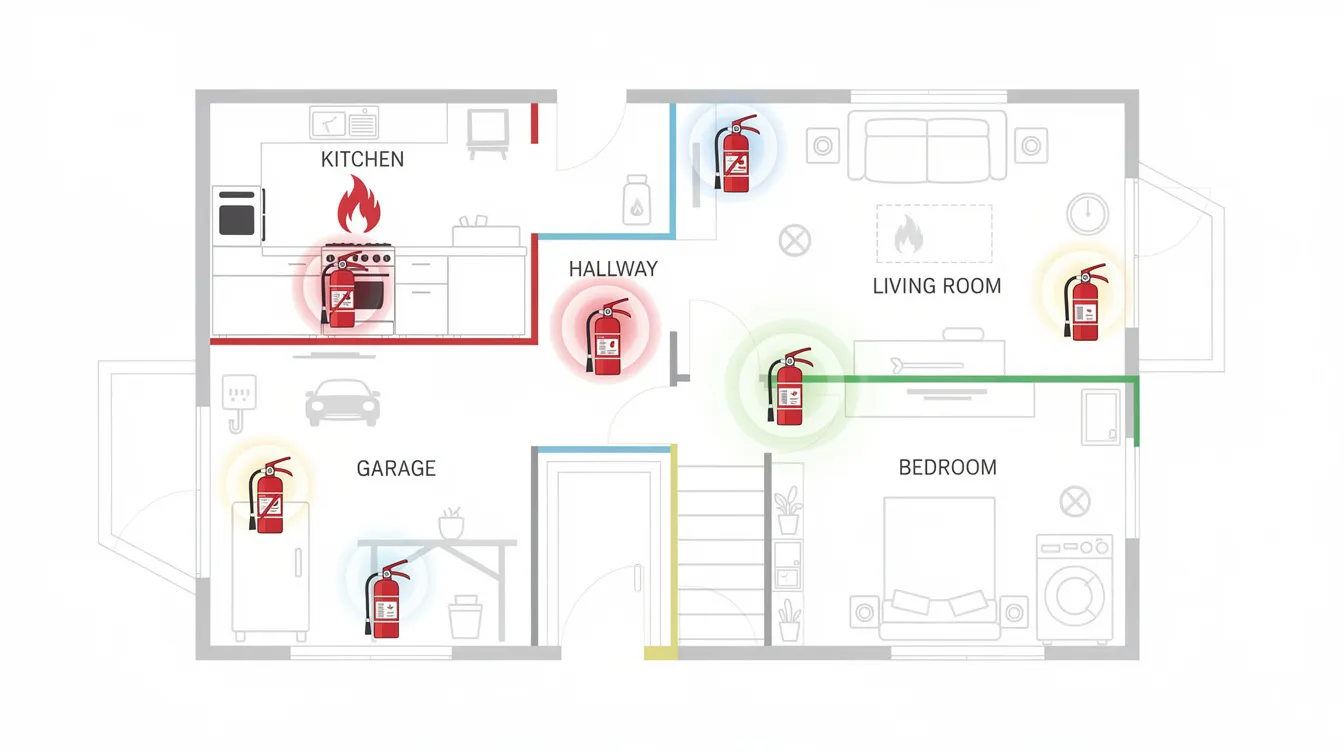
Placing fire extinguishers strategically in your house can significantly enhance safety and help protect both occupants and property by preventing the spread of fire. For the kitchen, consider the following placement guidelines:
- Position a kitchen extinguisher within 30 feet of the stove.
- Mount the kitchen extinguisher on a wall near the stove for easy access, but not so close that it could be blocked by smoke or flames.
- Ensure it is easily accessible.
- Avoid placing it too close to the stove to prevent smoke blockage during a fire.
This placement allows swift action without compromising safety.
Garages and workshops are another critical area where a fire extinguisher is essential. These spaces often contain flammable materials such as gas canisters and oils, making a garage extinguisher indispensable. Ensure that extinguishers in these areas are placed near potential fire sources but not immediately adjacent to them to allow for safe access in an emergency.
Equip every level of your home, including the attic and basement, with at least one fire extinguisher. Make sure each floor, including the basement, has an extinguisher to maximize coverage throughout your property and help prevent the spread of fire. The National Fire Protection Association (NFPA) recommends that the maximum distance to reach a fire extinguisher should not exceed 75 feet. This guideline ensures extinguishers are accessible and visible, allowing for a quick response during a fire emergency. Always know the location of the closest extinguisher, especially near sources of heat such as fireplaces, heating equipment, or in rooms where fire risk is higher.
How to Use a Fire Extinguisher Safely
Home fire extinguisher guide – essential locations for home fire extinguishers
It’s crucial to learn how to use a fire extinguisher before a fire breaks out, so you are prepared when fire breaks occur.
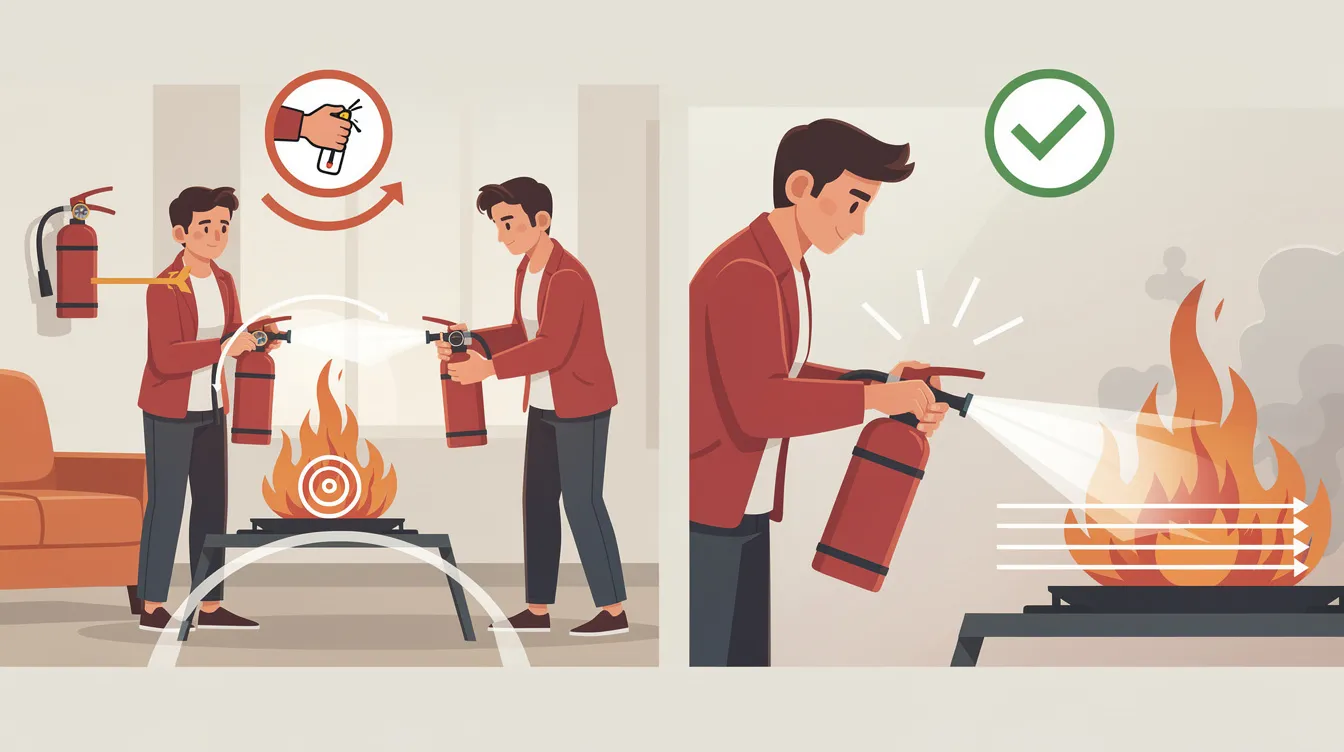
Knowing how to use a fire extinguisher in an emergency can make all the difference. The P-A-S-S method—Pull, Aim, Squeeze, Sweep—is a simple yet effective technique endorsed by fire safety experts. This method ensures efficient and safe operation of the extinguisher during a fire incident. Here are the steps:
- Pull the pin.
- Aim the nozzle at the base of the fire.
- Squeeze the handle to release the extinguishing agent.
- Sweep the nozzle from side to side to cover the area of the fire.
First, pull the pin located at the top of the extinguisher. This pin prevents accidental discharge and must be removed to activate the extinguisher. Next, aim the nozzle pointing low at the base of the fire to target the source of the flames, making the extinguisher more effective.
Once aimed, follow these steps:
- Squeeze the trigger slowly and evenly to release the extinguishing agent.
- Sweep the nozzle from side to side to cover the entire area of the fire until it is completely extinguished.
- Always keep a clear exit behind you in case you need to evacuate quickly.
Maintenance and Inspection Tips
Regular maintenance and inspection of fire extinguishers ensure they are always ready for use in an emergency. Monthly inspections check the visibility and accessibility of the extinguisher. Ensure it is unobstructed and check for any physical damage.
During inspection, ensure the following:
- The pressure gauge is in the operational range.
- The locking pin is intact with an unbroken tamper seal.
- The operating instructions on the extinguisher’s nameplate are legible and facing outward.
This ensures that anyone can quickly understand how to use the extinguisher during an emergency, for example.
Annual professional inspections by a licensed contractor are necessary; they should inspect your fire extinguishers at least once a year. Report any missing or malfunctioning extinguisher immediately and ensure it is replaced or repaired. Record the last date of professional service on the extinguisher’s tag to keep track of maintenance.
Specific Extinguishers for Different Areas
Home fire extinguisher guide – maintenance and inspection tips
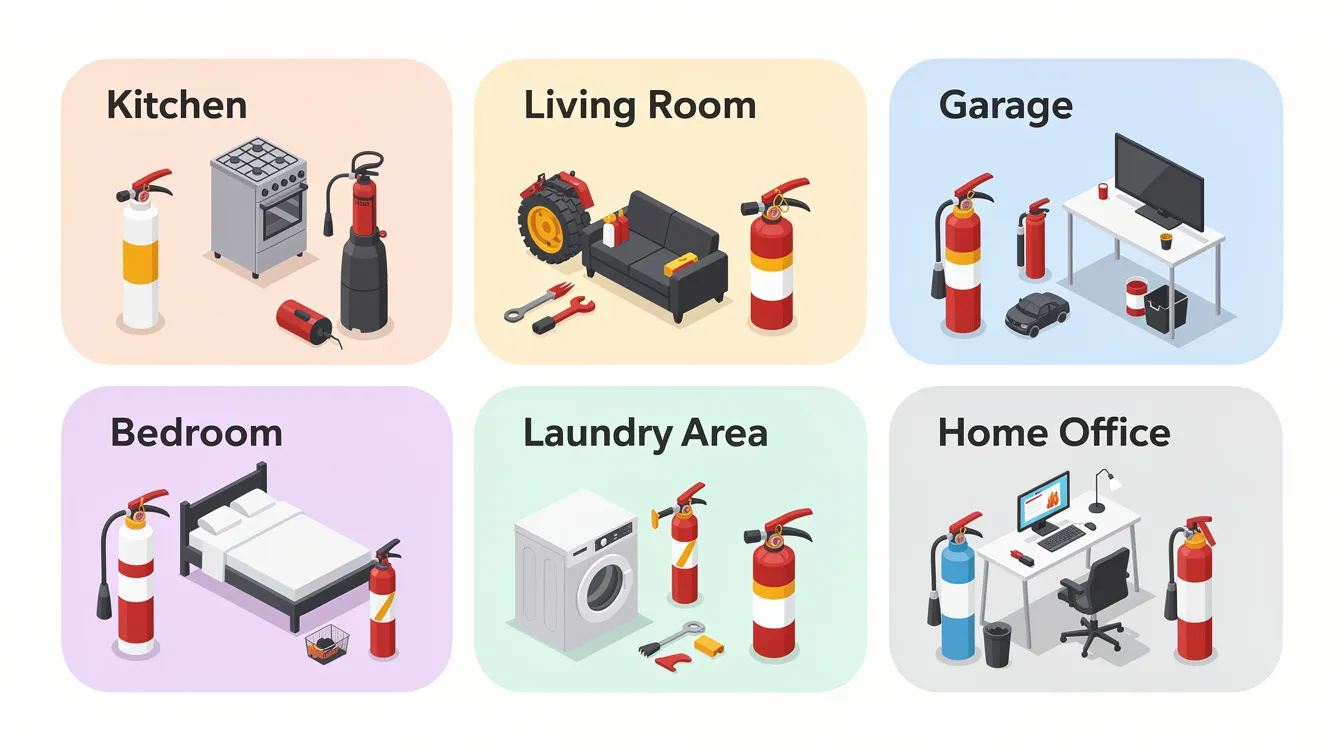
Various areas of your home require specific types of fire extinguishers. In the kitchen, a Class K fire extinguisher is ideal for cooking appliances. These extinguishers are specially designed for fires involving cooking oils and fats, which are common in kitchen fires and can be particularly dangerous due to the high heat generated by cooking appliances. Proper fire control in the kitchen is essential to prevent these dangerous fires from spreading. A BC class extinguisher is also recommended to handle flammable liquids and electrical equipment fires.
Garages also require specific fire extinguishers. A rechargeable, corrosion-resistant fire extinguisher is recommended for garages to handle flammable liquids and electrical fires. This ensures the extinguisher can handle the unique hazards in these spaces.
Ensure bedrooms have accessible fire extinguishers in the room for nighttime emergencies. Having an extinguisher in the bedroom helps control a fire before it becomes more dangerous, allowing for a quick response even during the night.
Class D extinguishers are designed for fires involving combustible metals like magnesium and sodium, while Class C extinguishers are suitable for electrical equipment fires.
When Not to Use a Fire Extinguisher
Although fire extinguishers are invaluable tools, some scenarios make using one inadvisable. Assess if the small fire is controllable before attempting to use a fire extinguisher. If the fire grows or you feel unsafe, evacuate immediately and call 911.
If unsure about using a fire extinguisher, alert others, leave the building, and contact the fire department. Your safety and the safety of others should always come first in these situations.
The Role of the National Fire Protection Association (NFPA)
The National Fire Protection Association (NFPA) establishes national guidelines and standards for fire safety. The NFPA provides comprehensive guidelines on the types and classes of fire extinguishers suitable for home use, ensuring they are effective against different types of fires.
NFPA guidelines recommend placing fire extinguishers in key areas of the home, such as the kitchen, garage, and on every floor, to ensure quick access during emergencies and to help prevent home fires.
The NFPA endorses the P-A-S-S method for operating fire extinguishers: word pass - Pull - Aim - Squeeze - Sweep
Following these guidelines ensures effective and safe use of the extinguisher during a fire incident.
Summary
Fire safety is not just about having the right tools but knowing how to use them effectively. Understanding the different types of fire extinguishers, their specific uses, and proper placement in your home can significantly enhance your safety. Regular maintenance and knowing when not to use a fire extinguisher are equally important.
By following the guidelines set by the National Fire Protection Association and being prepared, you can protect your home and loved ones from potential fire hazards. Stay safe, stay prepared, and remember that a well-placed fire extinguisher can save lives.
Frequently Asked Questions
What types of fires do Class A fire extinguishers handle?
Class A fire extinguishers are specifically designed to handle fires involving ordinary combustible materials, including cloth, wood, and paper. These extinguishers are essential for effectively managing such common fire hazards.
Where should I place a fire extinguisher in my kitchen?
A fire extinguisher in the kitchen should be located within 30 feet of the stove while ensuring it is not positioned too close to prevent smoke blockage during a fire. This placement allows for quick access in an emergency.
How often should fire extinguishers be professionally inspected?
Fire extinguishers should be professionally inspected at least once a year by a licensed contractor to ensure they are in proper working condition. This regular maintenance is crucial for safety.
What is the P-A-S-S method?
The P-A-S-S method constitutes Pull, Aim, Squeeze, and Sweep, serving as an essential technique for effectively operating a fire extinguisher in emergencies. Familiarizing yourself with this method can significantly enhance your safety during such critical situations.
When should I not use a fire extinguisher?
You should not use a fire extinguisher if the fire is growing, if you feel unsafe, or if you are uncertain about how to operate it; instead, prioritize your safety by evacuating and calling the fire department.