Are you wondering how to position your home security cameras for optimal protection? This home security camera placement guide provides the essential tips you need to secure your property effectively. Learn the key areas to cover and best practices for indoor and outdoor camera setups.
Key Takeaways
- Key security camera placements include front, back, and side doors, as well as garages and driveways, to cover critical entry points and deter intruders.
- Indoor cameras should be positioned in high-traffic common areas and vulnerable locations like stairways and large windows to monitor daily activities and prevent unauthorized access.
- When choosing between wired and wireless cameras, consider factors like reliability, ease of installation, and compliance with privacy laws to optimize home security.
Key Areas to Place Security Cameras
Home security camera placement guide – key takeaways
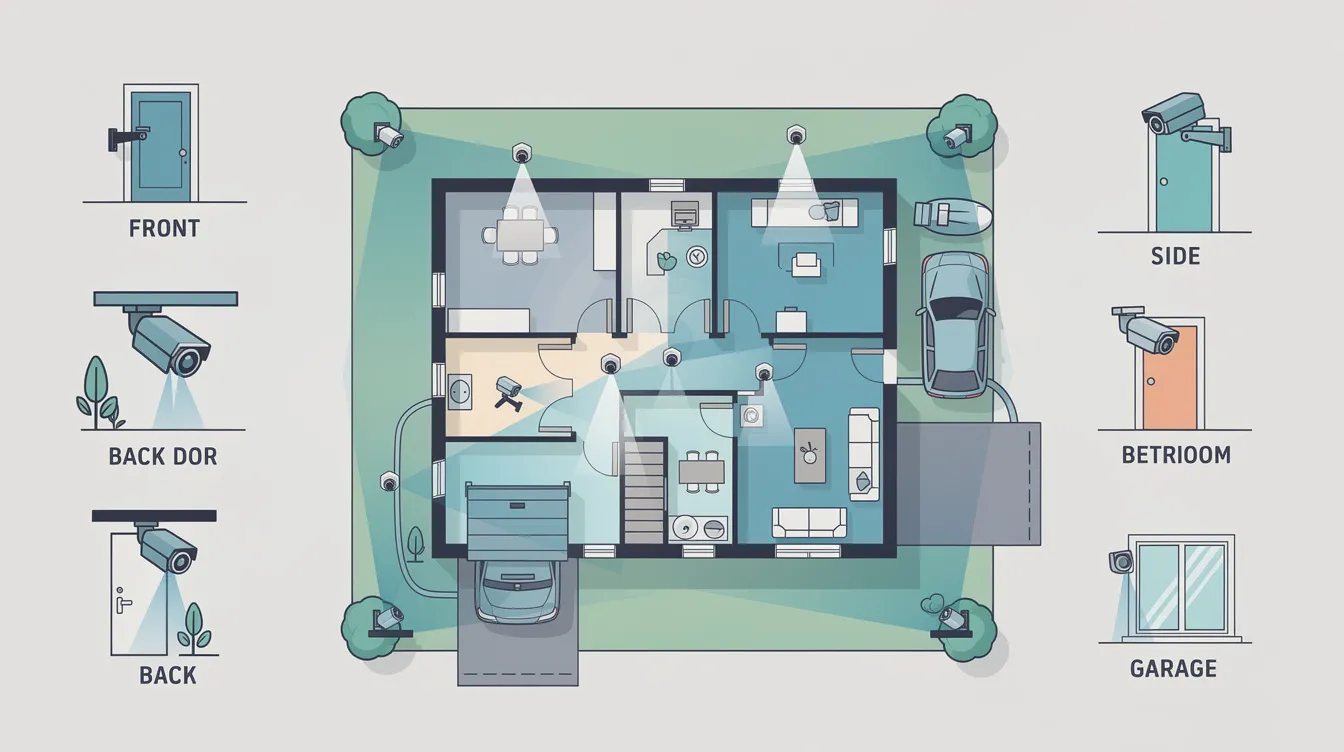
Securing your home’s critical entry points is essential for effective home security. Intruders often target ground-floor windows and doors due to their easy accessibility. Placing security cameras at these spots can deter break-ins and capture clear footage of suspicious activities.
Strategic camera placement can significantly boost surveillance coverage. Well-positioned cameras create multiple layers of protection, making it harder for intruders to avoid detection. Placement height, angle, and environment are key factors in maximizing camera effectiveness. Understanding the camera’s field of view is crucial, as it directly impacts how much area is covered and the overall effectiveness of your security system.
We’ll explore key areas for placing security cameras, including front doors, back and side doors, and garages and driveways, providing specific guidance on maximizing home security.
Front Door
The front door is the primary entry point for visitors and potential intruders. Statistics indicate that burglars frequently attempt entry through the front door, either by exploiting unlocked doors or using force. A security camera here is vital for monitoring who enters and exits your home.
Video doorbells are highly effective in this area. For optimal installation:
- Install the doorbell around 4 feet above the ground for optimal visibility.
- In tighter spaces, angle the camera outward for better coverage.
- Follow the manual instructions to ensure the camera functions correctly and covers the desired area.
Back and Side Doors
Back and side doors are often less visible, making them vulnerable to intruders. These entry points should not be overlooked. Installing cameras here helps monitor vulnerable areas and boosts overall security, especially at the back door.
Covering all entry points, including back and side doors, adds layers of protection, ensuring no entry point is unchecked. This approach captures clear footage of any suspicious activity around your home.
Garage and Driveway
Garages and driveways are common burglary targets, making their monitoring critical. These areas provide visibility into additional entry points and help protect valuable items like bikes, tools, and cars.
Position cameras to cover the entire driveway and garage entrance for optimal monitoring. Wide-angle or fisheye lenses are especially useful for monitoring large open areas such as parking lots, as they can capture a broader view. Place a camera at the gate if there is one, to spot any access attempts. This records all activities around these high-value areas, offering a comprehensive security solution.
Indoor Camera Placement Tips
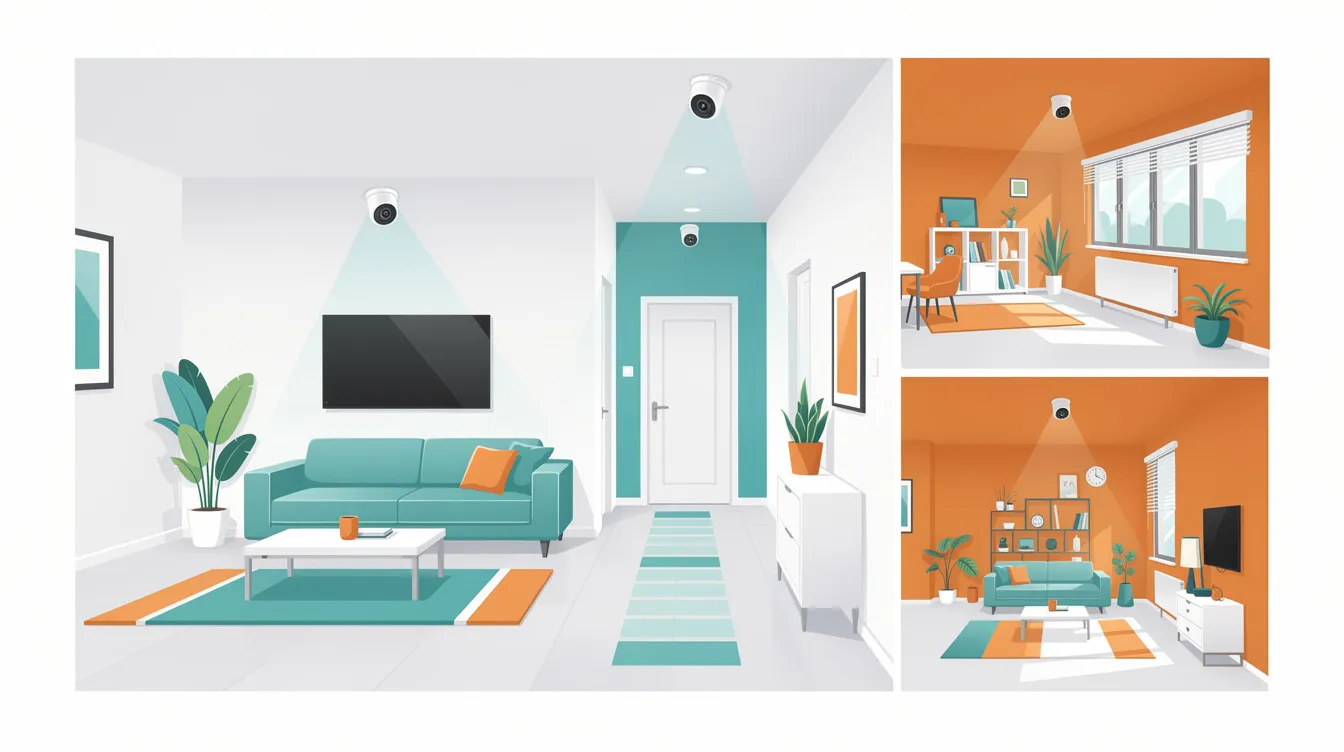
Indoor cameras play a crucial role in monitoring activities within the home. Proper placement and the right lens selection ensure that important details, such as faces or actions, are clearly captured in indoor footage. Positioning them in common areas allows for monitoring high-traffic spaces like living rooms and kitchens, enhancing visibility of daily activities and potential security breaches.
Recommendations for camera placement and settings:
- Place cameras at all ground-floor doors and windows, common entry points for burglars.
- Adjust camera settings to enhance clarity in varying lighting situations, ensuring optimal performance day and night.
- Use cameras with low-light sensitivity to improve performance in different lighting conditions.
We’ll provide detailed guidance on placing cameras in common areas, main stairways or hallways, and rooms with large windows to ensure comprehensive indoor coverage.
Common Areas
Installing cameras in common areas like living rooms and kitchens is essential for effective monitoring. These spaces are frequently used, making them crucial for surveillance. Cameras here help:
- Keep an eye on kids
- Monitor babysitters
- Watch pets
- Oversee household help
This provides oversight of interactions and potential issues.
Surveillance in common spaces ensures safety and security. Cameras in living rooms can deter inappropriate behavior from visitors, while those in kitchens can monitor daily activities and interactions.
Main Stairway or Hallway
Cameras in stairways or hallways help monitor movement between parts of the house. A camera in the main stairway can capture movement between levels, providing a clear view of who is entering or leaving specific areas.
This placement helps:
- Oversee access points and detect unauthorized movements.
- Capture movement patterns in hallways.
- Provide valuable evidence in case of break-ins.
- Ensure comprehensive monitoring of internal traffic.
Rooms with Large Windows
Rooms with large ground-floor windows are particularly vulnerable to break in. Cameras here can deter intruders by increasing visibility and monitoring for more detail on suspicious activity. Better protection through a block in visibility on this site can make these areas even more area susceptible to a mistake. Using a narrower field of view may cover less area, but it allows the camera to capture more detail, which is important for identifying intruders through large windows. The sun can also create glare that affects visibility.
Position cameras to observe potential tampering or break-ins, ensuring they cover the entire window area. This helps identify unauthorized access attempts and protects valuable objects within the room.
Outdoor Security Camera Strategies
Home security camera placement guide – indoor camera placement tips
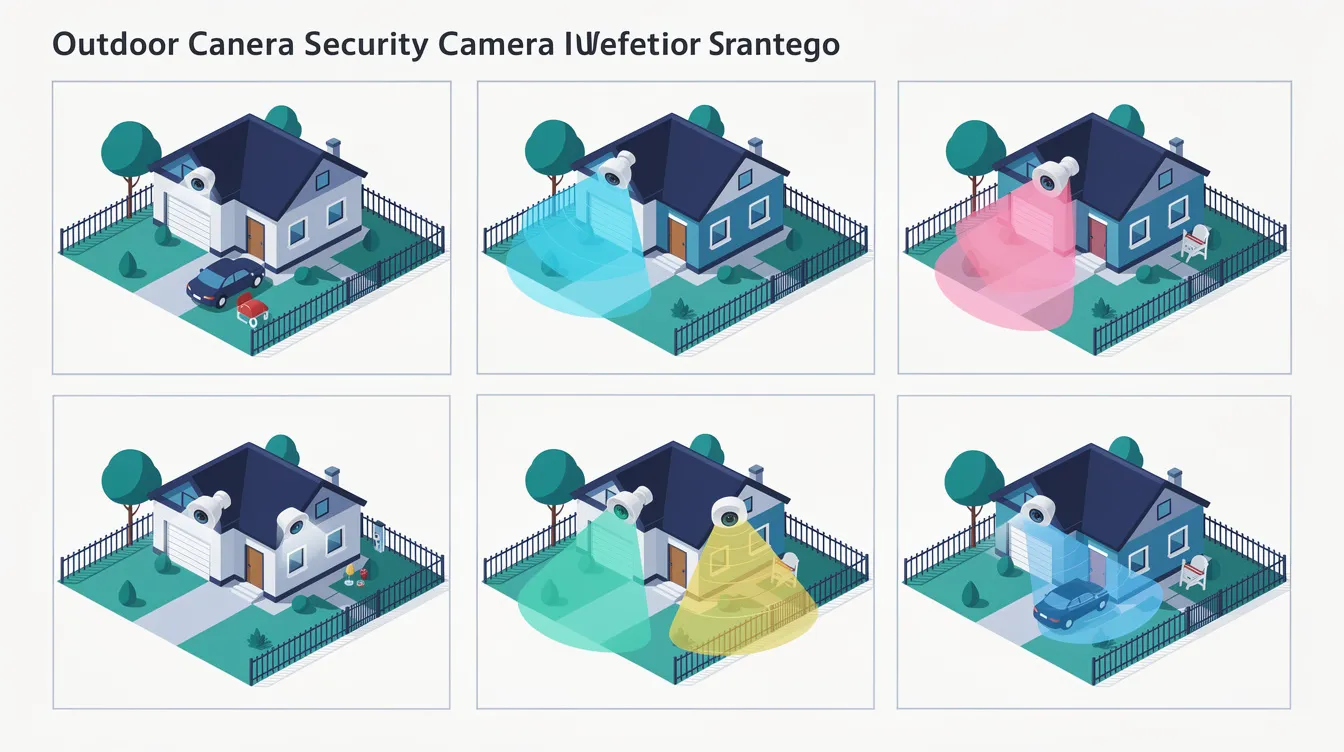
Outdoor security cameras are essential for securing your home’s perimeter. Proper placement significantly reduces security breaches by covering all outdoor space. Choosing wireless or battery-powered cameras offers flexible placement options without extensive wiring. Selecting the appropriate security camera lens is essential for achieving the desired field of view and image detail in outdoor surveillance. A home security camera can further enhance your security measures.
Positioning cameras where they are less visible can protect them from being targeted by intruders. We’ll discuss strategies for wide yard views, the pros and cons of hidden versus visible cameras, and the optimal mounting height for outdoor cameras.
Wide Yard Views
The right lens of view is crucial for yard surveillance. A wide angle lens is best for general surveillance of large areas, providing a comprehensive view. Superwide-angle lens, offering 180 degrees or more, can cover extensive areas without distortion, making them ideal for a wide field of view. However, for tasks such as capturing license plates from a distance, a lens with a narrower field of view may be necessary to ensure the details are clear.
A field of view of at least 130 degrees is recommended for yard cameras. Position cameras to cover yard entrances, like fence gates or shed doorways, to enhance overall security coverage and to consider how much area is being monitored in the camera’s field.
Hidden vs. Visible Cameras
Visible cameras can deter intruders by their presence, while hidden cameras allow for discreet monitoring. However, visible cameras in sensitive areas may raise privacy concerns and make individuals feel uncomfortable.
Hidden cameras can be strategically positioned in vulnerable areas, enhancing security by remaining unnoticed. However, they have limited deterrent effect and may raise legal concerns, especially in areas where privacy is expected.
Mounting Height
Mounting height is crucial for effective outdoor security camera monitoring while preventing tampering. Approximately 9 feet is the recommended height.
Installing cameras at this height helps prevent tampering and provides comprehensive coverage. This ensures cameras capture clear footage while remaining out of easy reach for vandals.
Choosing Between Wired and Wireless Cameras
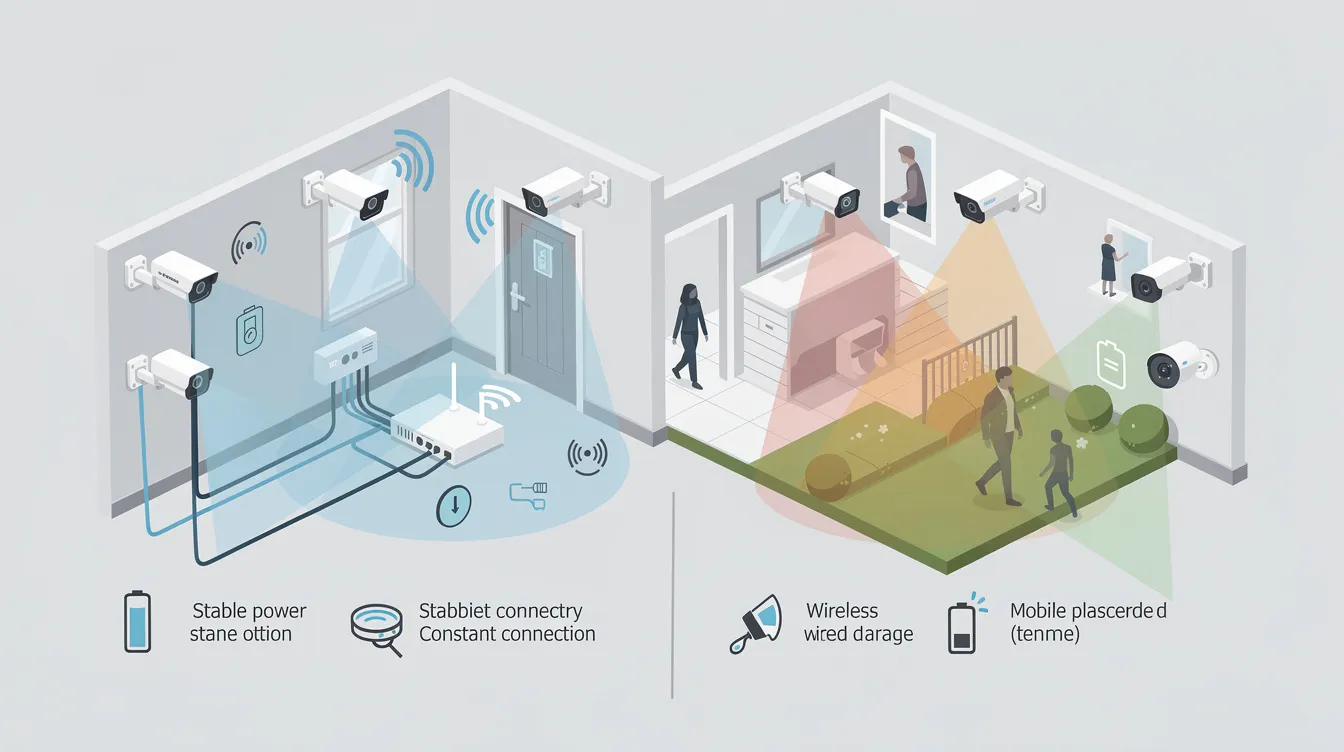
Choosing between wired and wireless security cameras is a primary decision. Wired cameras are preferred in high-security settings for their reliable power and data transmission but require complex and time-consuming installation.
Wireless security cameras offer flexibility, ease of installation, and customizable placement options. They can be installed quickly without professional help, but may encounter connectivity issues depending on Wi-Fi signal strength, affecting their reliability compared to wired options.
We’ll delve into the reliability and power supply considerations, as well as the ease of installation for both wired and wireless cameras.
Reliability and Power Supply
Wired cameras are reliable due to their continuous power supply, minimizing disruptions. This constant power source ensures uninterrupted surveillance coverage.
In contrast, wireless cameras, though flexible, can suffer from connectivity issues if the wireless signal is weak. They rely on Wi-Fi signals, which can be disrupted by factors like distance from the router and physical obstructions. While offering flexible placement, their reliability can be compromised if not properly managed.
Installation Ease
Installing wireless cameras is generally faster and doesn’t require extensive cabling. This ease of installation makes them popular for homeowners preferring a straightforward setup. Wireless cameras offer:
- Faster installation
- No need for extensive cabling
- Ability to be mounted almost anywhere within Wi-Fi range
- Versatile placement options
Wired camera installations can be complex and often require professional assistance. The process involves running cables through walls and ceilings, which can be intrusive and time-consuming.
Despite the complexity, the effort is worthwhile for the reliable and uninterrupted operation that wired cameras offer.
Enhancing Camera Effectiveness
Home security camera placement guide – choosing between wired and wireless cameras
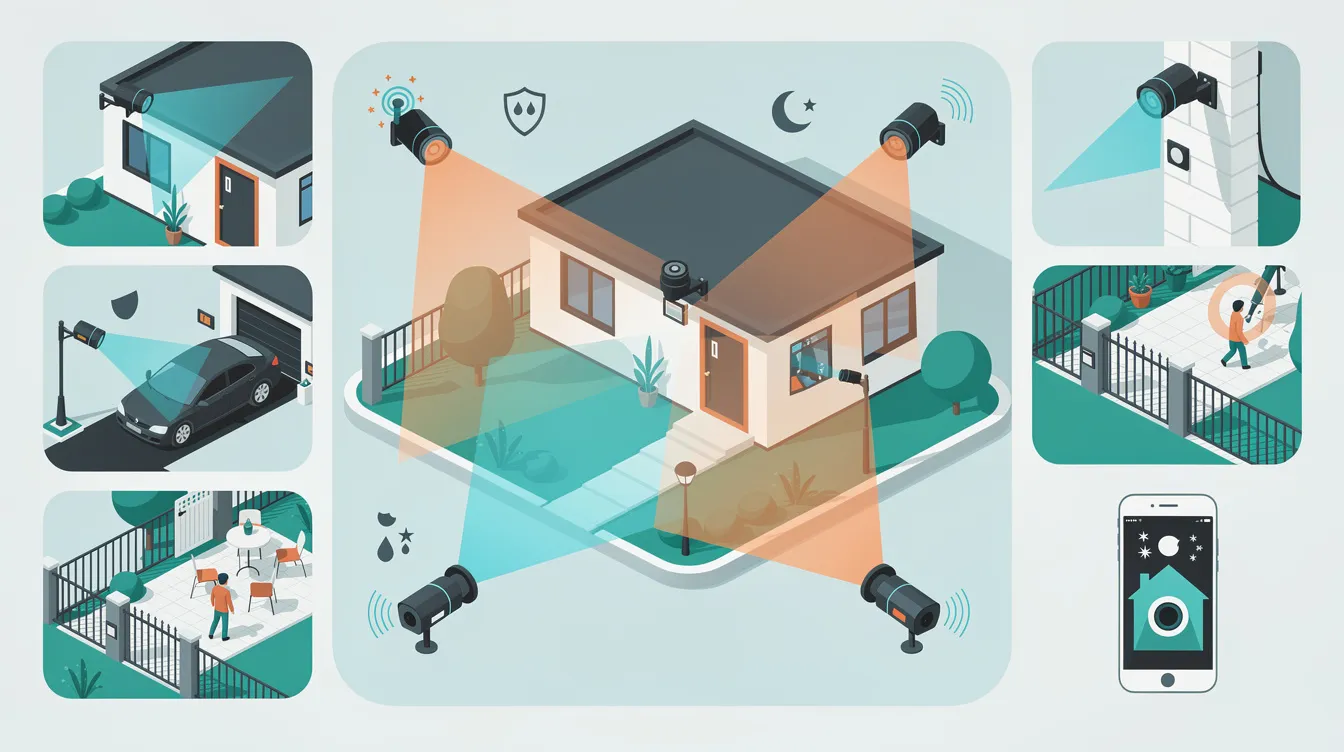
Enhancing the effectiveness of security cameras involves more than just proper placement. Strategic positioning, using wide-angle lenses, and preventive measures against tampering are crucial. Positioning cameras above the front door can effectively capture and identify faces of visitors and potential intruders.
Using wide-angle lenses can significantly reduce blind spots, ensuring comprehensive monitoring. Position cameras to eliminate blind spots and avoid glare from sunlight, ensuring clear images both during the day and at night.
To protect cameras from tampering and vandalism, install them in high-visibility locations to deter tampering. Using weatherproof and tamper-resistant enclosures can significantly reduce the chances of physical damage.
Eliminating Blind Spots
Strategic camera positioning is essential for complete coverage of vulnerable areas. Regular monitoring and adjusting camera angles ensure no new blind spots form over time.
Continually assessing and tweaking your camera setup maintains optimal visibility and zoom security.
Using Motion Detectors
Motion detectors are essential components in modern home security systems, designed to identify and respond to movement. Integrating them with cameras enhances efficiency by triggering recordings and alerts only when significant movements are detected.
This approach conserves storage space by recording only when necessary, making your security system more effective and efficient.
Adjusting for Lighting Conditions
Adjusting security camera settings is crucial for effectiveness in different lighting conditions, including indirect light. Weather and lighting impact camera performance, affecting image quality and motion detection. Conditions like direct sunlight, shadows, and low light can significantly alter performance.
To optimize monitoring, adjust camera settings such as exposure and position cameras for optimal light capture. These adjustments will help ensure that your cameras provide clear footage regardless of the lighting conditions.
Legal Considerations for Security Camera Placement
Understanding the legal and privacy concerns when placing security cameras is crucial to ensure compliance with laws and respect for privacy. Both federal and state laws must be considered when installing security cameras to avoid legal issues. It’s also important to be aware of the legality of monitoring other people’s properties with security cameras, as it is illegal to do so.
Consulting with experts, such as Gabe Turner, can provide valuable insights into the legal aspects of security camera placement. Additionally, the Fourth Amendment protects individuals’ rights regarding surveillance, establishing a reasonable expectation of privacy.
In the following subsections, we will delve into federal and state laws to provide a comprehensive understanding of the legal considerations for security camera placement.
Federal Laws
Federal regulations dictate that recording in public spaces is generally lawful, but private areas, such as bathrooms and bedrooms, have higher privacy expectations. These laws are designed to protect individuals’ privacy while allowing for necessary surveillance in public areas.
Federal regulations also include laws on consent and expectation of privacy, particularly applicable to audio recordings. Understanding these laws is essential to ensure that your security camera setup complies with federal guidelines.
State Laws
Before placing security cameras, it is important to look up state statutes to ensure compliance with local laws. Checking with city, district, or county laws is also crucial, as regulations can vary significantly between different jurisdictions.
If you are unsure about camera placement laws, it is advisable to talk to a lawyer. Seeking legal advice can help you navigate the complexities of state and local regulations, ensuring that your security camera placement is both legal and effective.
Preventing Tampering and Vandalism
To enhance home security, protecting security cameras from tampering and vandalism is crucial. Employing IK10-rated cameras can enhance protection against physical damage, ensuring that your cameras remain operational even in the face of attempted sabotage.
Using unique mounting hardware can make it more difficult for intruders to remove or tamper with security cameras. Additionally, installing cameras at heights of 8 to 10 feet can help deter tampering by making them less accessible to intruders.
In the following subsections, we will discuss the importance of durable camera housings and strategic positioning to prevent tampering and vandalism.
Durable Camera Housing
Durable camera housings are essential for protecting security cameras from physical damage and vandalism. IK10 rated housings offer high impact resistance, safeguarding cameras from physical damage due to vandalism.
Vandal-resistant domes made of plexiglass can significantly deter damage to cameras. Incorporating strong screws with unique heads can also make it difficult for intruders to remove cameras, further enhancing their protection.
Strategic Positioning
Positioning mount cameras out of easy reach can discourage tampering and make them harder to access. Installing cameras at higher elevations helps reduce their accessibility for potential vandals.
Placing cameras at heights that are difficult to reach can significantly reduce the risk of tampering or vandalism. By strategically placing cameras at increasing heights, homeowners can enhance their property’s security against potential vandalism.
Summary
In summary, effective home security depends significantly on the strategic placement of security cameras. By covering all critical entry points such as front doors, back and side doors, and garages, you create multiple layers of protection against intruders. Indoor cameras in high-traffic zones and rooms with large windows further enhance visibility and security.
Understanding the differences between wired and wireless cameras helps you choose the best option for your specific needs. Enhancing camera effectiveness through proper placement, the use of motion detectors, and adjusting for lighting conditions ensure optimal performance. Legal considerations are also crucial to ensure compliance with privacy laws and avoid legal issues.
By following these guidelines, you can create a comprehensive security system that offers peace of mind and protection for your home and loved ones. Take the first step towards fortifying your sanctuary today.
Frequently Asked Questions
Why is it important to place security cameras at the front door?
Placing security cameras at the front door is essential to deter potential burglaries, as it is the most frequent entry point for intruders. This measure also helps capture clear footage of any suspicious activity, enhancing your overall security.
What are the advantages of using wireless security cameras?
Wireless security cameras provide flexibility in installation and placement, allowing for easier customization and eliminating the need for extensive wiring. This enhances convenience and adaptability for various surveillance needs.
How can I prevent my security cameras from being tampered with or vandalized?
To effectively prevent tampering or vandalism of your security cameras, utilize durable housings, unique mounting hardware, and install the cameras at elevated positions. This approach significantly enhances their security and functionality.
What legal considerations should I keep in mind when installing security cameras?
When installing security cameras, ensure you comply with federal and state laws regarding recording in public versus private spaces, and obtain consent for audio recordings. Prioritizing legal compliance is crucial to avoid potential legal issues.
How do motion detectors enhance the effectiveness of security cameras?
Motion detectors enhance the effectiveness of security cameras by triggering recordings and alerts only during significant movements, thereby increasing system efficiency and conserving storage space. This focused approach ensures that you capture critical events without unnecessary footage.