
How can you make your home safer using design? CPTED (pronounced sep-ted) home security principles offer a strategic way to prevent crime. This article will teach you how to enhance lighting, optimize landscaping, and control access points for better home security.
Key Takeaways
- CPTED principles advocate for the strategic design of environments to reduce crime opportunities through natural surveillance, access control, and community engagement.
- Incorporating features such as well-lit areas, clear property boundaries, and effective landscaping enhances visibility and territorial reinforcement, deterring potential intruders.
- Regular maintenance and integration of modern security technology, along with community involvement, are vital for sustaining safety and fostering a proactive environment against crime.
Understanding CPTED Concepts
Cpted home security principles – key takeaways
Crime Prevention Through Environmental Design (CPTED) is a strategic approach that aims to prevent crime by designing the physical environment in ways that influence human behavior. The fundamental idea is to reduce opportunities for criminal activities by manipulating the built environment. Integrating cpted strategies into home security strategies involves modifying various environmental elements such as lighting, landscaping, and access points to deter crime and enhance safety.
One of the key aspects of CPTED is the systematic integration of design, technology, and operational strategies. This holistic approach ensures that every aspect of home design contributes to overall security. For instance, using well-placed security cameras and proper lighting can significantly enhance surveillance and reduce the risk of criminal behavior by making it harder for criminals to operate unnoticed.
Community engagement is another vital component of CPTED. Collaboration between residents and law enforcement agencies helps neighborhoods to form proactive security networks. Engaged community members can participate in neighborhood watch programs and other initiatives, increasing vigilance and creating a sense of collective responsibility.
Surveillance plays a crucial role in CPTED. Good surveillance practices, such as having clear sightlines and well-lit areas, reduce the vulnerability of properties to criminal activities. Clearly defined spaces, marked by visual cues like signage and landscaping, can indicate acceptable behaviors and territories, further enhancing security.
Understanding and applying these CPTED concepts allows homeowners to create safer living environments and foster stronger community ties.
Natural Access Control Techniques
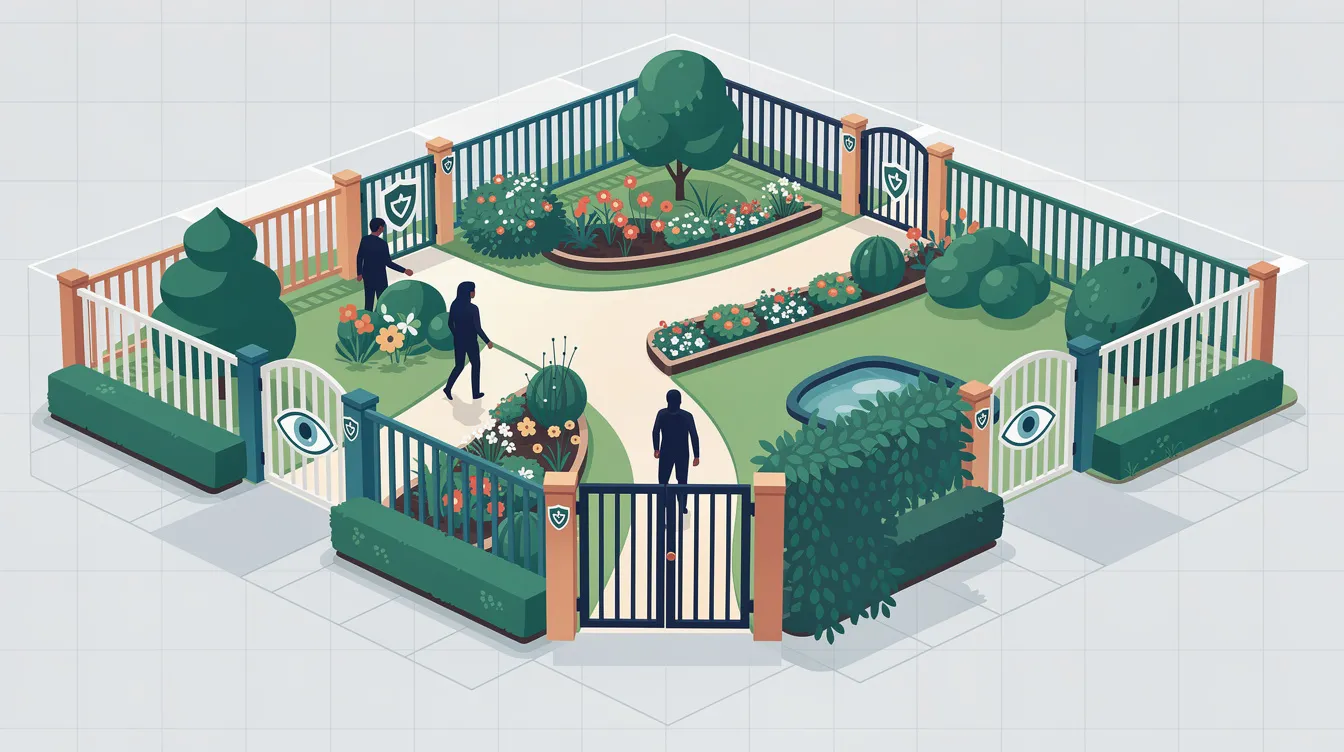
Natural access control is a fundamental CPTED strategy aimed at reducing crime by managing entrances and exits to create a perception of risk for potential intruders. This technique involves designing the physical environment in a way that naturally guides people toward or away from specific areas, thereby decreasing crime opportunities.
Achieving natural access control can be done through various methods:
- Designing streets, sidewalks, and building entrances to discourage unauthorized access.
- Strategic placement of fences, gates, and landscaping to direct foot traffic and indicate permitted access while maintaining visibility.
- Using low fences or see-through barriers to provide a sense of ownership and territorial reinforcement while allowing for natural surveillance.
Effective use of these physical features helps homeowners create natural barriers that deter unauthorized access without resorting to unsightly or oppressive security measures. These strategies not only enhance security but also contribute to a more aesthetically pleasing environment that promotes a sense of safety and community.
Enhancing Natural Surveillance
Cpted home security principles – natural access control techniques
Natural surveillance is a key design concept in CPTED that enhances the visibility of people and areas, making potential intruders observable and thus deterring criminal activity. The goal is to maximize visibility around the property, reducing hiding places and enabling residents and neighbors to monitor suspicious activity. Achieving critical intensity—the necessary level of human presence or activity in an area—is crucial for effective natural surveillance, especially in spaces where observation may be limited, such as parking garages.
Specific visibility enhancements include features such as doors and windows facing the street, pedestrian-friendly sidewalks, and front porches. These design elements ensure that areas are easily observable by legitimate users, thereby increasing the likelihood of detecting and deterring criminal behavior. Additionally, enhancing lighting in parking areas and around the front door can elevate visibility and perceptions of safety.
Key strategies for enhancing security through landscaping and exterior lighting include:
- Maintaining short shrubs and well-trimmed trees to improve visibility and reduce concealment spots.
- Using effective outdoor lighting to illuminate dark areas and deter criminal activity by making it harder for criminals to operate unnoticed.
- Designing landscaping that creates an impression of an active presence to reinforce territorial boundaries.
Incorporating security technology such as security cameras can further enhance natural surveillance. Key strategies include:
- Strategic placement of cameras in high-risk areas to increase effectiveness in crime deterrence and monitoring.
- Using advanced surveillance systems with facial recognition and behavioral analysis tools to automatically detect unusual patterns and alert users to potential criminal activity.
- Creating environments that foster legitimate activities to significantly deter criminal behavior by increasing the visibility of the area.
Territorial Reinforcement Strategies
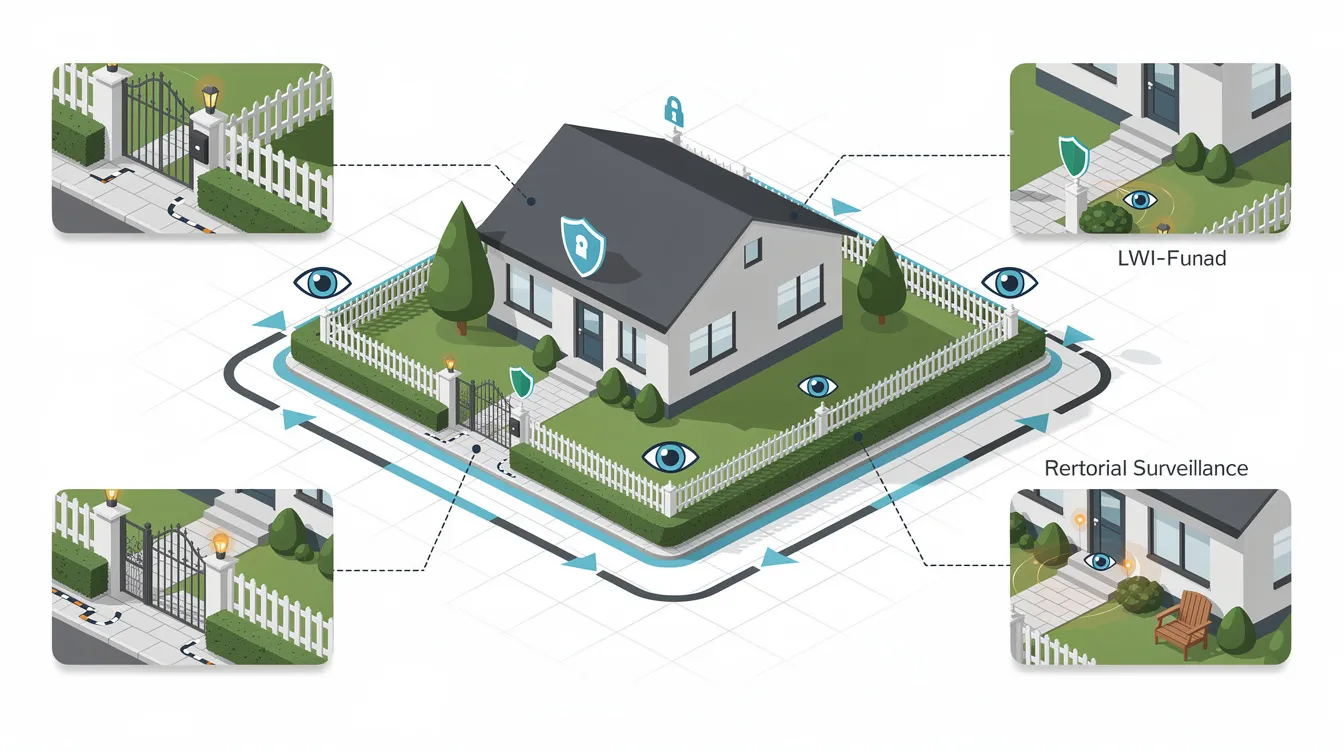
Territorial reinforcement is a strategy that uses physical design to create clear property delineation between public and private spaces. This approach helps to establish areas of control and deter potential offenders by signaling ownership and territorial behavior.
Natural access control plays a significant role in establishing these boundaries by clearly defining where public space ends and public and private space begins, providing a clear border definition. For example, low, open fencing can indicate private areas while still allowing for visibility, thereby making it harder for potential intruders to go unnoticed. Features that promote territorial reinforcement include landscape plantings, pavement design, land use, and gateway treatments, all of which contribute to a sense of ownership and control, while also addressing symbolic barriers.
When users develop a sense of territorial control, they are more likely to maintain and protect their property, which in turn discourages potential offenders. This territorial influence not only enhances security but also fosters a sense of community pride and vigilance, further contributing to keeping intruders out and creating a safer environment for everyone.
Defensible Space Design
Cpted home security principles – territorial reinforcement strategies
The concept of defensible space, developed by Oscar Newman in the early 1970s, argues that the design of a space can significantly influence crime rates. Defensible space design focuses on creating environments where residents have control over their surroundings in a controlled space, thereby reducing opportunities for crime.
Key design features that contribute to creating defensible spaces include:
- Physical barriers and clear boundaries that help establish territoriality and enhance safety.
- A single entrance point to restrict access to private spaces, simplifying monitoring and increasing security.
- Thorny plants around windows or other vulnerable areas to deter would-be burglars from attempting entry.
Implementing defensible space principles not only increases safety but also empowers residents by giving them a sense of control over their environment. A well-kept environment fosters a sense of ownership and discourages criminal activity, creating a more secure and cohesive community.
Legitimate Activity Support
Encouraging legitimate activities in public spaces is a powerful strategy for crime prevention. When people engage in positive activities, it diminishes the likelihood of criminal acts occurring. Parks and community spaces that are well-maintained and regularly used promote positive social interactions while decreasing crime opportunity for criminal activity.
Effective design elements that support legitimate activities include adequate lighting, regular maintenance, and community engagement. The appearance of a property significantly influences crime perception; well-maintained spaces indicate care and can deter criminal activity. Timely removal of vandalism and litter contributes to a neighborhood’s overall safety by discouraging further acts of disorder.
Regular maintenance and community involvement are crucial in supporting legitimate activities and ensuring that public spaces remain vibrant and safe. Communities that foster a sense of pride and ownership are better able to protect their properties and reduce crime.
Maintenance and Upkeep
Regular maintenance and upkeep of the physical environment play a critical role in crime prevention. Maintaining neighborhoods and residences ensures that security components are functional and that the overall appearance of the property deters potential criminals.
Visibility of well-maintained properties can signal ownership and care, which can deter criminals. Key measures include:
- Keeping bushes trimmed
- Trimming limbs trimmed
- Maintaining landscaping well to reduce hiding places and improve visibility
- Addressing overgrown landscaping, as neglected or overgrown areas can create a negative impression of apathy and disinterest, which may attract illicit activities and undermine community safety
- Ensuring that exterior doors and windows are secure, which is essential for maintaining home security.
Regular maintenance of security systems, such as security cameras, is crucial to ensure optimal performance and mitigate blind spots. Maintaining a well-kept property significantly enhances security and deters potential offenders.
Incorporating Security Technology
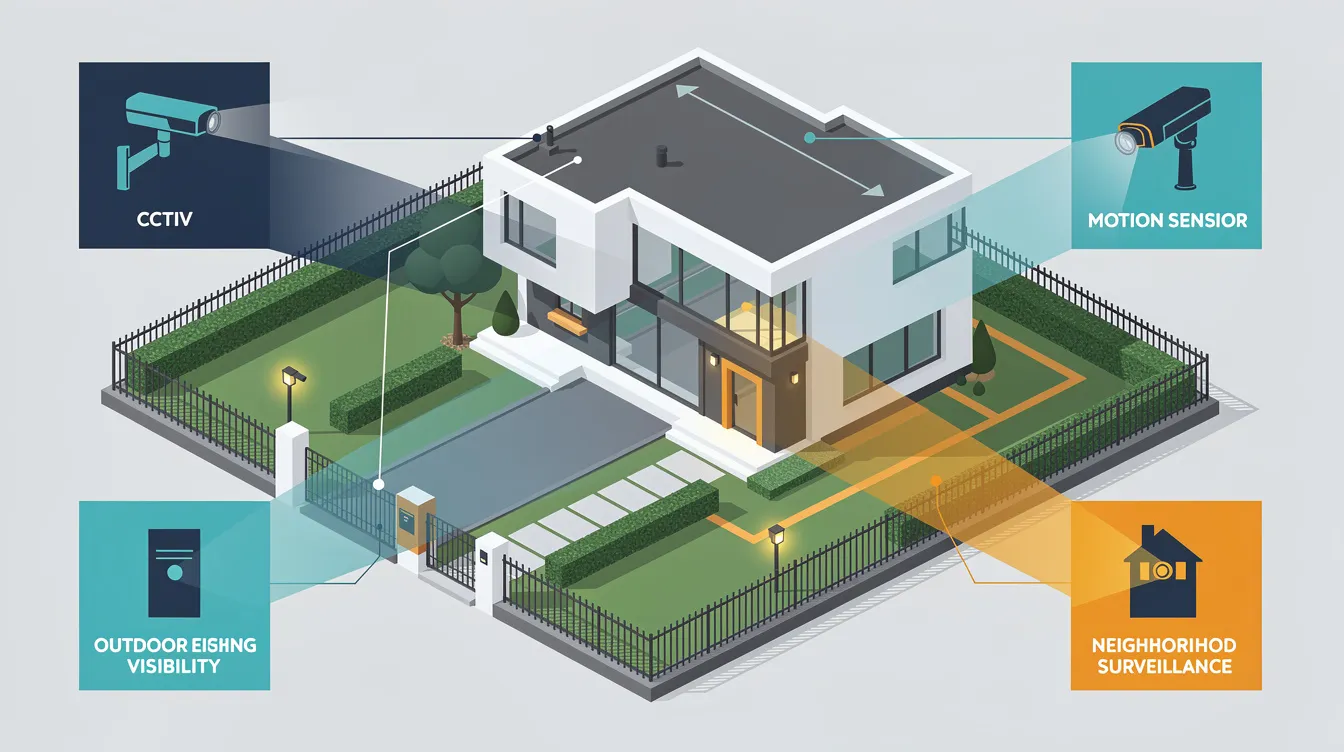
Integrating modern security technology into home design is essential for enhancing safety and deterring potential intruders. Closed circuit television (CCTV) systems, alarm systems, and other modern security measures can significantly enhance home security.
CCTV systems provide high-resolution footage that aids in identifying suspects and streamlining the prosecution process in criminal cases. Dummy cameras serve as a low-cost deterrent, leveraging their visual presence to discourage crime without the functionality of actual surveillance. The overall integration of security technology, like CCTV and deterrents such as dummy cameras, leads to a significant reduction in crime incidence.
Incorporating these security measures into the home’s architectural design creates a more secure environment and effectively deters criminal activity in such a way that promotes proper design.
Community Involvement
Community engagement is a critical component of applying CPTED principles to create safer neighborhoods. Effective home design can promote ‘self-patrolling’ among neighbors, boosting community vigilance against crime. Neighborhood events and activities can enhance community bonds, leading to increased vigilance and safety within the area.
Communities designed with defensible space principles encourage social interaction and community engagement, which can further deter criminal activity. Maintaining well-kept properties promotes a sense of vigilance among residents and fosters community pride, which can help protect against crime. Additionally, the presence of guard dogs can enhance security measures in these neighborhoods.
Collaborating with local law enforcement and integrating security systems with police officers can enhance public safety by ensuring quicker responses to incidents.
Summary
Mastering CPTED principles can significantly enhance home security and foster a safer community. By integrating strategies such as natural access control, natural surveillance, territorial reinforcement, and defensible space design, homeowners can create environments that deter crime and promote safety.
Community involvement and the incorporation of modern security technology further strengthen these efforts, creating a proactive and vigilant neighborhood. Embrace these principles, and take the first step towards a safer, more secure home.
Frequently Asked Questions
What is CPTED?
CPTED, or Crime Prevention Through Environmental Design, is a strategic approach that aims to reduce crime opportunities through effective environmental design. This method emphasizes the importance of the physical environment in deterring criminal behavior.
How can natural access control enhance home security?
Natural access control enhances home security by strategically designing the environment to direct individuals towards legitimate entrances and away from vulnerabilities, thereby minimizing opportunities for criminal activity. This approach effectively reinforces safety through thoughtful spatial organization.
What are some examples of natural surveillance techniques?
Natural surveillance techniques include designing buildings with doors and windows that face the street, creating pedestrian-friendly sidewalks, incorporating front porches, and ensuring adequate nighttime lighting. These elements enhance visibility and promote safety in the environment.
How does community involvement help in crime prevention?
Community involvement effectively deters criminal activity by promoting vigilance, fostering social interaction, and enhancing collaboration with law enforcement. This collective effort strengthens the social fabric and safeguards neighborhoods.
Why is regular maintenance important for home security?
Regular maintenance is crucial for home security as it guarantees that all security components function properly, improves visibility, and demonstrates ownership, effectively deterring potential criminals.